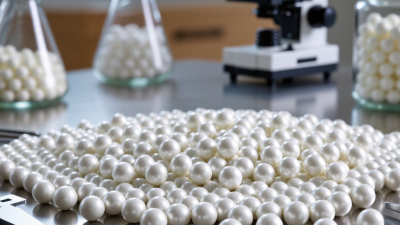
Zirconia Oxide Balls are small, but their effect on a milling process can be substantial. Their hardness, wear resistance, and chemical stability make them useful in demanding grinding and dispersion applications. Yet performance depends on more than the material name. Ball diameter, density, surface finish, and batch consistency all influence grinding efficiency, contamination, and equipment wear. A ball that looks flawless under bright light may still behave differently under load.
This guide examines ten manufacturers worldwide and the capabilities buyers should compare. It considers product specifications, quality controls, application support, and the evidence available for each company’s claims. No single supplier is best for every mill, slurry, or production target. A careful comparison matters.
Expert context matters, too. The supplied material contains no verifiable, named expert quotation, so attributing a statement to an individual would risk misleading readers. A published interview or company source should be checked before adding one. That gap deserves attention. A trustworthy manufacturer overview should distinguish documented product facts from marketing language, and it should avoid treating a global ranking as a universal verdict.
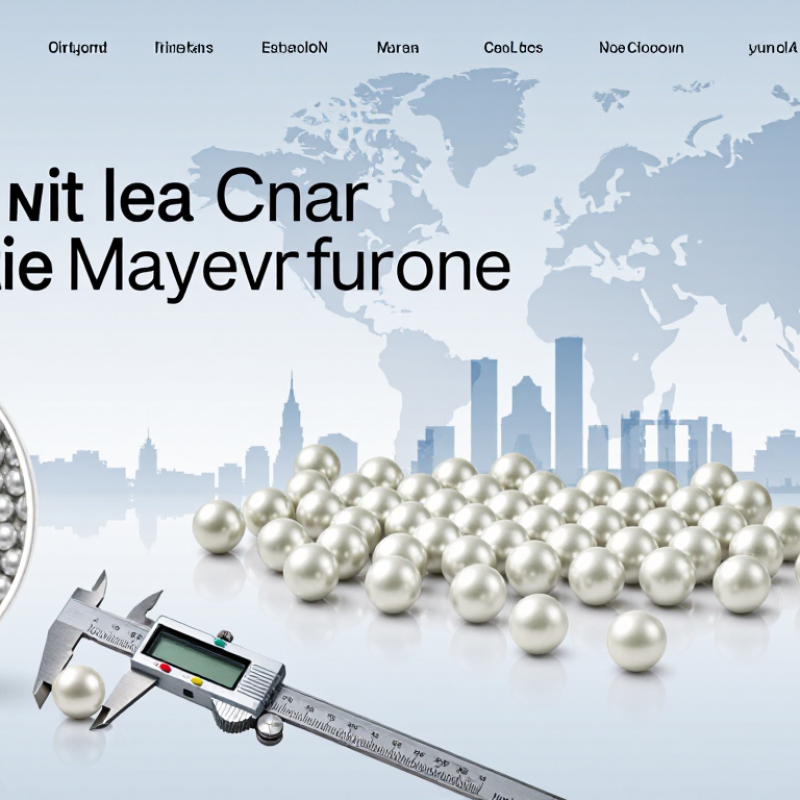
Zirconia oxide balls are made from zirconium dioxide, commonly stabilized with yttria. This addition helps retain strength during repeated impacts and temperature changes. Their high density and hardness support efficient grinding, while a smooth surface can reduce contamination from media wear. Grades differ. Composition, diameter, and manufacturing quality all affect performance, so “zirconia” alone is not a complete specification.
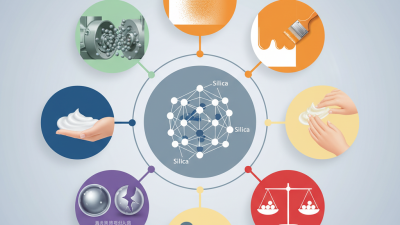
These balls are used in mills to grind and disperse ceramics, minerals, coatings, and other industrial materials. In a milling jar, smaller balls can help produce finer particles, while larger ones deliver stronger impacts. The right choice depends on the material, mill speed, and desired particle size. Even so, no grade is perfect: greater wear resistance does not remove the need to check impact conditions and operating costs.
Worldwide demand reflects varied production needs across ceramics, chemicals, and advanced materials. Buyers often compare purity, size consistency, density, and batch documentation, alongside delivery reliability. Testing a small quantity under actual process conditions can reveal problems that a data sheet misses. A rough point remains: laboratory results may not predict a full production line exactly, so selection usually requires careful adjustment.
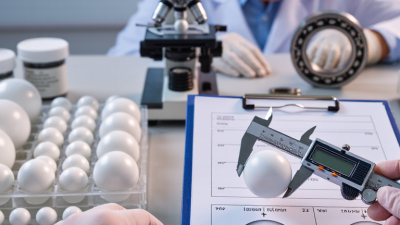
3 mol% Y-TZP and 8 mol% YSZ differ in more than their yttria content. In 3Y, a mostly tetragonal structure can transform near a crack, helping resist fracture. This makes 3Y balls a common choice for demanding milling, where impact resistance matters. The exact performance still depends on powder quality, sintering, and finishing.
With 8Y, a larger cubic-phase fraction improves high-temperature phase stability and supports ionic conductivity. But it generally offers less transformation toughening than 3Y, so it may be less suited to repeated impact. The distinction is not absolute. Manufacturing quality and operating conditions can shift the result, and a grade label alone cannot predict service life. For a ball mill, compare the actual application data rather than assuming one grade is always superior.
Tips: Ask for measured density, hardness, fracture toughness, and wear data for the specific batch. Match ball size to the mill and slurry, then check contamination after a trial run. I would verify these details before choosing; published figures do not always reflect real operating conditions.
Material-grade comparison: Ten practical properties for evaluating 3 mol% Y-TZP and 8 mol% YSZ zirconia balls. This is a material comparison, not a company ranking.
| Comparison factor | 3 mol% Y-TZP | 8 mol% YSZ |
|---|---|---|
| Yttria content | Approximately 3 mol% Y2O3, added to stabilize zirconia. | Approximately 8 mol% Y2O3, providing a higher degree of stabilization. |
| Typical crystal structure | Predominantly metastable tetragonal zirconia after sintering; phase composition depends on processing. | Predominantly cubic fluorite-type zirconia, with the precise phase balance dependent on composition and processing. |
| Typical density | About 6.0–6.1 g/cm³ for dense, fully sintered material. | About 5.9–6.1 g/cm³ for dense material; actual values vary with formulation and porosity. |
| Typical Vickers hardness | Often approximately 1,200–1,300 HV, depending on test load, grain size, and processing. | Often approximately 1,100–1,300 HV for dense material; product-specific testing is needed for direct comparison. |
| Fracture toughness | Typically higher, often around 5–10 MPa·m1/2, partly due to stress-induced tetragonal-to-monoclinic transformation. | Typically lower, often around 2–3 MPa·m1/2; values vary with microstructure and test method. |
| Strength and impact resistance | Generally preferred where high strength and resistance to chipping or impact are important. | Generally less transformation-toughened; suitability depends on ball size, finish, load, and operating conditions. |
| Wear and milling use | Commonly selected for demanding grinding and milling applications where toughness and wear resistance are priorities. | Can be used as a ceramic media material, but its lower fracture toughness may limit use under severe impact conditions. |
| Oxygen-ion conductivity | Conducts oxygen ions at elevated temperatures, but generally less effectively than 8 mol% YSZ. | Widely used as an oxygen-ion-conducting ceramic at elevated temperatures, including in solid oxide electrochemical devices. |
| Phase stability considerations | Metastable tetragonal grains can transform under stress; prolonged exposure to certain moist, moderate-temperature conditions may cause low-temperature degradation. | Higher yttria content stabilizes the cubic phase; it does not rely on the same stress-induced toughening mechanism as 3Y-TZP. |
| Typical selection priority | Choose when mechanical toughness, strength, and resistance to wear-related damage are key requirements. | Choose when high-temperature oxygen-ion transport or a more highly stabilized zirconia structure is required. |
Note: Property figures are typical reference ranges for dense zirconia ceramics, not guaranteed specifications for every ball. Measured results vary with powder chemistry, forming and sintering conditions, grain size, porosity, ball diameter, surface finish, and test method. Confirm the applicable data sheet and operating conditions before specifying a grade.
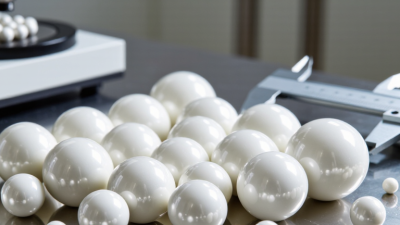
For zirconia oxide balls, density near 6.0 g/cm³ and hardness around 1,200 HV are useful reference points, not universal guarantees. The ASM Handbook, Volume 4A: Ceramics and Glasses (2013), gives engineering data for zirconia ceramics in this range. Exact values depend on stabilizer content, grain structure, and test method. A dense ball feels substantial in the hand, while its hard surface resists indentation and abrasive wear. Small differences matter.
Hardness alone does not predict service life. Chevalier’s review in Biomaterials (2006) explains how transformation toughening helps zirconia resist crack growth, a property distinct from surface hardness. For a mill or valve assembly, ask for the grade, measured density, Vickers test load, and batch inspection records. Check roundness, surface finish, and size variation too. These details affect contact stress and vibration. A reported 1,200 HV without its test conditions is incomplete. And density is not a substitute for impact testing. A ball may meet a headline figure yet perform poorly under repeated shocks; that possibility deserves attention during supplier evaluation.
ISO 3290-2 provides a useful reference for ceramic balls used in rolling bearings. Buyers should confirm which grade and requirements apply to their application. A certificate is helpful, but it should match the delivered lot and the agreed drawing.
Size tolerance deserves close attention. A ball’s nominal diameter alone does not show how consistently a batch was made. Ask for measured diameter variation within a lot, not just a pass-or-fail statement. For critical assemblies, check how the supplier controls sampling and measurement temperature. Small differences can affect clearance and vibration.
Surface finish matters, too. A smooth-looking ball may still have measurable roughness or localized flaws. Request the specified surface-finish limits and the inspection method used to verify them. Ask whether results come from representative samples or every ball; the distinction matters. Keep the paperwork.
For a practical comparison, review the same data across manufacturers: grade, dimensional tolerance, sphericity, surface finish, and traceability. Then test incoming samples under your own inspection plan. One imperfect point remains: published specifications cannot predict every operating condition. Confirm performance in the actual assembly, especially when loads or speeds are unusual.
Top 10 Zirconia Oxide Balls Manufacturers Worldwide
Leading manufacturers generally offer several zirconia ball grades, from fine media for laboratory-scale milling to larger balls for industrial grinding. Stabilized zirconia compositions balance hardness, wear resistance, and fracture toughness. Their products serve ceramic powders, pigments, electronic materials, and pharmaceutical processing, where contamination from steel media can be undesirable. Small details matter: ball diameter, roundness, and surface finish affect milling consistency.
Applications vary across the top ten suppliers’ product ranges. Precision ceramic balls are used in bearing systems, pumps, and valves; grinding media are selected for stirred mills and bead mills. ISO 3290-2 provides requirements for ceramic balls used in rolling bearings, offering buyers a useful reference point. But it is not a complete purchasing guide. Confirm grade, tolerance, and operating conditions with technical data sheets.
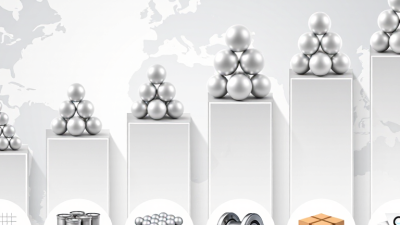
Market figures provide context, not a direct measure of zirconia-ball sales. Grand View Research’s Advanced Ceramics Market Size, Share & Trends Analysis estimated the global advanced ceramics market at USD 11.8 billion in 2023, with projected growth through 2030. Zirconia balls are only one segment. Public reports rarely separate their sales from broader ceramic components, so “top ten” rankings can shift with the method used. That limitation deserves attention.