Pingxiang Baitian New Materials Co., Ltd

Leave Your Message

How to Choose Zirconia Ceramic Ball Suppliers?

Choosing the right Zirconia Ceramic Ball supplier is not simply a price comparison. It is a decision about wear life, contamination control, dimensional stability, and production risk. A polished website proves little. The real evidence appears in test reports, sample consistency, and traceable manufacturing records.

Ceramic materials researcher Dr. Robert B. Heimann offers a useful principle: “The properties of ceramics depend strongly on their composition, structure, and processing.” This matters when evaluating zirconia balls. Ask whether the supplier clearly identifies the zirconia grade, yttria content, density, hardness, fracture toughness, and sintering method. These details affect grinding efficiency, bearing performance, and service life. They should not remain vague.

Small details reveal serious suppliers.

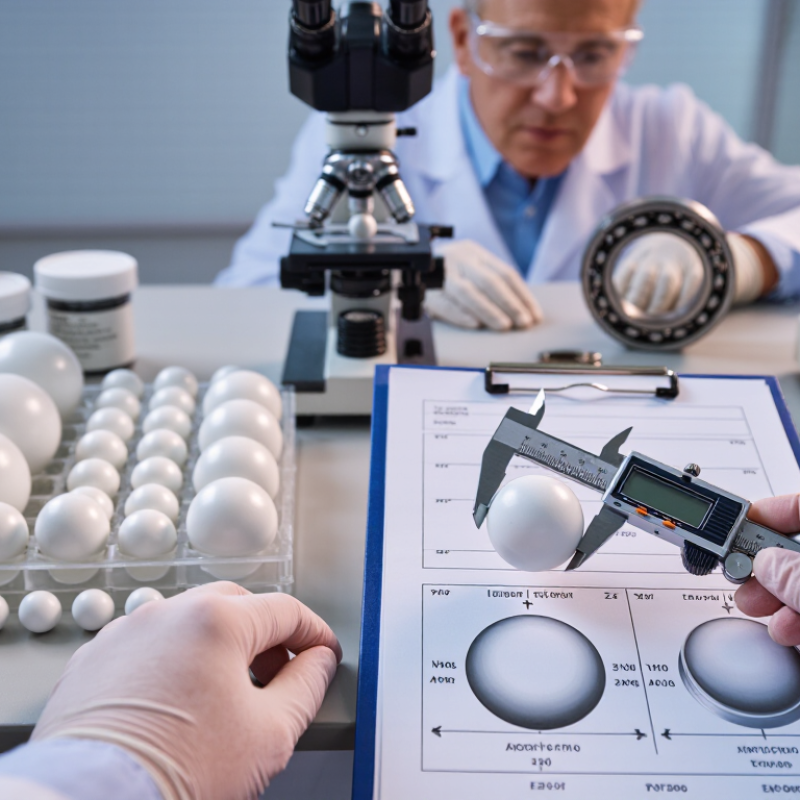
Request a sample lot before placing a large order. Measure diameter tolerance, sphericity, surface roughness, and visible defects. For milling applications, confirm contamination levels and compatibility with the processed material. For precision bearings, review roundness data and inspection methods. ISO-related documentation can help, but certificates should match the actual product batch. A generic certificate is not enough.

Experience also matters. A supplier who understands wet milling may not understand high-speed bearing applications. I would not assume that the lowest quotation creates the lowest total cost. Sometimes it creates more downtime, faster wear, and difficult replacement planning. Still, no supplier is perfect. Even strong manufacturers may offer incomplete application guidance. Treat that weakness as a reason to ask better questions, not as an immediate rejection.

This guide explains how to compare suppliers carefully, verify technical claims, and select a dependable Zirconia Ceramic Ball partner for your operating conditions.
How to Choose Zirconia Ceramic Ball Suppliers?

Define Zirconia Ceramic Ball Types and Performance Requirements

Choosing a zirconia ceramic ball supplier starts with defining the ball, not comparing prices. Common options include yttria-stabilized zirconia, ceria-stabilized zirconia, and alumina-toughened zirconia. Yttria-stabilized zirconia suits high-energy grinding because it combines high density, hardness, and wear resistance. Ceria-stabilized grades can offer better fracture resistance in some applications. The correct choice depends on mill speed, slurry chemistry, ball diameter, and contamination limits.

Performance requirements should be measurable. Request density, Vickers hardness, fracture toughness, roundness, diameter tolerance, and wear-rate data. Ask whether tests follow recognized methods, such as ASTM C1327 for hardness or ASTM C1421 for fracture toughness. ISO 13356:2015 provides useful reference requirements for yttria-stabilized zirconia materials, although it targets surgical ceramics. The USGS 2024 Mineral Commodity Summaries reported approximately 1.5 million metric tons of global zirconium mineral concentrate production in 2023. That large raw-material supply does not guarantee consistent ceramic quality. Batch traceability still matters.

Tips: Match ball density to your equipment’s energy needs. Confirm the smallest available size tolerance. Ask for a certificate of analysis, sample testing, and abrasion results using your actual slurry. Inspect chipped edges under magnification. A low quotation may look efficient, but hidden wear can contaminate products and increase downtime. I would not rely on polished marketing claims alone. Some supplier data is incomplete, and that should be treated as a warning, not a minor inconvenience.

Compare Supplier Manufacturing Capabilities and Quality Standards

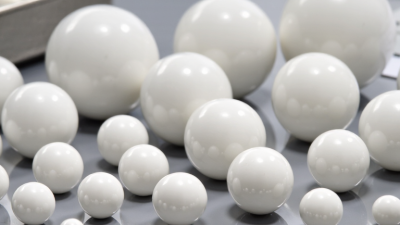
Choosing a zirconia ceramic ball supplier requires more than comparing price or catalog photos. Manufacturing capability should be checked at each stage, from powder preparation to final inspection. A capable supplier can explain zirconia powder purity, stabilizer content, forming method, sintering temperature, and shrinkage control. Ask for process records, not only certificates. The 2024 Grand View Research report valued the global advanced ceramics market at approximately USD 11.7 billion in 2023, with continued growth expected through 2030. This expansion increases capacity, but it does not guarantee consistent quality.

Quality standards must match the application. Request inspection data based on ISO 3290-2, including diameter tolerance, roundness, surface roughness, density, and crushing load. A reliable supplier should provide batch traceability, calibration records, and samples from different production lots. For example, inspect balls under magnification for edge chips, grey spots, or uneven polishing. These small defects can increase friction inside a valve or contaminate a grinding process. Supplier audits should also review furnace uniformity and rejected-ball handling. A 2023 industry analysis by Mordor Intelligence projected steady growth in the zirconia market, driven partly by precision engineering and medical applications. Growth can hide weak controls. A perfect test report may still represent only one batch, which is an uncomfortable limitation worth questioning. Ask for repeatability data across at least three batches.

Evaluate Material Purity, Precision, and Product Consistency

How to Choose Zirconia Ceramic Ball Suppliers?

Material purity should be verified, not assumed. Request batch-specific chemical results for zirconia, yttria, alumina, iron, and silica. ICP-OES or XRF testing can expose contamination hidden by a clean certificate. ISO 3290-2 provides a technical framework for ceramic ball diameter, form, and surface requirements. Ask whether the supplier tests against this standard or only uses internal specifications. In practice, I also compare raw powder records with the finished-lot certificate. The numbers should agree.

Precision requires more than a nominal diameter. Ask for measured diameter variation, roundness, surface roughness, and test temperature. NIST Technical Note 1297 recommends reporting measurement uncertainty with a stated coverage factor. A k=2 value generally represents approximately 95% coverage under normal distribution assumptions. That detail matters. Without uncertainty, a tolerance result may look more accurate than it is. Request the measuring instrument model, calibration date, and sampling plan.

Consistency is where suppliers often weaken. Review at least three consecutive lots, not one attractive sample. Check density, hardness, microstructure, and wear data across those lots. A stable supplier should provide traceability from powder mixing through sintering, grinding, cleaning, and packing. I prefer documented process capability, although a single Cpk value is never enough. Ask how rejected balls are controlled. Some suppliers disclose little here. That is a warning, but not absolute proof of poor quality. Conduct an independent incoming inspection before approving regular orders.

Review Customization, Packaging, Lead Times, and Technical Support

How to Choose Zirconia Ceramic Ball Suppliers?

A reliable supplier should discuss customization in measurable terms. Ask about diameter tolerance, roundness, surface roughness, density, and material grade. A serious technical team can read your drawings and suggest practical changes. For example, a tighter tolerance may improve performance but increase machining time. That trade-off matters. Do not accept vague claims such as “premium quality.” Request sample measurements, inspection records, and batch traceability. Small details often reveal real manufacturing experience.

Packaging deserves equal attention. Zirconia balls can be damaged by impact, contamination, or poor labeling during transport. Check whether the supplier uses sealed inner bags, rigid protective containers, and clear lot numbers. Ask how different sizes are separated. Mixed batches create unnecessary inspection work. It happens more often than expected.

Lead times should include sampling, production, inspection, and shipping. Ask for a written schedule instead of one attractive delivery date. A capable supplier should explain monthly capacity and possible delays. Technical support should remain available after the order leaves the factory. Look for prompt answers about installation, cleaning, wear, and application conditions. A shared test report helps both sides compare results. However, no supplier can predict every issue perfectly. Leave a reasonable buffer for revisions, because real projects rarely follow the first plan.

Assess Pricing, Certifications, Reputation, and Long-Term Reliability

How to Choose Zirconia Ceramic Ball Suppliers?

Price matters, but the cheapest quote can hide higher replacement costs. Compare delivered price, inspection fees, packaging, lead time, and rejected-lot policies. Request a sample lot before signing a volume contract. Check density, diameter tolerance, roundness, surface finish, and wear data. ISO 3290-2 provides dimensional requirements for ceramic balls used in rolling bearings. It should guide your checklist, not replace testing.

Certification needs careful reading. The 2023 ISO Survey recorded 1,265,216 ISO 9001 certificates worldwide. That figure shows quality certification is widespread, not that every zirconia ball meets your specification. Ask for the certificate scope, expiry date, audit body, and batch-level certificates of analysis. Useful evidence includes particle-size results, phase composition, hardness, and traceability from powder to finished balls. Some documents look impressive. They may still omit the critical test.

Reputation is built through repeatable performance. Contact two recent industrial customers and ask about dimensional consistency, corrective-action speed, and late shipments. A dependable supplier should explain production capacity, backup equipment, and storage controls. Review three years of quality records when possible. I have seen polished samples outperform later shipments, so one successful test is not enough. Long-term reliability deserves a small pilot order, quarterly reviews, and written acceptance criteria. The choice is imperfect, but measurable evidence reduces the guesswork. (Sources: ISO Survey 2023; ISO 3290-2.)