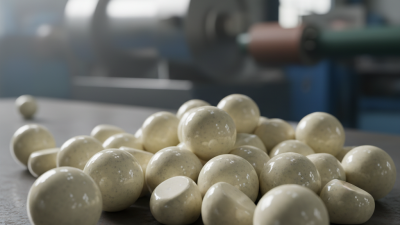
Global buyers often treat grinding media as a simple purchasing item. In practice, Zirconium Oxide Beads can strongly influence product quality, equipment life, and operating cost. A bead that performs well in a pigment mill may not suit battery materials, ceramics, or pharmaceutical processing. The correct choice depends on material hardness, viscosity, mill design, and required particle size. Small details matter.
Experienced procurement teams usually compare density, wear resistance, bead size distribution, roundness, and chemical stability. Higher density can improve grinding energy, but it may also increase stress on certain mills. Smaller beads can produce finer particles, although they may complicate separation and cleaning. Buyers should request technical data, batch traceability, safety information, and test samples before signing a large order. A polished surface and consistent dimensions can reduce bead breakage during continuous production.
Supplier claims still require careful review. Ask how quality is measured, not only what the brochure promises. Check inspection records, application experience, and customer references from comparable industries. Local service, packaging strength, export documentation, and replacement availability also affect the real purchase value. Some buyers focus too heavily on price. That can be a costly mistake. However, the most expensive grade is not automatically the best solution. Pilot testing remains essential because laboratory results may not fully reflect production conditions. Even experienced teams can overlook temperature changes, separator wear, or contamination risks. This guide explains how global buyers can compare Zirconium Oxide Beads with greater confidence, while recognizing that every application needs evidence, adjustment, and honest review.

Zirconium oxide beads are small ceramic grinding media made from stabilized zirconia. They are not ordinary glass beads. Their density commonly reaches 5.9–6.1 g/cm³, according to technical data reported for 3Y-TZP ceramics. This high density creates strong impact energy inside bead mills. Their low wear rate also helps reduce contamination in paints, inks, minerals, battery materials, and advanced ceramics. The USGS Mineral Commodity Summaries 2024 reported approximately 1.4 million metric tons of global zirconium mineral concentrate production in 2023. That figure describes raw mineral supply, not finished beads. Still, it shows why sourcing quality and material traceability deserve attention.
Global buyers should examine composition, density, bead size, roundness, and crushing strength. A narrow size distribution supports more stable milling. Smaller beads improve fine dispersion, while larger beads handle tougher feed materials. In practice, I check the certificate, then test a sample batch. Certificates can look perfect. Performance may still vary. Ask for batch identification, inspection methods, and wear-test conditions. Water-based processing may require different choices from solvent-based processing. Process temperature matters too. ISO 13356 provides useful reference points for zirconia ceramic quality, although it was not created specifically for grinding beads. A low quotation can hide inconsistent sizing or excessive wear. I have learned that “high purity” means little without measured data, testing conditions, and a clear acceptance standard.
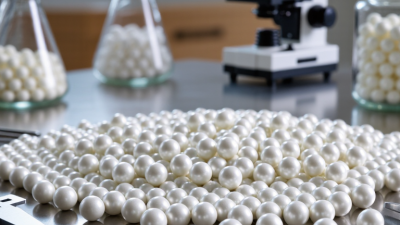
Choosing zirconium oxide beads starts with the material being processed, not the lowest quoted price. High-density yttria-stabilized zirconia beads suit demanding dispersion and fine grinding. Their hardness supports longer service in horizontal mills. They work well for ceramics, inks, coatings, and advanced mineral slurries. For less aggressive duty, ceria-stabilized beads can offer a practical balance between density, toughness, and cost. The right answer depends on the mill.
Particle size should match the target fineness and separator design. Beads around 0.1–0.3 mm help produce narrow particle distributions, but they require suitable screens and stable circulation. Larger beads, such as 0.6–1.0 mm, transfer stronger impact energy for coarser feed. Check bead roundness, density, crush strength, and polishing quality. A rough surface may increase wear and contaminate a light-colored product. Ask for batch certificates, dimensional tolerances, and test samples before approving a full shipment. Small details matter.
Temperature and chemistry also influence selection. Acidic, alkaline, or water-based systems can expose weaknesses that a short laboratory test misses. Compare wear loss, throughput, temperature rise, and final particle size under real operating conditions. Keep bead loading and milling time consistent during trials. Otherwise, the comparison becomes unreliable. Global buyers should also confirm packaging, moisture protection, traceability, and replacement availability. A perfect choice on paper may fail during transport or continuous production. That deserves honest review.
Bead size controls dispersion quality, flow, and grinding time. For laboratory dispersions, 0.1–0.3 mm beads provide more contact points and finer particle breakage. Larger beads, often 0.5–1.0 mm, can deliver stronger impact in high-viscosity systems. Check the size distribution, not only the advertised average. A wide distribution may increase contamination and reduce process consistency. Particle size reports from laser diffraction testing should state the D10, D50, and D90 values.
Density affects energy transfer inside the mill. High-density zirconia beads commonly measure about 5.8–6.1 g/cm³, while partially stabilized grades may vary slightly. Use true density and bulk density carefully; they are not interchangeable. Hardness is usually reported near 1,200–1,500 HV for engineering zirconia, but test conditions matter. ASTM C1327 provides a recognized method for ceramic Vickers hardness testing. Harder beads usually resist wear better, yet excessive hardness may damage sensitive equipment. Real results depend on mill speed, slurry viscosity, and bead loading.
Purity deserves closer inspection. Industrial grades may contain about 80–95% zirconium oxide, while high-purity grades often exceed 94% or 99%. Ask for chemical analysis, stabilizer content, and batch traceability. ISO 13356:2015 offers useful guidance on zirconia composition and phase stability, although it is not a bead-specific standard. The 2024 U.S. Geological Survey Mineral Commodity Summaries also highlights zirconium supply dependence and material variability. That point is easy to overlook. A higher purity number is not automatically better. Compare wear loss, crushing strength, and contamination results from actual trials.
Choosing zirconium oxide beads starts with the milling equipment, not the product catalogue. High-density beads usually range from 5.8 to 6.2 g/cm³, with Mohs hardness near 8. This supports efficient impact and wear resistance. However, a bead that is too large may leave coarse particles. A bead that is too small may block the separator. Equipment compatibility matters more than maximum hardness.
Check the mill’s chamber volume, separator gap, shaft speed, and pump capacity. For high-speed bead mills, 0.1–0.3 mm beads can support fine dispersion, but only when the separator is designed for them. Larger chambers and lower-speed systems often need 0.5–1.0 mm beads. A 2024 ceramic grinding media market analysis reported growing demand for fine-particle processing, with annual market growth estimated above 5%. That trend does not mean every plant should reduce bead size. Pilot testing remains essential. In real production, viscosity and temperature can change the result. This is where many purchasing decisions become imperfect.
Tips: Match the bead diameter to the separator opening. Keep the bead density close to the agitator’s design range. Measure outlet temperature during trials. If power rises but particle size stops improving, the bead size or filling rate may be wrong. One practical test is to compare wear loss after 8–24 hours, then inspect the slurry for contamination. The 2023 U.S. Department of Energy motor-systems guide also emphasizes monitoring load and operating efficiency, not only installed motor power. That principle applies here. A powerful mill can still be poorly matched.
Global buyers should check the bead’s zirconium oxide content, density, hardness, and manufacturing consistency before placing an order. Higher density usually improves grinding efficiency, but it may also increase equipment load. Ask for a recent technical data sheet, not an old standard file. The listed values should match the actual production batch.
Size selection needs practical attention. Small beads can improve fine grinding, while larger beads may handle tougher materials more effectively. Check diameter tolerance and roundness carefully.
Irregular beads can increase wear and reduce grinding stability. Request a representative sample and test it under your real operating conditions. Short trials reveal problems that laboratory claims may hide.
Contamination control is equally important. Ask how the beads are cleaned, packed, and protected during transport. Confirm packaging weight, moisture protection, batch identification, and inspection records. A supplier should provide clear quality certificates and explain its testing method.
Do not rely only on polished sales language. A perfect specification sheet can still miss a production weakness. I have found that buyers sometimes overlook bead breakage because initial pricing looks attractive. That decision can create unexpected replacement costs. Check delivery terms, lead time, export documents, and communication response before approval. Small details matter. Keep the first order controlled, recorded, and easy to compare with later batches.