Pingxiang Baitian New Materials Co., Ltd

Leave Your Message
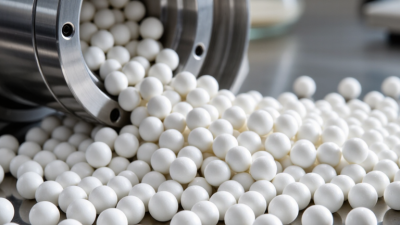
Zirconia Ceramic Ball performance depends on more than a polished surface. Purity, powder preparation, forming, and sintering all influence the finished ball. Small differences matter. A ball used in a precision bearing faces different demands from one used in a pump or grinding system. Buyers should compare the properties that fit their actual operating conditions, not rely on a single headline specification.
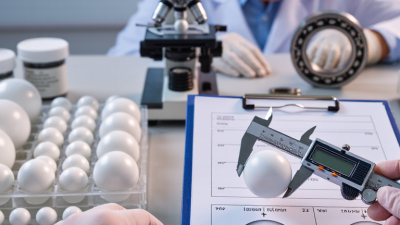
Ceramic-engineering author David W. Richerson’s work emphasizes the importance of composition, processing, and microstructure. Paraphrased as a practical reminder: “Ceramic performance begins with material and process control.” This is not a zirconia-ball buying rule by itself. It points to useful questions: How consistent are the batches? What inspection methods support the stated tolerances? Can the manufacturer provide traceable technical data? Clear answers matter.
This guide examines ten Zirconia Ceramic Ball manufacturers worldwide and the capabilities they present. It considers product range, manufacturing experience, quality practices, and application support. Details should still be verified directly with each supplier, since grades and specifications can vary. A ranking cannot replace testing under real operating conditions. That limitation deserves attention. Even a well-made ball may disappoint when its size, grade, or surface finish does not suit the equipment. The comparisons ahead are intended to help readers ask better questions, not to promise one universal best choice.
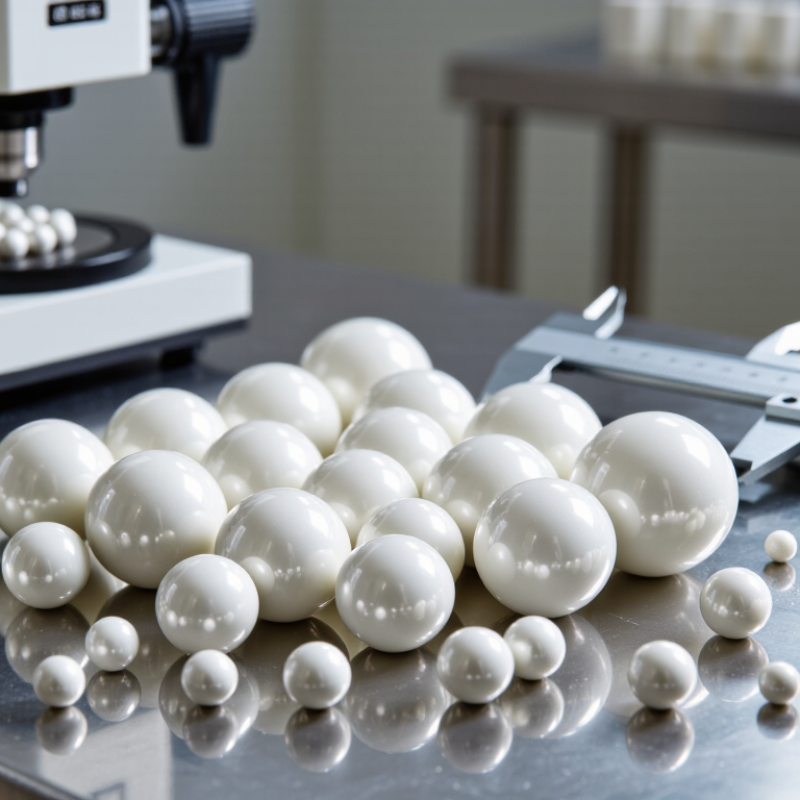
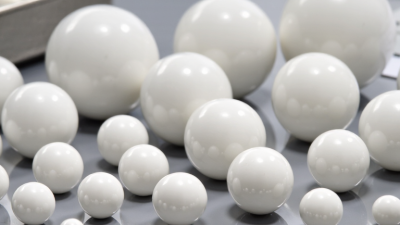
Zirconia ceramic balls are commonly made from zirconium dioxide, with yttria added to stabilize the crystal structure. A widely used grade, 3Y-TZP, contains about 3 mol% yttria. Typical technical data sheets report density near 6.0 g/cm³, Vickers hardness around 1,200–1,300 HV, and fracture toughness of roughly 6–10 MPa·m½. These are representative ranges, not guaranteed values. Processing and test methods matter.
The USGS Mineral Commodity Summaries 2024 estimates 2023 global zirconium-mineral-concentrate output at about 1.5 million metric tons. That figure describes upstream feedstock, not finished ceramic-ball production. In service, zirconia’s wear resistance and low contamination risk suit ball mills, bead mills, precision bearings, and valves. Tiny, but tough. A mill operator may notice the difference as less metal contamination in a slurry and slower ball wear. The trade-off is easy to overlook: zirconia is dense, and impact damage can still occur if balls collide sharply or equipment is poorly loaded. Even strong ceramics have limits.
Technical comparison: Company names and brand data are intentionally omitted. The entries below describe established zirconia-ball material characteristics and application profiles; they are not a verified manufacturer ranking. Actual specifications vary by grade and supplier.
| No. | Material or Application Profile | Typical Composition | Relevant Properties | Common Industrial Uses | Selection Considerations |
|---|---|---|---|---|---|
| 1 | Yttria-stabilized zirconia (Y-TZP) grinding media | Zirconium dioxide stabilized with yttria; 3 mol% yttria is a widely used technical-ceramic composition. | High hardness, wear resistance, and fracture toughness for a ceramic. Dense grades are commonly around 6.0 g/cm³; exact values depend on formulation and processing. | Wet and dry milling of ceramics, minerals, pigments, and other fine powders. | Choose ball diameter and media loading for the mill and target particle size. Check for possible zirconia contamination in sensitive products. |
| 2 | High-purity Y-TZP milling balls | Yttria-stabilized zirconia with controlled raw materials and low levels of unwanted impurities. | Combines high density with good wear resistance; purity and wear rate depend on the specific grade and manufacturing quality. | Fine grinding of electronic, optical, and advanced ceramic powders. | Request impurity and wear data when trace contamination could affect the final powder. |
| 3 | Y-TZP balls for pigment and coating dispersions | Typically yttria-stabilized zirconia; composition and surface finish vary by product. | High density supports effective impact and shear during milling; ceramic media avoid the rusting associated with steel media. | Dispersion and milling of paints, inks, coatings, and pigment concentrates. | Confirm chemical compatibility with the liquid, dispersants, and cleaning process. |
| 4 | Y-TZP balls for battery-material processing | Usually yttria-stabilized zirconia, selected according to the required wear and contamination limits. | Hard, dense media can support intensive powder processing; wear debris may introduce zirconium-containing contamination. | Laboratory and industrial milling of selected electrode and ceramic-electrolyte powders. | Assess contamination limits, milling atmosphere, and compatibility with the specific battery chemistry. |
| 5 | Precision Y-TZP bearing balls | Yttria-stabilized zirconia, finished to a specified diameter and sphericity. | Electrical insulation, corrosion resistance in many environments, and lower density than steel; performance depends on the bearing design and grade. | Corrosion-resistant, electrically insulating, or chemically demanding bearing assemblies. | Specify ball grade, diameter tolerance, roundness, surface finish, load, speed, and lubricant conditions. |
| 6 | Zirconia balls for valves and pump components | Commonly Y-TZP or another engineered zirconia grade selected for the service environment. | High hardness and resistance to wear; chemical resistance depends on the fluid, temperature, and zirconia formulation. | Selected check valves, metering systems, and wear-resistant fluid-handling components. | Verify compatibility with the process fluid, pressure, temperature, impact loading, and sealing design. |
| 7 | Y-TZP media for magnetic-material milling | Typically yttria-stabilized zirconia rather than ferromagnetic steel media. | Nonmetallic ceramic media can reduce iron pickup compared with steel media; media wear and contamination still need evaluation. | Milling selected ferrite and other magnetic powders. | Confirm that zirconium-bearing wear debris is acceptable for the magnetic material and its downstream process. |
| 8 | Small-diameter zirconia milling beads | Usually Y-TZP; available compositions depend on the bead manufacturer and intended process. | Small media provide a high contact area in suitable stirred-media mills; usable size depends on mill design and separation screens. | Fine dispersion and particle-size reduction in coatings, chemicals, and advanced materials. | Check bead-size distribution, separator compatibility, mill power, and the risk of bead breakage. |
| 9 | Large-diameter zirconia grinding balls | Often Y-TZP for demanding wear applications; other zirconia formulations may be offered for particular uses. | Larger balls deliver greater individual impact energy, while overall milling performance also depends on the mill and feed material. | Coarse or intermediate grinding in compatible milling equipment. | Match ball size and quantity to the mill, feed size, target fineness, and operating conditions. |
| 10 | Custom-grade zirconia balls for specialist processes | May use Y-TZP or another zirconia-based formulation; composition should be confirmed from the technical datasheet. | Properties such as density, hardness, toughness, and chemical behavior vary with stabilizer, additives, and processing. | Special-purpose milling, precision components, and process-specific wear applications. | Request a datasheet and verify composition, dimensional tolerances, surface finish, test methods, and application-specific compatibility. |