Why Choose Micro Zirconia Balls?
Why choose a Micro Zirconia Ball for demanding grinding and dispersion processes? The answer begins with control. These small ceramic media can create more contact points inside a bead mill. That contact helps process engineers produce finer particle sizes with consistent energy transfer. In practical trials, operators often notice smoother circulation and fewer visible metallic traces. The result can matter when product purity and surface quality affect customer acceptance.
Micro zirconia media also offer high density, strong wear resistance, and chemical stability. These properties support applications involving pigments, ceramics, coatings, electronic materials, and advanced composites. A well-selected Micro Zirconia Ball can reduce contamination risks compared with some steel alternatives. However, performance depends on more than material alone. Bead diameter, mill speed, slurry viscosity, filling ratio, and separator design must work together. Small details matter. A poorly matched size can reduce throughput or increase operating costs.
Reliable selection requires evidence, not attractive specifications. Engineers should review wear data, crush strength, density, and dimensional consistency. They should also test the media under real production conditions. Measuring particle size, temperature, energy use, and contamination provides a clearer comparison. It is easy to overstate zirconia’s advantages. No bead performs perfectly in every formulation. Some systems may need a different size or ceramic composition. Careful testing remains essential. This balanced approach helps manufacturers choose micro zirconia media with greater confidence, while recognizing that equipment design and process discipline strongly influence the final result.
What Are Micro Zirconia Balls?
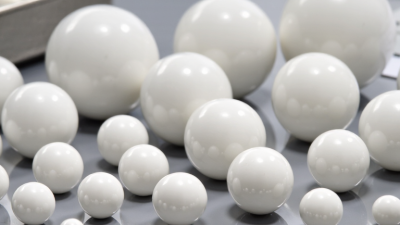
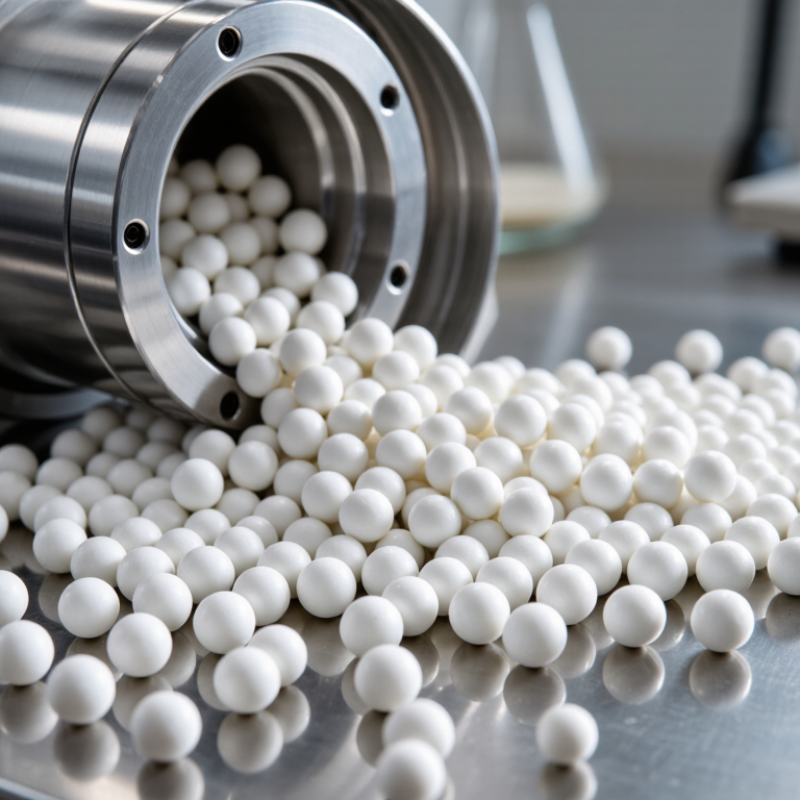
Micro zirconia balls are small spherical media made from zirconium dioxide, often stabilized with yttria to improve toughness. They are used in fine grinding, dispersion, and mixing, where consistent bead size helps create repeatable contact between particles. “Micro” describes their scale, not one universal diameter; actual sizes depend on the process and equipment. Small details matter.
Their appeal comes from a combination of hardness, density, and wear resistance. The ASM Handbook’s ceramic property data place dense zirconia near 6.0 g/cm³, while reported Vickers hardness commonly approaches 1,200 HV; exact values vary with composition and test method. These figures help explain why zirconia media can transfer substantial milling energy while resisting surface wear. ISO 13356:2020 also specifies requirements for zirconia-based ceramic materials, although it addresses implant materials rather than milling balls. That distinction is easy to miss.
In practice, bead size should match the target particle size, mill design, and slurry conditions. Smaller balls provide more contact points, but they may be harder to separate from a finished product. Check the supplier’s size tolerance, surface finish, and batch documentation, then confirm performance with a controlled trial. A published hardness figure alone cannot predict wear in every application. That deserves a second look.
How Are Micro Zirconia Balls Made?
How Are Micro Zirconia Balls Made?
Micro zirconia balls begin as carefully prepared ceramic powder, not as tiny stones.
The powder is blended with stabilizers and processing aids to help control strength and consistency. Moisture and particle size matter. Small variations can affect how evenly the material forms and shrinks.
The mixture is shaped into small blanks, often by pressing or granulation followed by forming.
These blanks are then heated in a controlled kiln. During sintering, the particles bond and the pieces become dense, hard ceramic. They also shrink. That change must be anticipated, though it is not always perfectly uniform. This is where careful process control earns its keep.
After firing, the balls are ground and polished in stages to reach the required diameter and surface finish.
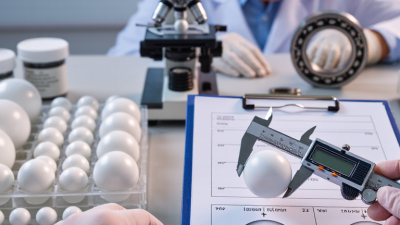
For very small sizes, even slight differences can affect how smoothly balls move through a bearing or other assembly. So they are sorted and inspected for size, roundness, and visible defects. Measurement methods vary by specification, and no single inspection tells the whole story. A smooth surface helps, but consistency across a batch matters just as much. The final result is a compact ceramic component designed for demanding motion and wear conditions.
Where Are Micro Zirconia Balls Commonly Used?
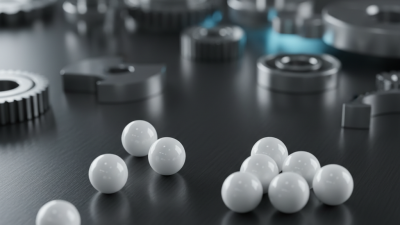
Micro zirconia balls are commonly used in bead mills, laboratory grinders, and precision dispersion equipment. Their high hardness supports efficient particle reduction with relatively low wear. This matters when processing ceramic powders, pigments, coatings, inks, and advanced electronic materials. Their compact size helps produce finer, more uniform mixtures. In practice, operators often choose them for demanding wet-milling applications where contamination must remain controlled.
They also appear in pharmaceutical, cosmetic, and chemical processing, especially when consistent particle size affects product performance. A small grinding chamber may use micro beads to improve circulation and contact between materials. However, zirconia balls are not a perfect solution. Incorrect bead size, excessive speed, or poor temperature control can reduce efficiency. I have found that process results depend as much on equipment settings as on bead quality. That detail is easy to overlook.
Tips: Match bead diameter to the starting particle size and mill design. Check density, wear data, and chemical compatibility before production. Run a small trial first. Inspect the slurry for unexpected discoloration or residue. Replace damaged beads promptly, but avoid changing the entire batch without reviewing the cause. Careful records can reveal patterns that a single test may miss.
How Should Micro Zirconia Balls Be Selected?
Why Choose Micro Zirconia Balls?
How Should Micro Zirconia Balls Be Selected?
Micro zirconia balls can support fine grinding, stable dispersion, and reduced product contamination. Their high density transfers strong impact energy into small particles. Their hardness also helps maintain a consistent grinding surface during extended operation. However, performance depends on choosing the correct size, quality, and process conditions.
Start with the target particle size. Smaller balls usually improve fine grinding, but they may reduce flow through narrow screens or separators. A practical trial should compare several sizes under the same speed, filling rate, and grinding time. For example, a 0.3 mm ball may suit a fine dispersion process, while a larger ball may work better for tougher feed materials. The best choice is not always the smallest one.
Check zirconia purity and density carefully. Higher purity can reduce unwanted contamination in sensitive materials, including coatings, ceramics, and electronic slurries. Inspect roundness, surface smoothness, and size consistency. Irregular balls create uneven contact and may increase wear on the mill chamber. Clean the beads before use, and measure wear after a defined production cycle.
Viscosity matters too. A thick slurry may require different bead loading and agitator settings than a thin liquid. I have seen efficient beads perform poorly when the filling level was copied from another formulation. That mistake is easy to make. Selection should include laboratory testing, wear monitoring, and a realistic cost review. Micro zirconia balls are precise tools, not universal solutions.