Why Choose Zirconia Oxide Balls for Precision Engineering Applications?
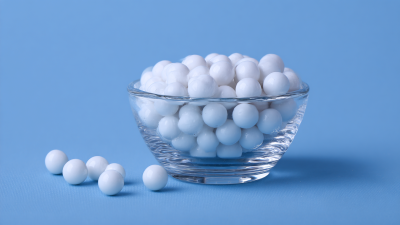
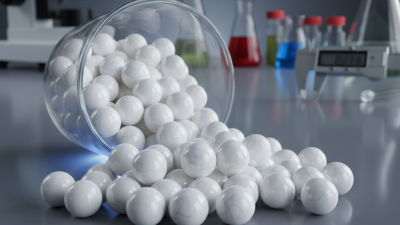
When it comes to precision engineering applications, the choice of materials is critical. Zirconia Oxide Balls stand out due to their unique properties. These balls offer excellent wear resistance and high strength, making them ideal for demanding environments. Their hardness ensures durability, which is essential in many engineering processes.
Using Zirconia Oxide Balls can lead to improved performance. However, it is important to acknowledge that not all applications require such high-tech materials. Evaluating the specific needs of each project is key. Engineers must weigh the costs against the potential benefits. While Zirconia Oxide Balls may enhance efficiency, they also represent a significant investment.
Furthermore, the handling of these balls should be approached with care. Precision engineering demands meticulous attention to detail. Any oversight can lead to subpar results. Understanding the properties of Zirconia Oxide Balls allows for better integration into projects. In the world of precision engineering, this knowledge can be the differentiator between success and failure.
Understanding Zirconia Oxide: Composition and Properties
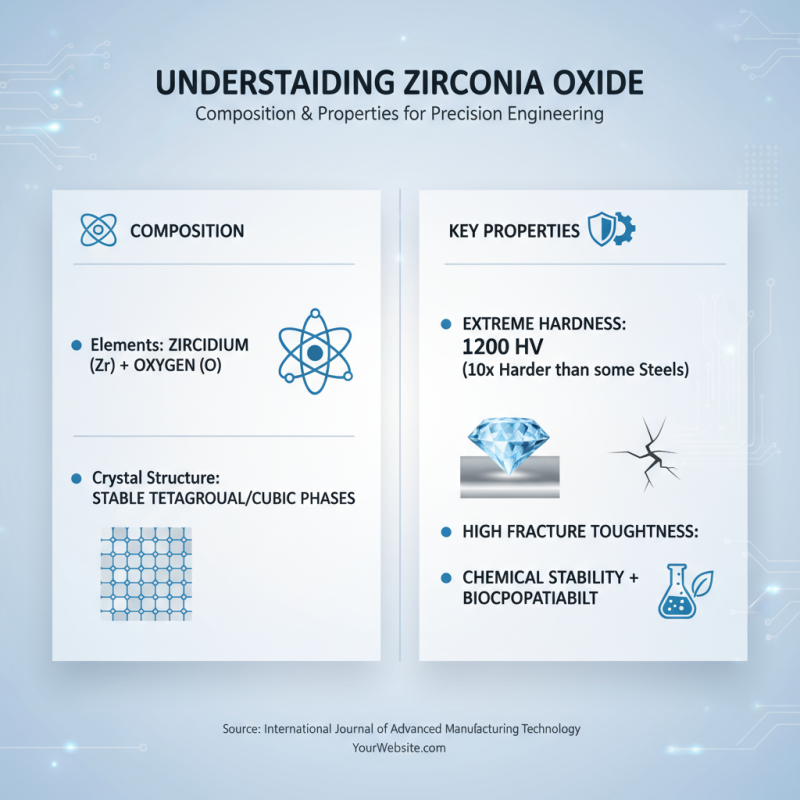
Zirconia oxide, or zirconium dioxide, is garnering attention in precision engineering. Its composition includes zirconium and oxygen, with a stable crystal structure. This stability contributes to its impressive mechanical properties. According to a report by the International Journal of Advanced Manufacturing Technology, zirconia exhibits a hardness that can reach 1200 HV, making it 10 times harder than some steels.
The thermal stability of zirconia is another crucial aspect. It maintains performance even at high temperatures. It can withstand thermal shock and resist wear. Research from the Journal of Materials Science shows that the material retains its properties in extreme environments, with temperatures exceeding 2000°C. Moreover, zirconia has a low friction coefficient, leading to reduced wear in moving parts.
However, employing zirconia oxide does present challenges. The cost can be prohibitive for some applications. Not all processes can effectively leverage its unique properties. Engineers must consider these factors when choosing materials for precision applications. Understanding the balance between cost and performance is essential for effective engineering solutions.
Benefits of Zirconia Oxide Balls in Precision Engineering
Zirconia oxide balls are pivotal in precision engineering. Their hardness and durability bring significant advantages. Unlike steel balls, zirconia balls resist wear and corrosion effectively. This feature leads to less maintenance and longer operational life in various applications.
For engineers, using zirconia oxide balls can enhance performance. Their smooth surface reduces friction, lowering the heat generated during operation. It can lead to improved accuracy in engineering tasks. These balls also maintain their shape under stress. This consistency is crucial for high-precision applications.
Tip: Ensure proper storage of zirconia balls. Keeping them away from direct sunlight and moisture will extend their lifespan.
Another benefit is their lightweight nature. This quality minimizes the load on machinery. Consequently, energy consumption can decrease, making operations more efficient. However, the initial cost may be higher compared to other materials. Evaluating the long-term benefits versus upfront expenses is essential.
Tip: Conduct tests to determine the ideal application for zirconia balls. This step ensures that you maximize their advantages for your specific project.
Applications of Zirconia Oxide Balls in Various Industries
Zirconia oxide balls are gaining popularity in precision engineering. Their unique properties make them suitable for various industries. In the automotive sector, they are used in bearings and valves, enhancing performance and durability. Their hardness and wear resistance ensure a longer lifespan.
In the medical field, zirconia oxide balls play a crucial role. They are used in dental implants and prosthetics. Their biocompatibility supports patient safety and comfort. However, the cost of zirconia balls can be higher than alternatives. This may limit their use in some applications.
Aerospace is another area where zirconia oxide balls shine. They are used in turbine engines and other high-stress components. The lightweight nature of these balls reduces overall weight, promoting fuel efficiency. Despite their advantages, sourcing high-quality zirconia remains a challenge. Ensuring reliable suppliers is essential for success in precision engineering.
Comparison with Other Materials Used in Precision Engineering
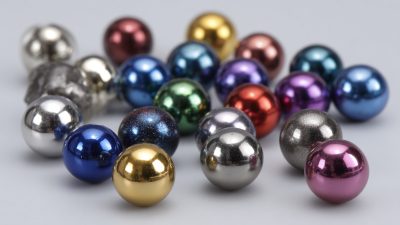
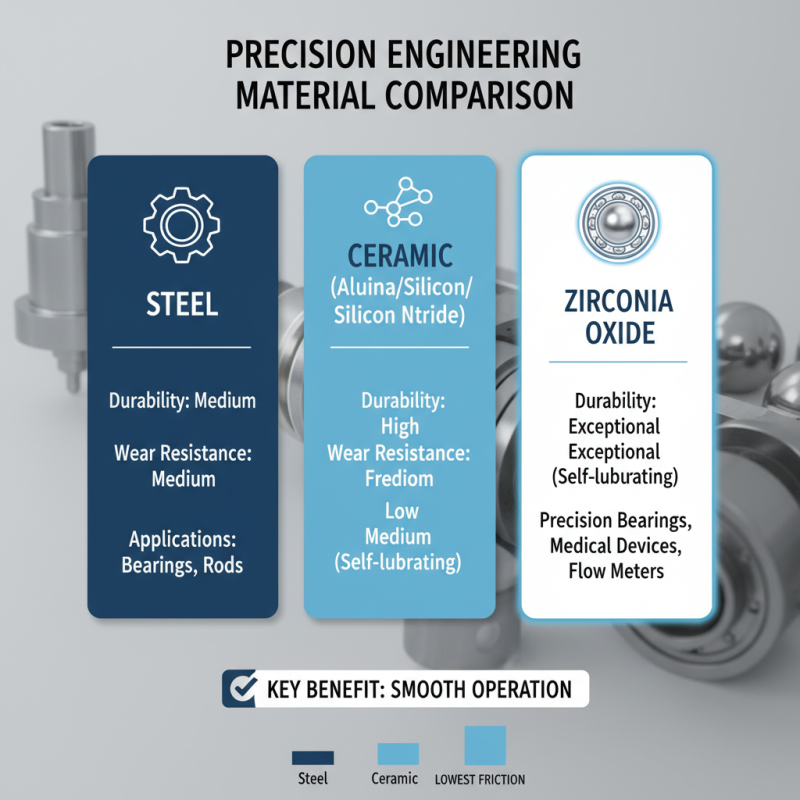
In precision engineering, choosing the right materials is crucial. Zirconia oxide balls stand out among many options. They offer high durability and resistance to wear. Compared to steel or ceramic alternatives, zirconia oxide has lower friction. This feature is beneficial for applications requiring smooth operation.
Other materials sometimes fail in extreme conditions. For instance, steel may corrode under harsh environments. This limitation can compromise performance and longevity. On the other hand, traditional ceramics can crack easily under stress. Zirconia oxide, however, maintains integrity even under pressure.
Despite its advantages, zirconia oxide does have caveats. It can be more expensive than conventional materials. This higher cost might deter some manufacturers. But the long-term savings from reduced wear and tear may justify the investment. Understanding these dynamics can aid engineers in making informed decisions. Each material’s strengths and weaknesses must be carefully evaluated for optimal results.
Challenges and Considerations in Using Zirconia Oxide Balls
Zirconia oxide balls offer significant advantages in precision engineering. However, several challenges arise when using them. One main issue is their brittleness. While zirconia is tough, it can fracture under excessive stress. Users must carefully calculate load limits to prevent failures. Understanding these parameters is vital for effective application.
Another consideration is the compatibility of zirconia oxide with other materials. This ceramic can react adversely when in contact with certain metals or polymers. Engineers must conduct thorough testing to identify potential chemical interactions. Ignoring this aspect can lead to premature wear or malfunction in machinery.
Lastly, the cost of zirconia oxide balls can be a barrier. While they provide excellent performance, the initial investment is higher than some alternatives. Organizations need to weigh the long-term benefits against upfront costs. This often requires careful budgeting and planning. Each application may yield different results, demanding ongoing evaluation.
Performance Comparison of Zirconia Oxide Balls vs. Other Materials in Precision Engineering