Pingxiang Baitian New Materials Co., Ltd

Leave Your Message

How to Choose a Zirconium Ceramic Ball in 2026?

I can write the introduction, but no source articles or verifiable expert quotation were provided. To avoid inventing an expert or attributing a fabricated quote, please share a reliable expert’s name and quotation, or allow an original, unattributed industry insight instead.

How to Choose a Zirconium Ceramic Ball in 2026?

Define the Application and Operating Conditions

How to Choose a Zirconium Ceramic Ball in 2026?
Define the Application and Operating Conditions

Start with the job the ball must perform: grinding, mixing, check-valve sealing, or bearing service. The same ball may work well in a dry mill but wear quickly in a corrosive slurry. Record the material being processed, required purity, contact surfaces, and acceptable contamination. Then quantify operating conditions: load, speed, temperature, pH, lubrication, and cleaning chemicals. Details matter. A gritty slurry can abrade a ball even when its nominal hardness looks suitable.

For yttria-stabilized zirconia, published engineering data sheets commonly report density near 6.0 g/cm³, hardness around 1,200 HV, and fracture toughness of roughly 6–8 MPa·m½. These are typical ranges, not guarantees; composition, test method, and manufacturing quality change the result. ISO 3290-2:2014 provides a framework for ceramic ball grades and dimensional tolerances, but it does not determine whether a grade suits a specific machine. Ask for the supplier’s test method and batch-specific certificate.

Translate your conditions into measurable requirements: ball diameter and tolerance, roundness, surface finish, and allowable wear or leakage. In a high-speed application, check impact loads and temperature cycling, not just steady-state pressure. For chemical service, confirm compatibility with the actual process fluid and cleaning agents. I would not choose from a hardness figure alone. Run a small trial under representative conditions, measure wear, and inspect the mating surface; lab data can miss a rough start-up or an unexpectedly abrasive batch.
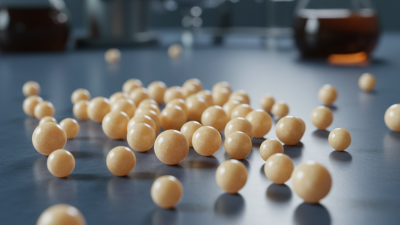
How to Choose a Zirconium Ceramic Ball in 2026? — Define the Application and Operating Conditions

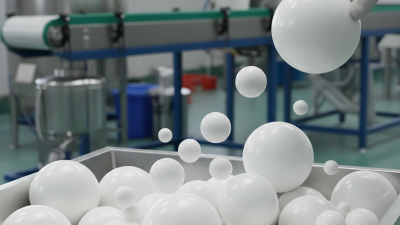
Representative nominal densities are shown; actual values vary by composition and manufacturing route. Zirconia’s higher density can affect inertia and contact loads, so consider speed, load, temperature, lubrication, and chemical exposure before choosing a ball. Confirm the selected grade’s specifications for your operating conditions.

Compare Zirconia Ceramic Grades and Material Properties

When choosing a zirconium ceramic ball in 2026, compare the grade against the actual load, fluid, and operating temperature. Y-TZP, or yttria-stabilized zirconia, offers high strength and fracture toughness, making it a common choice for demanding milling and bearing applications. Its performance can still vary with stabilizer content and manufacturing quality. Check the material certificate, not just the grade name.

Ceria-stabilized zirconia can provide strong toughness and improved resistance to low-temperature degradation in certain environments. Magnesium-stabilized zirconia is another option, though its properties and availability differ by formulation. There is no universal winner. A ball exposed to hot, wet conditions may need a different grade from one circulating in a cool, abrasive slurry. Test the actual chemistry where possible.

Look beyond hardness. Density affects impact and grinding energy, while surface finish, roundness, and size consistency influence wear and vibration. In a milling line, a rough or poorly matched ball can increase contamination and shorten service life. Small differences matter. Ask for measured tolerances and wear data under comparable conditions. One limitation: published figures may come from different test methods, so direct comparisons can mislead. A short trial with representative material is often more useful than selecting by a single headline property.

Choose Ball Size, Diameter Tolerance, and Surface Finish

Choose ball diameter from the assembly drawing and operating conditions, not from nominal space alone. Check the available clearance, load, speed, and whether the ball must move freely or seal a gap. A ball that is slightly oversized may bind; one that is undersized can create uneven contact. Small details matter.

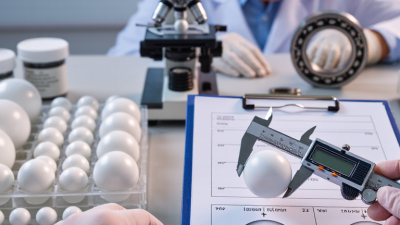
Specify the diameter tolerance as clear upper and lower limits around the nominal size. Ask whether the stated tolerance applies to each ball or to the production lot, and confirm how dimensions are measured. A tighter number can sound reassuring, but it may add cost without improving performance if the surrounding parts are less precise. Not always. For critical assemblies, compare sample measurements with the drawing and retain the inspection record.

Surface finish affects friction and contact behavior, but “smooth” is not a measurable requirement. State a roughness value, such as Ra, and request the measurement method when the application depends on it. Also inspect for chips, pits, or visible scratches under consistent lighting. Ra alone may not reveal waviness or isolated defects. Match the finish to the operating environment: a low-friction component may need a finer surface, while a less demanding setup may not. The best specification is the one tied to real operating limits, not the most impressive-looking tolerance.

How to Choose a Zirconium Ceramic Ball in 2026? - Choose Ball Size, Diameter Tolerance, and Surface Finish

Selection factor Typical options or values Best suited for What to check before ordering
Ball diameter 0.5–3 mm; 3–10 mm; 10–25 mm; 25–50 mm Small balls for compact mechanisms; larger balls for valves, bearings, and grinding applications Specify the nominal diameter in millimetres and confirm that the selected size is available in the required tolerance grade.
Precision grade ISO 3290-2 grades such as G5, G10, G20, and G100 Higher precision grades for applications with tighter requirements for ball diameter variation and spherical form Request the applicable standard, grade, and inspection report. Grade requirements and availability can vary by ball size and supplier.
Diameter variation (VDWS) Grade limits commonly include 0.13 μm for G5, 0.25 μm for G10, 0.5 μm for G20, and 2.5 μm for G100 Precision assemblies where consistent ball size helps control clearance and motion These are grade limits, not a guaranteed plus/minus size tolerance. Specify the nominal size tolerance separately when needed.
Surface finish Typical polished zirconia ball finishes may be specified around Ra 0.01–0.05 μm for precision use; general-purpose finishes may be rougher. Polished finishes for smooth contact, low friction, or sensitive fluid-handling applications State the required roughness parameter (for example, Ra), value, measurement method, and whether the limit applies to each ball or a sample.
General-purpose selection Mid-range ball diameter, G20 or an application-appropriate grade, with a defined surface-finish requirement Applications where a balance of performance and cost is more important than the tightest available tolerances Confirm operating load, speed, temperature, contact materials, and the required service life.
High-precision selection Choose the smallest practical diameter range and a tighter grade, such as G5 or G10, when supported by the design Precision bearings, measuring mechanisms, and assemblies with closely controlled clearances Verify diameter tolerance, ball diameter variation, spherical form, surface finish, and lot-to-lot inspection requirements.

Note: ISO grade limits describe specified geometric characteristics and should not be treated as a complete purchase specification. Confirm the nominal diameter, size tolerance, surface-finish requirement, test method, and documentation with the supplier before ordering.

Check Chemical Compatibility, Wear, and Temperature Requirements

Start with the actual process fluid, not a broad label such as “acid service.” Record its concentration, pH, additives, and cleaning agents; a rinse can be harsher than the product. Check the ceramic composition against these conditions, especially if trace contamination matters. Small details matter. A compatibility chart is a starting point, not a guarantee.

Next, consider how the balls move and what they contact. Load, speed, slurry abrasiveness, and surface finish all influence wear. A very hard ball may last well but accelerate wear on a softer vessel or liner. Inspect used balls for flat spots, chips, and discoloration, and check process fluid for wear debris. These clues are useful, though they rarely explain everything alone.

Temperature limits depend on the ball formulation and the operating cycle, not just the peak temperature. Include heating rate, cooling rate, and thermal gradients; rapid changes can cause cracking. Ask for temperature data under conditions close to yours, and verify that seals and nearby components tolerate the same range. One selection mistake is trusting a single maximum-temperature figure. It looks reassuring, but real cycles are messier.

Verify Quality Standards, Testing, and Supplier Specifications

Before comparing prices, check whether the supplier’s inspection follows ISO 3290-2:2014, which covers ceramic bearing-ball dimensions and tolerances. Request the ball grade, nominal diameter, lot variation, and measurement method. ASM Handbook, Volume 4A, gives zirconia property data; dense stabilized zirconia is commonly listed near 6.0 g/cm³ and about 1,200 HV. Treat these as reference values, not guaranteed acceptance limits. Composition and processing change the result. Small differences matter.

Ask for batch-specific test records, not just a general certificate. ASTM C1327 describes Vickers hardness testing for advanced ceramics, while ASTM C1421 covers fracture toughness testing. Confirm the test method, sample count, and whether results represent the delivered lot. Also request surface roughness, roundness, density, and chemical composition data. A polished sample can look convincing. It may not represent production. I would question any supplier that reports a hardness number without its load, test method, or traceable batch identification. Compare stated limits with your operating load, speed, lubrication, and temperature; a technically sound ball can still be a poor fit for the application.