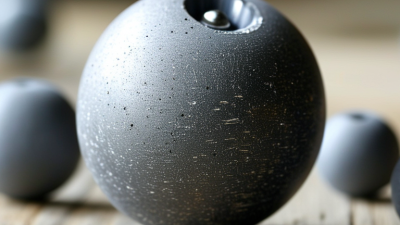
Choosing a 95% Zirconia Bead supplier involves more than comparing prices or browsing polished product photos. In milling rooms, bead size consistency can affect circulation, grinding efficiency, and the final particle-size distribution. Buyers should compare suppliers by checking stated zirconia content, size ranges, bulk density, wear data, packaging, and available technical documents. Small details matter.
This guide introduces ten suppliers for global buyers seeking 95% Zirconia Bead products. The profiles are intended as a practical starting point, not a blanket endorsement. Product specifications and service capabilities may differ by grade, factory, and destination, so confirm current details directly with each supplier. Ask for a recent certificate of analysis, sample availability, lead times, and guidance on matching bead size to the mill and material being processed. Where possible, compare sample performance under similar operating conditions rather than relying on one supplier’s test figures.
A neat ranking can hide important differences. One company may offer broader size options, while another may provide clearer documentation or more responsive technical support. Those distinctions are worth checking. This overview cannot replace independent testing or a careful supplier review, and its comparisons may need updating as product lines change. Use it to form focused questions, verify claims with documents, and identify suppliers that fit your process, order volume, and delivery requirements.
A 95% zirconia bead is typically formulated with about 95% zirconium dioxide and a stabilizing fraction, often yttria. Exact recipes can vary, so buyers should check the grade’s technical data sheet rather than infer composition from its name. Published technical data for this bead class commonly give a density near 6.0 g/cm³. That figure matters: denser media can deliver stronger impact in a given mill, but it may also increase equipment load and energy demand. Small differences matter.
Density should be measured, not assumed. ISO 18754:2020 describes methods for determining density in advanced technical ceramics, offering a useful reference when comparing reported values. The 6.0 g/cm³ figure is typical, not a guaranteed specification for every lot. Ask whether the reported value is bulk or material density, and request the test method and tolerance. Hardness, wear resistance, bead size, and surface finish also influence milling results. In practice, a bead that looks uniform in a sample jar may still perform unevenly if its size distribution is broad. Composition and density are a starting point, not the whole purchasing decision.

Selecting 95% zirconia beads means matching diameter to the feed, target fineness, and mill design. Published technical data sheets for this media commonly report density near 6.0 g/cm³ and hardness around 1,200 HV. Treat these as typical values, not guarantees; composition and test methods can differ. ISO 13320:2020 outlines laser diffraction methods for measuring particle-size distributions, helping operators verify whether a chosen bead size achieves the required result.
Beads from 0.1 to 0.3 mm often suit fine dispersions and narrow particle-size targets, but they need compatible mill gaps and effective separation. Sizes around 0.5 to 1.0 mm offer a practical middle range for many production tasks. Larger 1.0 to 3.0 mm beads can provide stronger impacts for coarser feeds or higher-viscosity batches. Smaller is not always better. Excessively fine media may increase heat or complicate separation, while oversized beads can leave fine particles under-processed.
Tips: Run a small trial before changing the full production load. Record bead size, mill speed, temperature, and particle-size results. Check wear and screen condition, too; these details are easy to overlook, and actual performance may not match a supplier’s typical data.
A useful comparison of ten 95% zirconia bead suppliers starts with product range, not headline capacity. Check available bead diameters, density, wear resistance, and whether each supplier provides batch-specific certificates. Fine beads suit narrow milling gaps; larger beads can handle coarser feed. A broad catalogue is valuable only when the required sizes are consistently available.
Capacity and market reach need careful reading. The USGS Mineral Commodity Summaries 2024 describes zircon supply as geographically concentrated, with Australia and South Africa among major producers. This upstream picture helps buyers assess supply-chain exposure, but it does not prove a bead supplier’s production volume. Ask for bead-specific monthly capacity, typical lead times, export destinations, and contingency stock. One detail is easy to miss: stated capacity may cover all ceramic products, not 95% zirconia beads alone. Compare like with like.
Tips: Request recent certificates of analysis and sample beads from the same production grade you plan to order. Check packaging, moisture protection, and delivery terms for your route. A polished datasheet helps, but actual wear-test results are more useful. Supplier rankings can look precise; available capacity and shipping performance may change.
Data transparency: Supplier identities have been withheld, so supplier-specific product ranges, production capacities, and market reach cannot be independently verified or attributed. The entries below are anonymized placeholders, not a verified ranking.
| Reference | 95% Zirconia Bead Product Range | Production Capacity | Market Reach | Verification Status |
|---|---|---|---|---|
| Supplier 01 | Not independently verifiable without supplier identity. | Not publicly attributable. | Not publicly attributable. | Anonymous placeholder; no supplier-specific data supplied. |
| Supplier 02 | Not independently verifiable without supplier identity. | Not publicly attributable. | Not publicly attributable. | Anonymous placeholder; no supplier-specific data supplied. |
| Supplier 03 | Not independently verifiable without supplier identity. | Not publicly attributable. | Not publicly attributable. | Anonymous placeholder; no supplier-specific data supplied. |
| Supplier 04 | Not independently verifiable without supplier identity. | Not publicly attributable. | Not publicly attributable. | Anonymous placeholder; no supplier-specific data supplied. |
| Supplier 05 | Not independently verifiable without supplier identity. | Not publicly attributable. | Not publicly attributable. | Anonymous placeholder; no supplier-specific data supplied. |
| Supplier 06 | Not independently verifiable without supplier identity. | Not publicly attributable. | Not publicly attributable. | Anonymous placeholder; no supplier-specific data supplied. |
| Supplier 07 | Not independently verifiable without supplier identity. | Not publicly attributable. | Not publicly attributable. | Anonymous placeholder; no supplier-specific data supplied. |
| Supplier 08 | Not independently verifiable without supplier identity. | Not publicly attributable. | Not publicly attributable. | Anonymous placeholder; no supplier-specific data supplied. |
| Supplier 09 | Not independently verifiable without supplier identity. | Not publicly attributable. | Not publicly attributable. | Anonymous placeholder; no supplier-specific data supplied. |
| Supplier 10 | Not independently verifiable without supplier identity. | Not publicly attributable. | Not publicly attributable. | Anonymous placeholder; no supplier-specific data supplied. |
A supplier’s “95% zirconia” claim needs supporting data, not just a product-page number. Request a lot-specific certificate showing zirconia content, the test method, and the permitted tolerance. Ask whether the reported value is based on the finished beads or the raw powder. That detail can matter. Compare density in g/cm³ and confirm how it was measured, since trapped pores or inconsistent sampling may affect results.
Hardness figures also need context. Check the stated scale, test method, and sample preparation before comparing suppliers. A higher number alone does not guarantee longer service life. Wear data is more useful when the supplier provides test duration, mill type, slurry, bead size, and measured mass loss. For example, results from a short dry test may not predict performance in a wet milling line. Request recent, batch-linked reports where possible. Keep the records with your incoming inspection notes.
If figures vary between the certificate and the sales sheet, pause and ask for clarification. I would not treat a clean-looking table as proof by itself; paperwork can be incomplete, and tests differ. A small trial using your own feed material can reveal chipping, contamination, or unexpected wear. Record bead condition and milling results after a defined run. That takes time, but it gives buyers a more grounded comparison than a single headline specification.
For a 95% zirconia bead shortlist, match bead size and density to the mill, slurry, and target particle size. Ask suppliers for a lot-specific certificate of analysis, size distribution, bulk density, and wear-test method. A purity figure alone cannot predict contamination or service life. Check the paperwork. Confirm that any ISO 9001 certificate covers the manufacturing site and relevant processes, not merely an office.
The U.S. Geological Survey’s Mineral Commodity Summaries 2025 estimates global zirconium mineral-concentrate production at about 1.4 million metric tons in 2024. This is upstream material, not finished bead output, but it highlights why buyers should verify origin, stock status, and continuity plans. Request separate lead times for samples, production lots, and repeat orders. Then compare promised dates with shipment records and batch documentation.
Total cost includes more than the price per kilogram. Include freight, import handling, bead breakage, media replacement, and mill downtime. For example, a cheaper lot that wears quickly may raise cost per ton of finished product. Run a controlled trial using the buyer’s actual slurry and operating speed. Test the lot. One imperfect point: supplier wear figures may use different test conditions, so direct comparisons can mislead. Ask for the method, test duration, and raw results before ranking bids.