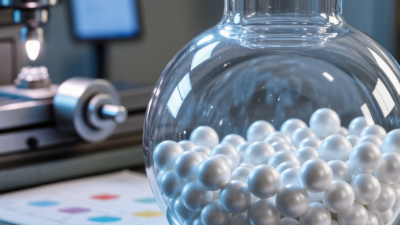
2026 Best Zirconia ZrO2 Beads for Global Buyers?
Choosing the right grinding media for 2026 requires more than comparing price per kilogram. Zirconia Zro2 Beads are engineered for high-energy milling, dispersion, and particle-size reduction. Their performance depends on zirconia purity, stabilizer content, density, hardness, bead diameter, and surface finish. In a laboratory jar, a 0.3 mm bead can improve fine dispersion. In an industrial mill, larger beads may deliver better impact energy and circulation.
Market evidence supports continued interest in advanced ceramic materials. Grand View Research’s 2024 Advanced Ceramics Market report identifies growing demand from electronics, chemicals, energy, and medical manufacturing. MarketsandMarkets also reports expanding applications for ceramic balls and grinding media, particularly where contamination control and wear resistance matter. These reports use different market definitions, so their forecasts should not be treated as identical. That detail is easy to overlook.
Supply reliability also deserves attention. The U.S. Geological Survey’s 2024 Mineral Commodity Summaries highlights the importance of zirconium mineral supply and global processing capacity. Buyers should therefore verify the producer’s raw-material controls, batch traceability, certificate of analysis, and export documentation. Ask for density, apparent porosity, crushing strength, wear-loss testing, and size tolerance.
Small details matter.
A practical evaluation should include a sample trial under real operating conditions. Record mill speed, slurry viscosity, feed hardness, temperature, and replacement frequency. Some suppliers publish impressive specifications but provide limited independent test evidence. That is a weakness worth questioning. The best 2026 choice may not be the cheapest bead. It should offer stable chemistry, consistent roundness, predictable wear, and dependable technical support across the complete purchasing cycle.

Zirconia ZrO2 Beads: Definition, Composition, and Core Properties
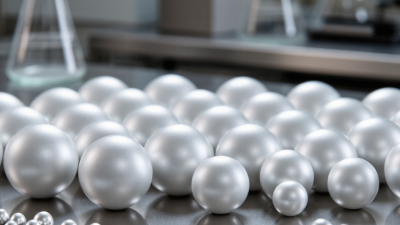
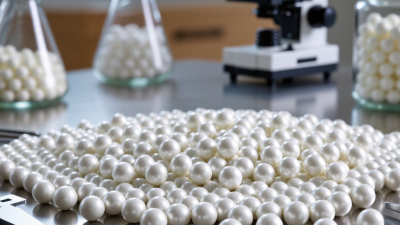
Zirconia ZrO2 beads are high-density grinding media made mainly from zirconium dioxide. Pure zirconia changes volume during cooling and can crack easily. Manufacturers therefore add stabilizers, commonly yttria, ceria, or magnesia. These additives control crystal phases and improve toughness. The exact composition affects performance, contamination risk, and price.
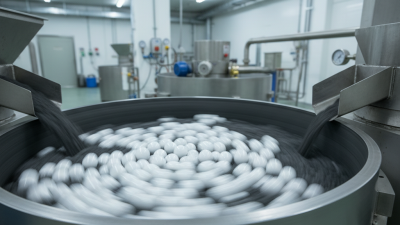
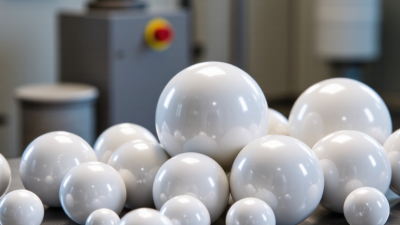
In practical milling trials, dense beads transfer strong impact energy into pigments, ceramics, minerals, and electronic powders. Their smooth, rounded surfaces reduce unwanted abrasion on the mill chamber. Zirconia also resists many chemicals and maintains hardness at demanding operating speeds. Typical technical checks include density, bead diameter, crushing strength, surface finish, and elemental purity. Small defects matter. A few irregular beads can increase wear and disturb particle-size control.
Reliable buyers should request a composition statement and independent test data before selecting a grade. Stabilizer content alone does not prove quality. Production method, firing temperature, internal porosity, and size tolerance also influence service life. I have found that trial results can differ between laboratories, even with similar specifications. Slurry viscosity, bead filling rate, and cooling conditions are easy to overlook. The best evaluation uses the buyer’s actual material, not only a catalog value. Some assumptions remain imperfect, especially when long-term wear data is unavailable.
How Zirconia Bead Grades Differ by Purity, Density, and Stabilizer
2026 Best Zirconia ZrO2 Beads for Global Buyers?
Zirconia bead grades differ mainly in purity, density, and stabilizer chemistry. High-purity zirconia reduces contamination during fine grinding. Dense beads transfer stronger impact energy. This often improves milling speed and particle-size control. However, higher density is not automatically better. It can increase equipment wear and energy use. A practical comparison should include bead density, crush strength, wear rate, and surface finish. Typical high-performance grades use yttria, ceria, or magnesia as stabilizers. Each choice changes toughness, hardness, and thermal behavior. Yttria-stabilized beads often support demanding submicron grinding. Ceria-stabilized grades may offer strong wear resistance in selected systems. Results still depend on slurry chemistry and mill settings.
Tips: Ask for a batch certificate, true density data, and contamination results. Request samples before placing a large order. Check bead roundness under magnification. Small shape defects can increase wear. Match bead size to the target particle size and separator design. Do not compare grades by purity alone. In one trial, a slightly less dense bead produced better total cost because it reduced chamber wear. That result was useful, but not universal. Re-test with your own materials, speed, temperature, and dispersant. Reliable suppliers should explain test methods, tolerances, packaging, and traceability clearly. A polished datasheet is not enough.
Quality Standards, Testing Methods, and Supplier Evaluation for Global Buyers
2026 Best Zirconia ZrO2 Beads for Global Buyers?
For global buyers, zirconia bead quality begins with consistent raw materials and controlled sintering. Ask for a documented specification covering zirconia content, density, bead size, roundness, and surface finish. High density supports efficient grinding, while smooth surfaces reduce contamination and equipment wear. Request lot-specific certificates, not only general brochures. Each certificate should show test methods, inspection dates, batch numbers, and traceability records.
Testing should combine laboratory data with practical trial results. Density can be checked through the Archimedes method. Particle size requires calibrated sieves or laser analysis. Microscopy helps reveal cracks, pores, and irregular edges. Wear testing should report media loss under defined time, speed, load, and slurry conditions. ISO-based procedures may improve comparability, but buyers must confirm the exact standard and revision. No test is perfect. A clean report can still miss unstable production between batches.
Tips:
Order representative samples from different lots. Run them in your actual mill, using the same speed, slurry, and processing time. Record bead loss, temperature, product contamination, and final particle size. Evaluate supplier reliability through factory audits, corrective-action records, response speed, and packaging controls. Sealed moisture-resistant bags, clear labels, and shock protection matter during long-distance transport. Be cautious when a supplier promises unusually low wear without raw data. Ask difficult questions. That habit often exposes weak quality systems.
2026 Purchasing Guide: Pricing, Logistics, and Import Considerations
2026 Best Zirconia ZrO2 Beads for Global Buyers?
2026 Purchasing Guide: Pricing, Logistics, and Import Considerations
Zirconia ZrO2 bead prices depend on density, yttria content, size tolerance, polishing quality, and order volume. Public reports rarely publish reliable bead prices, so buyers should request comparable quotations. The USGS Mineral Commodity Summaries 2025 identifies zirconium mineral concentrates as a major upstream material. However, concentrate prices do not equal finished bead costs. Processing, firing energy, inspection, and packaging can change the final offer significantly.
Ask suppliers for recent batch data. Useful records include bulk density, true density, crushing strength, wear loss, and particle-size distribution. A 0.1-millimeter bead needs tighter screening than a 3-millimeter bead. Small variations can affect milling efficiency and contamination levels. Pricing must include testing charges, export packing, insurance, and destination handling. Cheap offers can become expensive later.
Logistics need careful planning. UNCTAD’s Review of Maritime Transport 2024 notes that maritime shipping carries over 80% of global merchandise trade, while route disruptions can increase transit uncertainty. Buyers should compare FOB, CIF, and DDP terms carefully. Import documents may require commercial invoices, packing lists, certificates of origin, and safety information. Tariff classification also varies by jurisdiction. Confirm it with a licensed customs broker. I would not rely only on a supplier’s estimate. A pilot shipment, sealed samples, and independent inspection are safer, although they add time and cost.
2026 Best Zirconia ZrO₂ Beads for Global Buyers
Typical technical density ranges by zirconia stabilizer type. Higher density generally improves impact energy during wet or dry milling, while the final choice should also consider bead size, wear rate, contamination limits, and equipment compatibility.
Procurement note: Fully stabilized zirconia beads commonly fall near 5.8–6.2 g/cm³, depending on stabilizer chemistry, composition, and manufacturing process. Delivered cost should be evaluated together with bead size, packaging weight, shipping mode, customs classification, import duties, and local compliance requirements. The ranges shown are technical planning benchmarks, not supplier quotations.