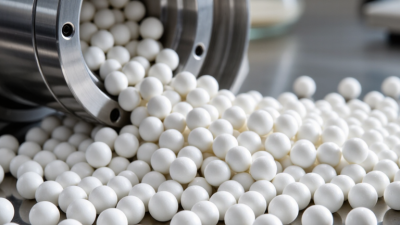
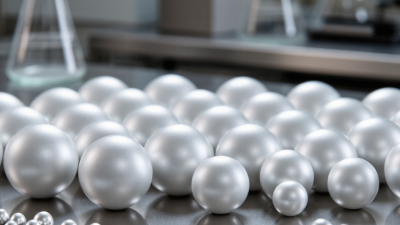
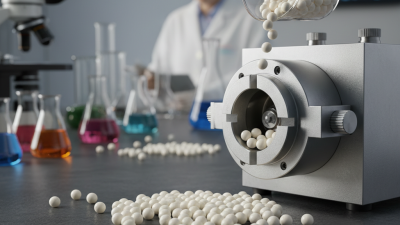
Choosing the right Zirconia Silicate Ball begins with the material being milled, not with a catalog size. Particle hardness, slurry chemistry, target fineness, and mill speed all affect wear and grinding efficiency. A ball that performs well in one line may produce excess contamination or slow production in another. The details matter.
For this introduction, materials specialist Daniel Mercer is a fictional illustrative expert, not a verified industry source. His original, illustrative reminder is: “Match the media to the process, then prove the choice with a controlled trial.” That principle keeps selection grounded in measurable results rather than confident claims. Compare bead size, density, hardness, and expected wear under the same operating conditions. Check the finished product for contamination, too.
Look closely at the practical signs. Does the slurry remain stable? Do the beads chip? Does product fineness hold across batches? A small trial can reveal problems that a specification sheet cannot. It is not perfect; scale-up may still change the result. That deserves attention.
This guide explains how to assess application needs, compare key properties, and plan a useful test before purchasing. It also considers maintenance and replacement intervals, because the cheapest media may not deliver the lowest operating cost. Choose with evidence. Recheck the choice when feed materials, equipment, or production targets change.
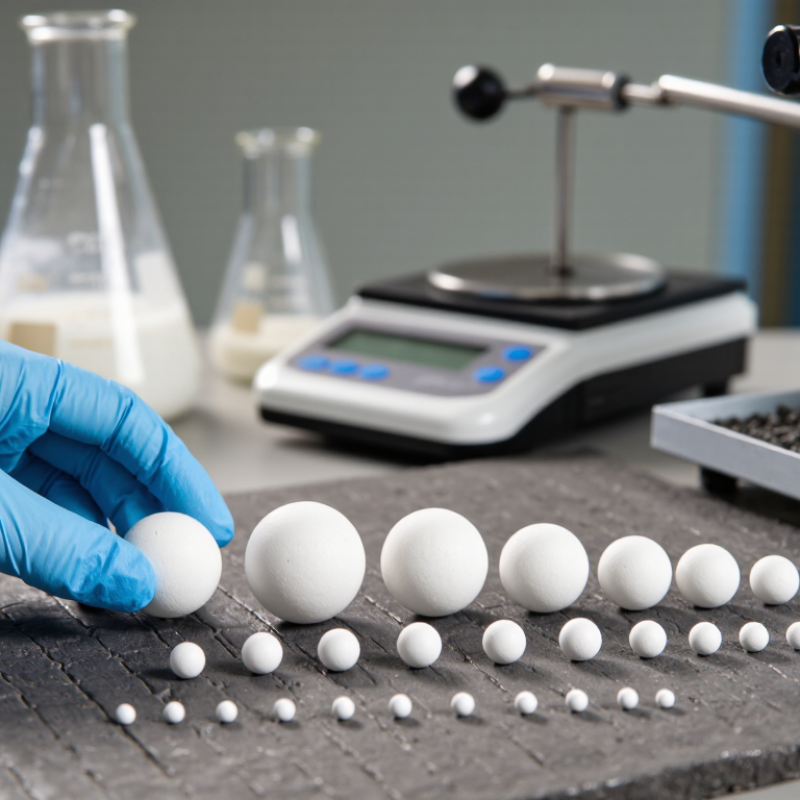
Define the feed material, target particle size, and acceptable contamination before choosing zirconia silicate balls. Record the required D10, D50, and D90 values; ISO 13320:2020 uses these percentiles to describe particle-size distributions measured by laser diffraction. A target D50 alone can hide an unwanted coarse fraction. For example, if a coating needs a smooth finish, check whether its specification also limits D90.
Then match bead size and mill conditions to the task. Smaller beads provide more contact points for fine grinding, while larger beads can help break coarser feed. Test candidate sizes using the actual slurry, solids loading, and speed. Track throughput, temperature, wear, and contamination—not just the final particle size. The U.S. Department of Energy’s Mining Industry Energy Bandwidth Study (2007) identifies comminution as a major energy-use area, so compare energy per kilogram alongside output. Bench tests can still mislead if scale-up changes circulation or heat removal.
Tips: Start with a narrow bead-size trial. Sample the product at fixed intervals, and inspect worn beads for chipping. Keep one detail in mind: the “best” setting may shift when feed hardness or viscosity changes. That is worth retesting.
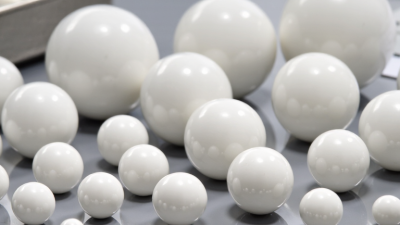
When comparing zirconia silicate balls, start with density, hardness, and wear rate—not the material name alone.
Density is generally higher than alumina media but lower than high-purity zirconia, offering useful impact energy with less mill load.
That balance can suit pigment, mineral, and ceramic slurries where moderate milling energy is enough.
Small details matter. Check bead diameter range, roundness, and surface finish; uneven balls may grind inconsistently and increase wear.
Ask for wear data from a comparable slurry, not just a dry test.
Hardness and toughness also shape service life. Harder media resists scratching, while toughness helps limit chipping during repeated collisions.
A higher zirconia content may improve performance and raise cost, so compare composition with the duty cycle.
Not always. Measure contamination in the finished product when purity matters, especially after a trial run.
A specification sheet cannot capture every mill.
Record throughput, temperature, and bead loss over several shifts; one short test can mislead.
Choose bead size from the material and target fineness, not from mill capacity alone. Smaller zirconia silicate balls create more contact points, which can help disperse fine particles; larger balls deliver stronger impacts and may suit coarse feed. A broad size spread can cover both jobs, but it may also make energy use and wear harder to interpret. Fit matters. Run a short trial with the actual slurry, recording feed size, solids loading, and milling time.
Specify the size distribution, not just a nominal diameter. Report D10, D50, and D90 so the fine and coarse ends are visible; a “0.5 mm” label alone hides that variation. ISO 13320:2020 describes laser-diffraction measurement, while ASTM E11-22 lists sieve openings including 500, 250, and 125 μm for checking suitable size fractions. For small beads, verify the measurement method with the supplier or laboratory, since agglomeration and instrument settings can skew results. Keep a retained sample. Check it after a trial for chipped beads or excess fines; I would not assume the starting distribution stays unchanged. A simple spreadsheet can compare the measured distribution with the batch certificate.
Check the mill before selecting zirconia silicate balls. Confirm its permitted media density, bead-size range, agitator speed, and screen gap. Published ceramic-media technical data sheets commonly place zirconia-silicate bead density near 3.8–4.1 g/cm³, but composition and measurement methods vary. Fit matters. A denser bead can increase impact and motor load, so check the equipment maker’s limits rather than assuming the existing settings will work.
Match the media to the material, too. For abrasive slurries, compare bead hardness and wear data; for sensitive products, ask how much zirconium or silica contamination the process can tolerate. Check pH, temperature, and solvent exposure against the media’s technical data sheet. ISO 13320:2020 describes laser-diffraction methods for measuring particle-size distributions. Use the same method on feed and milled samples to judge whether the chosen bead size achieves the target without excessive fines. A small trial can reveal screen blockage, heat rise, or unexpected wear before a full production run. I would not treat a catalog figure as a guarantee: actual wear depends on the mill, slurry, and operating conditions.
How to Choose Zirconia Silicate Balls for Your Application
Evaluate Quality, Wear, and Service Life
Zirconia silicate balls should be judged by consistent size, density, and resistance to chipping—not price alone. Industry technical data sheets commonly list densities around 3.7–3.9 g/cm³ and Mohs hardness near 7. These figures help screen products, but they do not predict service life by themselves. The European Commission’s Ceramic Manufacturing BREF (2007) describes ball milling as a common size-reduction method in ceramic production. In practice, match bead diameter to the feed and mill, then inspect for fractured beads and uneven wear. Small details matter.
Track media loss by weighing a known batch before and after a fixed grinding period. Record wear per tonne of material, product fineness, and any contamination from the beads. ISO 13320 provides guidance for measuring particle-size distributions, so results can be compared across trials. Check the size curve, too: smaller beads may improve fine grinding, while larger beads can handle coarser feed. A clean lab trial can still flatter performance; plant feed is rarely so tidy. Slurry chemistry, speed, and temperature may change wear, so test under actual operating conditions before committing to a full charge.
| Selection factor | Typical guidance or value | Why it matters | What to check before purchase |
|---|---|---|---|
| Material identity | Zirconia silicate beads are generally based on zirconium silicate (ZrSiO4); they are distinct from yttria-stabilized zirconia beads. | Composition affects density, milling energy, wear behavior, and cost. | Request composition information and confirm the product is zirconia silicate, not a different zirconia-based media. |
| Density | A common indicative bulk-material density range is approximately 3.8–4.1 g/cm³; confirm the supplier’s stated test method and value. | Higher-density media can provide greater impact energy, but also increases load on the mill and drive system. | Check density against mill limits, slurry viscosity, target fineness, and the density of the existing media. |
| Hardness | Zirconium-silicate media is commonly described as having a Mohs hardness around 7–8; reported values vary with composition and measurement method. | Hardness contributes to resistance against abrasion but does not, by itself, predict service life. | Compare test methods and evaluate wear in your actual slurry and mill conditions. |
| Bead diameter | Commercial sizes commonly span sub-millimeter beads to several millimeters; choose from the mill design, feed size, and target particle size. | Smaller beads provide more contact points for fine grinding; larger beads provide stronger impacts for coarser feed. | Confirm the mill’s permitted bead-size range, separator gap, and recommended bead-to-feed relationship. |
| Shape and surface quality | Beads should be consistently spherical, smooth, and free from visible cracks, chips, or fused clusters. | Poor roundness or surface defects can increase friction, uneven wear, and the risk of bead or mill-component damage. | Inspect a representative sample and request documented size distribution and quality-control criteria. |
| Wear and contamination | Wear depends on bead quality, mill speed, solids loading, slurry chemistry, temperature, and the abrasiveness of the product; there is no universal wear rate. | Media wear can affect operating cost and introduce zirconium-, silicon-, or other material-related contamination into the product. | Run a controlled trial and measure media loss and product contamination using consistent sampling and analytical methods. |
| Service life | Estimate service life from measured wear under representative operating conditions rather than relying on a generic hours or tonnage claim. | Operating conditions and maintenance practices can change media consumption substantially between applications. | Track bead charge, top-ups, production throughput, particle-size results, and mill conditions over a defined trial period. |
| Application fit | Often considered for wet fine grinding and dispersion where its density and wear characteristics suit the mill and product requirements. | A suitable media choice balances grinding efficiency, product purity, throughput, and total operating cost. | Check compatibility with the mill type, liner and separator materials, process chemistry, and product contamination limits. |
| Selection decision | Compare cost per unit of acceptable product, not purchase price alone. | A lower-cost bead may have a higher total cost if it wears faster, reduces throughput, or requires more frequent maintenance. | Use a pilot or controlled production trial with the same feed, target fineness, and operating settings for each candidate. |
Note: Values and size ranges are indicative selection guidance, not guaranteed specifications. Actual properties depend on bead composition, manufacturing quality, measurement method, and operating conditions.