
News
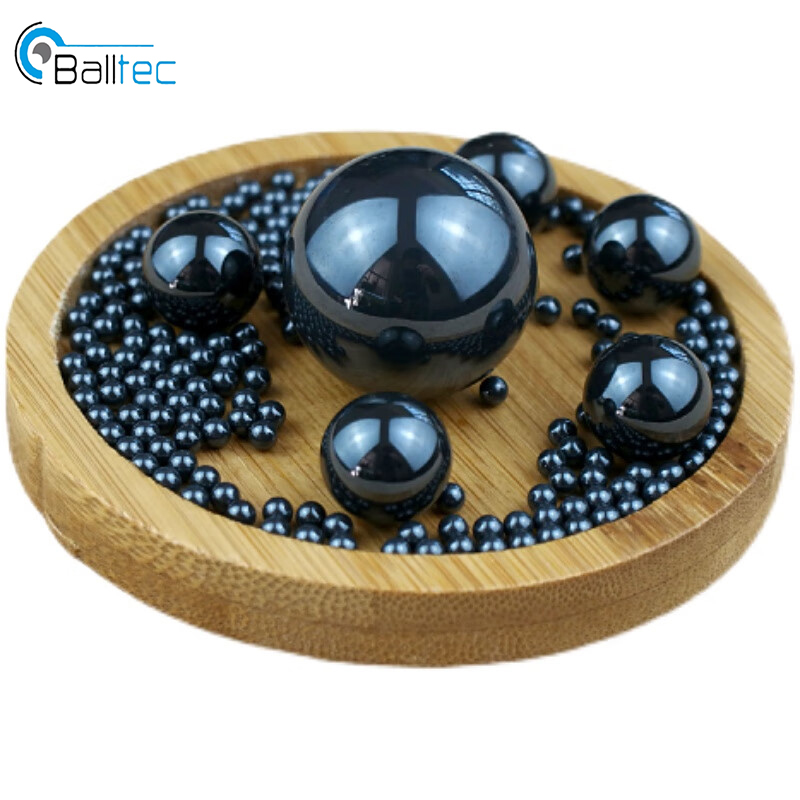
The influence of sintering temperature on the density of silicon nitride ceramic balls
Silicon nitride is a strong covalent bond compound. The self-diffusion coefficients of nitrogen and silicon atoms are low, resulting in low rates of volume diffusion and grain boundary diffusion required for densification, as well as insufficient sintering driving force, which leads to poor sinterability. Various defects are prone to form during the preparation process, thereby reducing material properties and limiting the application of Si₃N₄ ceramic ball bearings.
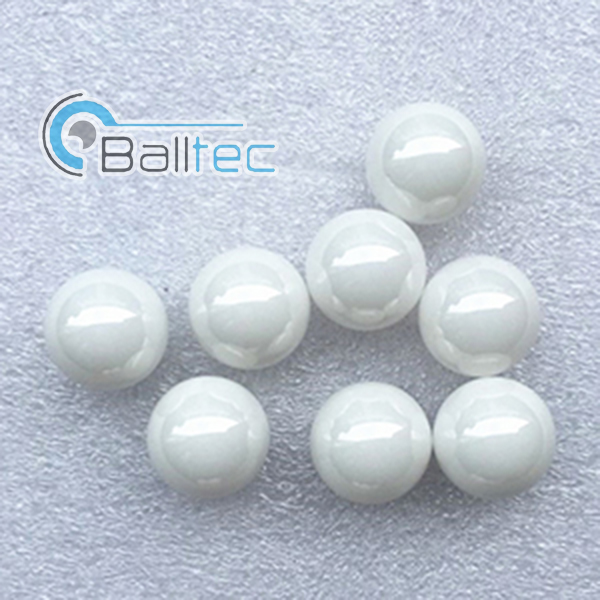
Types of ceramic grinding beads
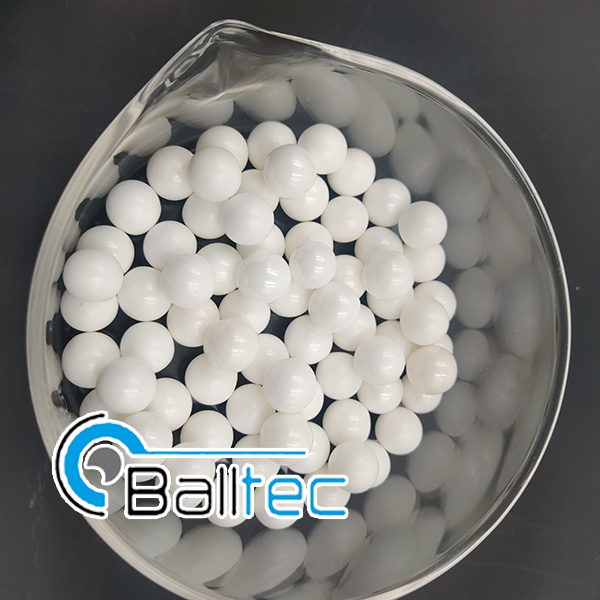
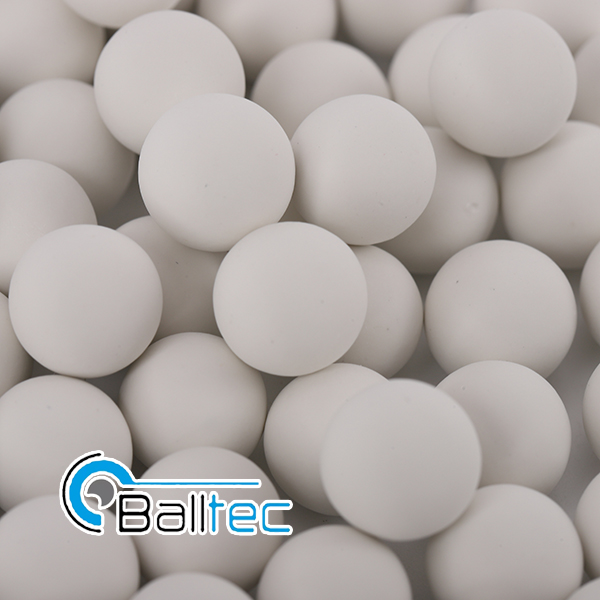
There are various types of ceramic grinding beads, such as alumina grinding beads, zirconia beads, glass beads, zirconium silicate beads, silicon nitride ceramic balls, etc. All can be used for grinding and dispersing materials, but they differ in material, density, and thus grinding efficiency.
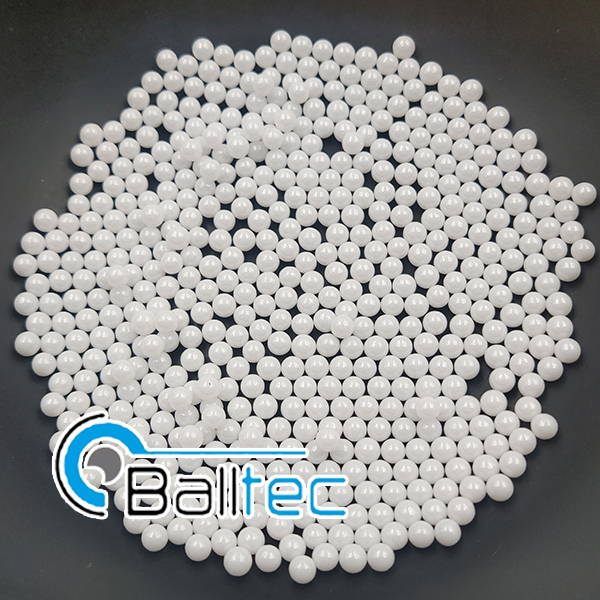
Why Do Zirconia Beads Used for Dental Sintering Turn Yellow?
Common dental crowns are ceramic crowns made from zirconia powder, the same raw material as zirconia beads. The sintering of dental crowns is generally carried out in a sintering furnace—a sealed piece of equipment classified as a small-scale laboratory furnace. The operating temperature of a dental crown sintering furnace reaches 1600°C. As a ceramic product, zirconia beads are high-temperature resistant and can maintain stability at 1600°C without cracking or shattering, thereby providing reliable protection for the teeth.
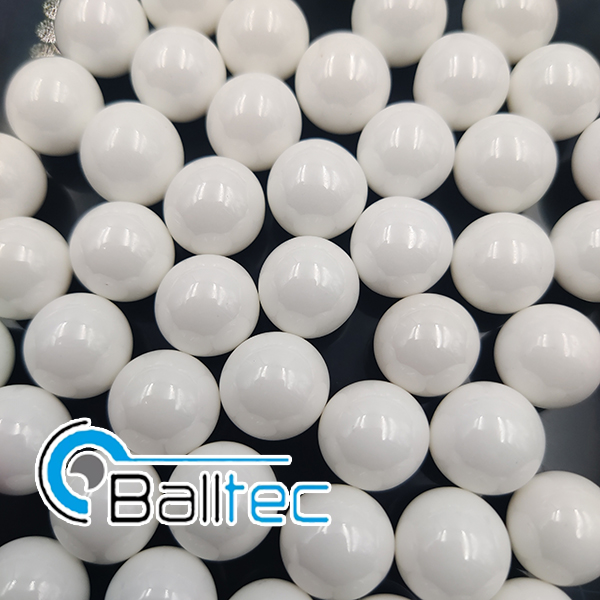
Causes of Powder Adhesion to the Wall and Sedimentation Agglomeration in Planetary Ball Mill Jars
For planetary ball mills, we usually classify the ground particle size distribution into the following grades: millimeter-micron (3 mm–10 μm), submicron (10 μm–3 μm), and nanometer (3 μm–1 nm). Generally, the grinding process from millimeter to micron proceeds very smoothly, which can be achieved rapidly by using zirconia beads of 15 mm, 10 mm, and 5 mm. However, grinding from the micron to submicron and further to the nanometer scale presents certain challenges, accompanied by the phenomenon that the powder adheres tightly to the inner wall of the grinding jar or agglomerates at the bottom. The reasons are as follows:
Effects of Zirconia Grinding Ball Mass Ratio and Ball-to-Powder Ratio on Milling Performance
The planetary high-energy ball mill is designed for preparing ultrafine powders. Its working principle is that during operation, the grinding jars drive the grinding balls to generate a resultant force through revolution and rotation, which impacts and pulverizes the materials. Factors affecting the ball milling effect include milling time, milling speed, and solid content of the materials being milled. Among these, the ball-to-powder mass ratio and the mass ratio of grinding balls with different sizes are critical control parameters.
The application of zirconia in the field of functional ceramics
01 The ball bearings of ballpoint pens are made of zirconia ceramic.
Under normal circumstances, the ball bearings of ballpoint pens are mainly made of stainless steel and tungsten carbide. However, these ball bearings often experience breakage, dropping, and dead ball problems during writing. Zirconia ceramic ball bearings overcome these drawbacks.