Pingxiang Baitian New Materials Co., Ltd

Leave Your Message

Why Choose 65 Ceramic Zirconium Silicate Beads?

Choosing the right grinding media can shape a mill’s output, energy use, and maintenance schedule. 65 Ceramic Zirconium Silicate Beads are considered for applications that need durable, dense media for wet grinding and dispersion. Their value, however, depends on the material being processed, the mill design, and the required particle size. A bead that performs well in one production line may be unsuitable in another.

The number “65” should not be treated as a complete technical specification. Confirm what it represents with the supplier, then review the stated composition, bead size, density, hardness, and wear data. Ask how the beads behave in your slurry and whether they suit your equipment’s speed and loading conditions. Fit matters. Trial results can reveal details that a product sheet cannot, including wear patterns, temperature changes, or contamination concerns. Not always obvious.

This guide examines why manufacturers choose these beads, what performance factors matter, and where careful testing is worthwhile. It also considers limitations, because no grinding media is ideal for every process. Compare verified specifications, request relevant test data, and assess results under operating conditions close to your own. The best choice is supported by evidence, not just a grade name or a broad performance claim.

Why Choose 65 Ceramic Zirconium Silicate Beads?

What Are 65 Ceramic Zirconium Silicate Beads?

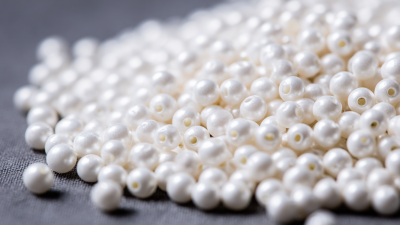
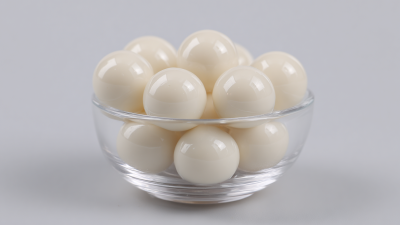
65 ceramic zirconium silicate beads are spherical grinding media made mainly from zirconium silicate, with zirconia and other oxides in the composition. In some specifications, “65” refers to a nominal zirconia percentage, but naming conventions can vary. Check the composition sheet before comparing products. The beads are made to resist impact and abrasion while moving through a mill. Their rounded surfaces help disperse particles and reduce contamination from media wear. They are used in processes such as producing coatings, inks, and mineral suspensions.

Their density sits between lighter glass media and many high-zirconia beads, making them a practical option for some milling tasks. A bead’s size matters: smaller beads can create more contact points, while larger ones may suit coarser material. Look for consistent diameter, smooth surfaces, and low breakage in a sample batch. There is a catch. These beads are not ideal for every formula or machine, and higher density can increase equipment load. Results also depend on slurry viscosity, mill speed, and feed size. A short trial can reveal wear or heating issues that a specification sheet may not predict.

How Their Composition Influences Their Performance

Why Choose 65 Ceramic Zirconium Silicate Beads?
How Their Composition Influences Their Performance

The “65” grade commonly refers to beads containing about 65% zirconia, with zirconium silicate and other oxides making up the balance. That blend matters: zirconia raises density and impact resistance, while the silicate-rich matrix helps keep costs and wear rates manageable. Industry technical data sheets commonly place these beads’ bulk density near 3.8–4.1 g/cm³; actual figures depend on formulation and test method. For context, the CRC Handbook of Chemistry and Physics lists zirconia’s theoretical density at about 5.7 g/cm³. A composite bead is lighter. That difference affects how much energy each bead transfers during milling.

In a horizontal mill, denser beads can improve grinding of hard materials, but they also increase load on the drive and may raise wear. Their rounded surfaces help maintain steady movement, while uniform sizing supports more predictable results. Composition alone does not guarantee performance. Bead size, porosity, mill speed, slurry viscosity, and contamination limits all matter. ASTM C373 provides a standardized method for measuring water absorption and related ceramic properties; it is useful context, though bead-specific wear testing is still needed. Real process data should guide selection.

Tips: Compare density and wear results from the same test conditions. Check a sample run for bead breakage, temperature rise, and product contamination. Small differences can matter. A “65” label is a useful starting point, not a complete specification.

Which Properties Make Them Effective Grinding Media?

65 ceramic zirconium silicate beads are valued for balancing hardness, density, and cost. The Handbook of Mineralogy reports natural zircon’s Mohs hardness at about 7.5 and specific gravity of 4.6–4.7. Finished beads are engineered composites, so their properties differ. Industry technical data sheets commonly place zirconium-silicate media near 3.8–4.1 g/cm³ in density, with hardness around 7–8 Mohs. Check the actual product specification; “65” can refer to composition, and naming conventions vary.

That density gives beads enough impact to disperse pigment and break down agglomerates, without the higher mill load of denser media. Their hard surfaces also resist wear during repeated circulation, helping limit contamination and bead consumption. In practice, though, hardness alone does not guarantee a good result. Bead size, mill speed, slurry viscosity, and feed size all matter. A practical test is to inspect the slurry and bead wear after a controlled run, then adjust one operating variable at a time. Small details count: chips near a screen can signal a mismatch between bead size and separator opening. Zirconium-silicate media may be less suitable when very high grinding intensity is required. A trial can expose that limitation.

Where Are 65 Ceramic Zirconium Silicate Beads Used?

65 ceramic zirconium silicate beads are used in wet grinding and dispersion processes. They help break down pigment and mineral agglomerates in paints, coatings, printing inks, and some ceramic slurries. In a production mill, beads tumble through the liquid and provide repeated impacts and shear. That matters when a smooth, consistent particle distribution is needed.

They are also used in selected chemical and specialty-material processes, where operators need efficient milling without relying on steel media. Bead size, mill design, slurry viscosity, and operating speed all affect the result. A paint maker, for example, may choose smaller beads to refine pigment dispersion, while a coarser mineral slurry may call for a different setup. Not every mill is suitable.

Selection takes testing. Check the equipment maker’s limits, then compare samples for grinding rate, wear, and contamination. The “65” designation can vary by product specification, so confirm the bead composition rather than assuming the number tells the whole story. I would also watch for excessive heat or unexpected bead wear during trials. It is easy to overlook those details when the first batch looks fine.

Why Choose 65 Ceramic Zirconium Silicate Beads? - Where Are 65 Ceramic Zirconium Silicate Beads Used?

Dimension Typical information Why it matters / common use
Material designation “65” is commonly used as a grade designation for zirconium-silicate grinding beads; the exact formulation can vary by supplier. Check the product datasheet for composition and test methods before comparing grades.
Typical density Often around 4.0 g/cm³; actual values depend on the formulation and manufacturer. Provides more grinding energy than lower-density glass beads in many applications, while remaining less dense than many high-zirconia media.
Hardness and wear resistance Hard ceramic media designed for repeated impacts and abrasion; published hardness values vary with grade and measurement method. Can support efficient particle-size reduction and may help limit media wear when used under suitable operating conditions.
Grinding performance Performance depends on bead diameter, mill design, slurry properties, loading, and operating speed. A practical option for wet grinding and dispersion where a balance of grinding force, media cost, and wear life is needed.
Paints and coatings Used in bead mills to disperse pigments and other solid ingredients in liquid formulations. Suitable for production of selected industrial, architectural, and specialty coating dispersions.
Printing inks Applied to pigment dispersion and milling in liquid ink systems. Can help achieve a finer, more uniform dispersion when the bead size and mill setup match the formulation.
Ceramics and mineral slurries Used for wet milling ceramic raw materials, minerals, and related suspensions. Useful where consistent milling and resistance to routine abrasive service are important.
Agrochemical dispersions May be used to mill and disperse active ingredients in compatible liquid formulations. Confirm chemical compatibility, contamination limits, and applicable process requirements for the specific formulation.
Bead-size selection Available diameters vary by product; smaller beads are generally selected for finer dispersion, while larger beads can suit coarser or higher-throughput duties. Match bead diameter to the mill, target particle size, and viscosity; follow the mill manufacturer’s operating guidance.
Selection note Typical properties are indicative, not guaranteed specifications. Compare verified density, composition, size tolerance, wear data, and chemical compatibility for the exact grade and application.

How to Choose the Right Bead Size and Grade

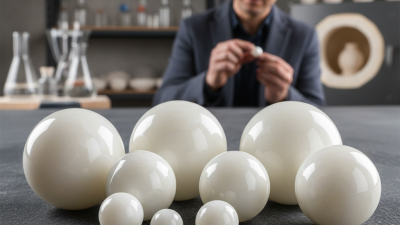
Choosing 65% zirconium silicate beads starts with the milling task, not the grade label. Bead diameter affects collision energy, contact frequency, and separator performance. Smaller beads provide more contact points and can help with fine dispersions. Larger beads deliver stronger impacts and may suit coarse, tougher feed. It depends.

Match bead size to the mill’s operating range and the material’s starting size. In a small laboratory mill, oversized beads may circulate poorly; in a production mill, very small beads may challenge the separator. Check the manufacturer’s minimum bead size and screen opening before ordering. A short trial can reveal what a data sheet cannot: watch temperature, product fineness, and bead wear over the same run time.

Grade matters too. Ask for density, size tolerance, roundness, composition, and wear-test details rather than relying on a grade name alone. Those names are not always comparable between suppliers. Inspect a sample under bright light; chipped edges or visibly mixed sizes deserve questions. Perfect consistency is rarely realistic. Recheck the choice when the formulation or target fineness changes.

Why Choose 65 Ceramic Zirconium Silicate Beads?

How to Choose the Right Bead Size and Grade

How to read the chart: For equal masses of same-density spherical beads, relative geometric surface area increases as bead diameter decreases. Smaller beads provide more surface area for fine grinding; larger beads deliver stronger individual impacts. Choose a grade suited to your mill and material, and confirm composition and operating recommendations with the product datasheet.