How to Choose the Best 95% Zirconia Bead for Your Needs?
Choosing the best 95% Zirconia Bead can be a daunting task. With various options available, it's essential to consider specific needs. Expert John Smith, a leading figure in the zirconia industry, emphasizes, "Quality and application compatibility are vital when selecting 95% Zirconia Beads." His insight guides many buyers in this niche market.
Understanding the composition and application of these beads is crucial. 95% Zirconia Beads are known for their durability and hardness. They are often used in both industrial and artistic settings. However, not all beads are created equal. Some may lack the necessary quality for demanding applications. Reflecting on one’s specific use can reveal gaps in knowledge about these products.
In the swirling world of ceramics, the right choice impacts outcomes greatly. Missteps in selection can lead to reduced performance. Thus, having reliable information is key. This guide aims to empower buyers with the knowledge they need to make informed decisions about 95% Zirconia Beads. The right bead can enhance your projects significantly.

Understanding the Basics of Zirconia Beads and Their Applications
Zirconia beads are essential in various applications, primarily in grinding and milling processes. They are made from zirconium dioxide, known for its strength and durability. When selecting zirconia beads, understanding their properties is crucial. For instance, their high density provides efficient grinding. An appropriate size impacts the effectiveness of the milling process.
These beads are used in industries such as ceramics, paints, and pharmaceuticals. Their resistance to wear makes them suitable for long-term use. While the benefits are clear, one must consider the specific needs of each application. Not every zirconia bead fits every task. Smaller beads may work best for fine materials, whereas larger beads could be more effective for coarser substances.
Deciding on the best zirconia bead demands thinking about the material to be processed. Overlooked factors, like bead shape and roughness, can affect performance significantly. Consider testing different options. Some might not meet expectations initially. Tracking outcomes helps refine choices over time, ensuring the best fit for your milling needs.
Key Factors to Consider When Choosing Zirconia Beads
When choosing a zirconia bead, several key factors should guide your decision. One primary aspect is the bead's hardness. Zirconia beads typically possess a high hardness rating, often around 1200 HV (Vickers hardness). This makes them ideal for grinding and milling operations. However, hardness alone isn't enough; the bead's shape is crucial too. Round beads provide consistent performance, while irregular shapes might offer unique advantages depending on the material being processed.
Another factor to consider is the bead's density. Density affects the bead's impact efficiency. A denser bead creates more energy upon impact, leading to better grinding efficiency. Research shows that beads with higher densities can improve the grinding process by nearly 30%. It’s essential to align these characteristics with your specific application needs.
**Tips:** Always evaluate the bead size relative to the material. Larger beads often yield faster results, but finer materials may require smaller beads for improved quality. Additionally, consider the surface finish. A polished bead has less friction, enhancing performance.
Selecting the right zirconia bead isn't straightforward. Differences in production processes can result in variations in quality. Regularly test and assess different beads within your operations. This will lead to better long-term results and help refine your selection criteria.
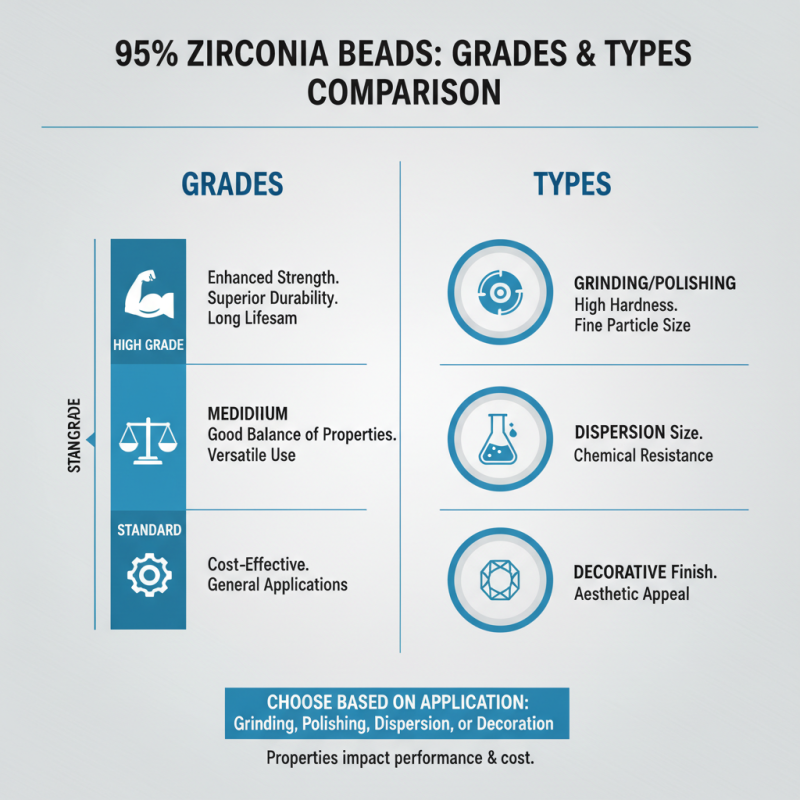
Comparison of Key Factors for Choosing 95% Zirconia Beads
This chart illustrates the importance of various factors to consider when selecting 95% zirconia beads for your specific needs. Durability and chemical resistance are rated the highest, emphasizing their significance in applications requiring high-performance materials.
Evaluating the Performance and Durability of Zirconia Beads
When evaluating the performance and durability of 95% zirconia beads, several factors come into play. Zirconia beads are often favored in various applications due to their high wear resistance and low thermal conductivity. According to a recent industry report, zirconia beads can have a wear rate as low as 0.05 grams per hour in high-energy milling. This statistic underscores the material's potential longevity, reducing the frequency of replacements.
A crucial aspect to consider is the bead's impact strength. Research indicates that beads with higher fracture toughness can endure greater stress without breaking. A report by a leading materials science organization states that zirconia beads possess a toughness of about 10 MPa·m^1/2. This level of resilience makes them suitable for demanding industrial environments. However, it's essential to note that not all zirconia beads offer the same performance, and factors like manufacturing processes and size uniformity can significantly influence results.
Another vital parameter is the bead's surface finish. A rough surface can lead to increased wear of both the beads and the milling equipment. Studies reveal that smooth beads generate less friction, minimizing energy consumption during milling processes. However, achieving a perfectly smooth finish can be challenging and may require advanced production techniques. It's essential to weigh these considerations carefully to select the right bead for specific applications.
How to Choose the Best 95% Zirconia Bead for Your Needs? - Evaluating the Performance and Durability of Zirconia Beads
| Property |
Description |
Value |
| Density |
The mass per unit volume of the zirconia bead. |
6.05 g/cm³ |
| Mohs Hardness |
A measure of the scratch resistance of the material. |
8.5 |
| Wear Resistance |
Ability to resist wear during use. |
High |
| Thermal Stability |
Resilience at high temperatures. |
Up to 1200°C |
| Shape |
Common forms available in the market. |
Round, Cylindrical |
| Color |
Appearance of the bead. |
White or Yellow |
| Application |
Typical uses in industry. |
Milling, Grinding, Polishing |
Tips for Sourcing and Purchasing High-Quality Zirconia Beads
When sourcing high-quality zirconia beads, consider the manufacturing process. Look for suppliers that use advanced techniques to ensure durability and precision. These beads should be uniform in size and shape. This consistency affects performance in various applications, whether in industrial settings or crafting.
Another key factor is the sourcing of materials. Ensure that the zirconia is sourced responsibly. This includes checking for certifications that guarantee quality. A reliable source can provide transparency about their production practices. This builds trust and reliability in your supply chain.
While purchasing, ask for samples before committing to a large order. Testing small quantities allows you to evaluate the beads' quality and suitability for your specific needs. Don’t rush the selection process. Take time to research different suppliers and their reputations in the market. Consider customer reviews and ratings as part of your decision-making process. Each detail taken into account can lead to better choices.