Pingxiang Baitian New Materials Co., Ltd

Leave Your Message

How to Choose 65 Ceramic Zirconium Silicate Beads for Sale?

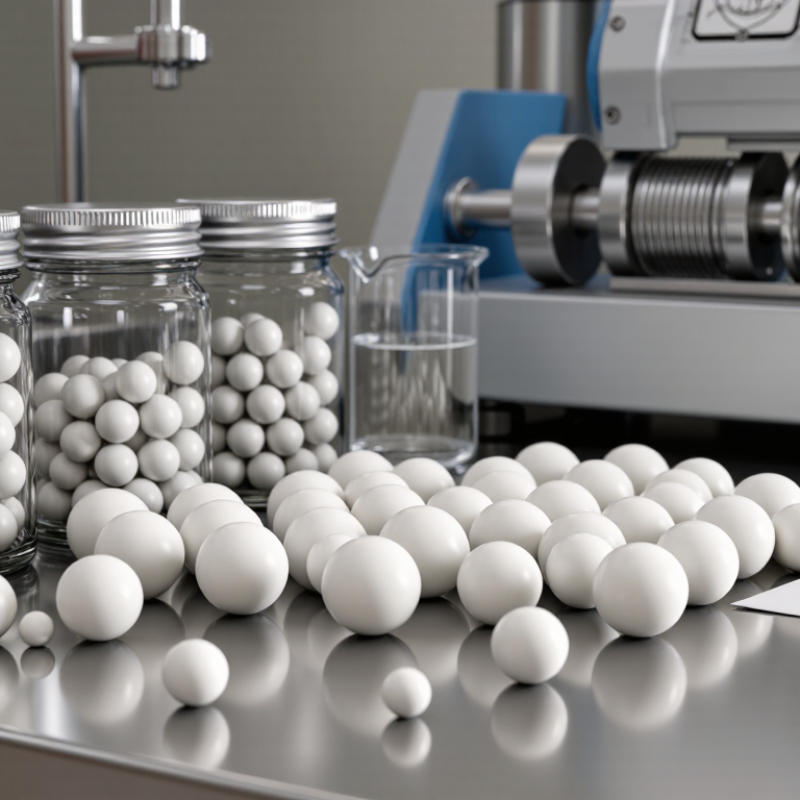
Choosing 65 Ceramic Zirconium Silicate Beads is not simply a matter of comparing price per kilogram. The right media must match the mill, slurry, and target particle size. A bead that looks uniform in a sample jar may still wear unevenly under continuous operation. Small differences matter.

The USGS Mineral Commodity Summaries 2025, in its “Zirconium and Hafnium” chapter, documents the wider supply context for zirconium-bearing materials. It does not certify bead composition or predict service life. That distinction is useful: raw-material data cannot replace a supplier’s batch certificate, chemistry analysis, or application trial. Ask for zirconia and silica content, bulk density, bead-size tolerance, and contamination data. Then check whether those figures describe the current lot, not just a standard product range.

Particle-size consistency also deserves attention. ISO 13320:2020 describes laser diffraction methods for measuring particle-size distributions, a relevant reference when checking milling results. For bead selection, compare test conditions as well as reported results. Viscosity, solids loading, mill speed, and separator design can change performance. There is no universal winner. A lower purchase price can become expensive if bead loss rises or the final grind drifts. That is easy to overlook. Before ordering in bulk, request a representative sample and run it under realistic production conditions. This guide explains how to assess specifications, supplier evidence, and fit for purpose—while recognizing that published data alone may not settle every plant-specific question.
How to Choose 65 Ceramic Zirconium Silicate Beads for Sale?

Understand What “65” Means in Ceramic Zirconium Silicate Beads

How to Choose 65 Ceramic Zirconium Silicate Beads for Sale?

Understand What “65” Means in Ceramic Zirconium Silicate Beads

In many product listings, “65” refers to an approximate zirconia content of 65% by weight. It usually does not describe bead diameter. Still, sellers may use the number differently, so treat it as a starting point, not a complete specification. Ask for a technical data sheet that states the composition and how the percentage is measured.

Composition affects practical performance. Zirconia content, bead density, and manufacturing quality can influence impact energy, wear, and contamination during milling. For example, a batch of 1 mm beads may look uniform in a sample jar, yet vary in density or size distribution. Ask the supplier for those figures, plus hardness and a wear-rate test under conditions similar to your process. Test a small quantity if possible. Actual results matter.

Check that the quoted “65” matches the certificate for the batch you will receive. Also confirm whether the stated percentage is a typical value or a guaranteed minimum. These labels are not always consistent across suppliers, and I would not choose by the number alone. That is easy to overlook. Match the beads to your mill, slurry, and target particle size, then compare documented data rather than relying on a short product name.

Identify Your Milling Process and Material Requirements

How to Choose 65 Ceramic Zirconium Silicate Beads for Sale?

Identify Your Milling Process and Material Requirements

Start with the mill, not the bead price. A 65 ceramic zirconium silicate bead may suit one wet-milling setup but perform poorly in another. Check the mill type, gap size, rotor speed, slurry solids, and target particle size. Also confirm what “65” means in the supplier’s specification; do not assume it refers to zirconium oxide content. For abrasive mineral slurries, bead toughness and wear contamination matter. For paint or coatings, color and final fineness may matter more. Small details count.

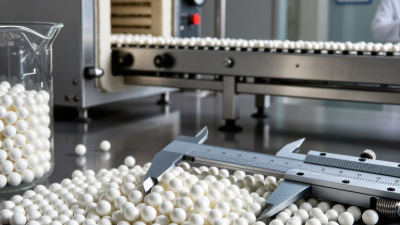
Record your feed and product particle-size distributions before testing. ISO 13320:2020 describes laser-diffraction methods for particle-size analysis, including reporting a distribution rather than relying on one average. Compare D10, D50, and D90 before and after milling. Then run a controlled trial, keeping bead loading, speed, and milling time consistent. A neat calculation can still miss how viscosity changes under heat. Check the slurry temperature and inspect beads for chipping after the run.

Tips: Match bead diameter to the mill’s operating gap and target fineness. Start with a small trial batch. Measure wear, temperature, and product quality; one test may not tell the whole story.

How to Choose 65 Ceramic Zirconium Silicate Beads for Sale? - Identify Your Milling Process and Material Requirements

Milling Process or Requirement Typical Material Examples Starting Bead Diameter Why This May Suit the Application What to Check Before Purchase
Fine grinding in a small-media stirred mill Water-based coatings, inks, and pigment dispersions 0.3–0.8 mm Smaller media provide more contact points and can support finer grinding when the mill and feed are suitable. Confirm the mill can retain the selected bead size and that the feed is pre-dispersed and free of oversized particles.
General-purpose dispersion and grinding Paints, industrial coatings, and mineral suspensions 0.6–1.2 mm A mid-range size is a practical trial point for balancing grinding action, throughput, and media separation. Run a controlled trial and compare particle-size distribution, temperature, throughput, and bead wear.
Higher-viscosity or coarser feed processing Thicker coatings, ceramic slurries, and some mineral feeds 1.0–2.0 mm Larger beads can be easier to move through some viscous or coarse-feed systems and are generally easier to separate. Check the mill’s recommended media range, rotor or agitator limits, and the maximum feed particle size.
High-energy milling where contamination must be controlled Color-sensitive pigments and specialty dispersions Choose within the mill’s validated range; trial 0.5–1.2 mm where appropriate Zirconium-silicate ceramic media may be considered where a ceramic alternative to steel media is required. Measure contamination and wear in the actual formulation; media composition alone does not predict final product contamination.
Selection by media density Applications where energy input and mill load need adjustment Not size-specific 65-grade zirconium-silicate beads are commonly sold with a true density around 4.0 g/cm³, but values vary by product. Request the product’s stated true density and bulk density. Do not substitute one value for the other when calculating mill charge.
Selection by composition and quality Any process requiring consistent media performance Not size-specific “65” commonly refers to a nominal zirconia content of about 65%; the exact composition and test basis can differ by specification. Request a current technical data sheet and certificate of analysis, including composition, size tolerance, density, and hardness.
Selection for bead separation and mill compatibility Continuous or recirculating bead-mill operations Match the separator and mill design Bead diameter affects retention, separator loading, and the risk of media carryover into the product. Check separator opening or screen specifications, minimum permitted bead size, and the mill manufacturer’s operating guidance.
Selection for service life and process stability Long production runs and repeated batch processing Use the size proven in a representative trial Wear depends on bead quality, mill design, speed, slurry properties, and operating conditions; no bead size guarantees a fixed service life. Track bead consumption, product contamination, temperature, and particle-size results during a production-representative test.

Selection note: Treat the diameter ranges and density figure as starting points, not universal specifications. Confirm the bead size, composition, and physical properties against the mill manufacturer’s guidance and the supplier’s current technical documents.

Compare Bead Size, Density, Hardness, and Wear Resistance

How to Choose 65 Ceramic Zirconium Silicate Beads for Sale?

When comparing 65 ceramic zirconium silicate beads, confirm what “65” describes: zirconia content, a grade, or a product code. Don’t assume. Industrial technical data sheets commonly list zirconium-silicate media near 4.0 g/cm³ density and about 7 on the Mohs scale; these are typical figures, not guarantees. The USGS Mineral Commodity Summaries 2024 identifies ceramics as a major use for zirconium minerals, but it does not certify bead performance. Ask suppliers for batch-specific test data.

Choose bead size to match the mill, slurry, and target particle size. Smaller beads offer more contact points, while larger beads can deliver stronger impacts. Density affects milling energy; hardness alone cannot predict service life. ASTM C1327 provides a standard method for measuring ceramic Vickers hardness, but wear comparisons also need consistent test conditions. Look for reported mass loss, test duration, and sample size. A glossy surface proves little.

Tips: Request a size distribution, density, hardness method, and wear-test results. Run a small trial with your actual slurry. Check the mill afterward for uneven bead wear. It happens. Lower wear figures may not translate directly to your process.

Check Product Specifications and Supplier Quality

Before buying 65 ceramic zirconium silicate beads for sale, clarify what “65” identifies. It could refer to a grade, size, or product code. Ask for the unit and nominal diameter in writing. Then compare the specification sheet for composition, density, hardness, bead roundness, and size tolerance. These details affect wear, grinding efficiency, and contamination risk. Check the full size distribution, not just the stated average. A small sample can reveal excess fines or visibly irregular beads. Details matter.

Supplier quality deserves the same scrutiny as the product itself. Request a batch-specific inspection report and ask how measurements were taken. Confirm that the quoted beads match the tested batch, and check whether the supplier can provide repeat orders within the same tolerances. Packaging should protect the beads from moisture and breakage during transit. If possible, test a sample under conditions close to your mill’s actual speed, load, and material. A polished datasheet is not proof of consistency. One limitation: a short sample trial may not predict long-term wear, so record operating conditions and compare results across batches.

How to Choose 65 Ceramic Zirconium Silicate Beads for Sale?

Check Product Specifications and Supplier Quality

This illustrative 1–5 rating scale highlights practical checks, not universal product specifications. Confirm bead size and size distribution, material composition, density, wear data, and lot traceability with the supplier, and request a sample and test documentation before purchasing.

Assess Compatibility, Pricing, and Operating Costs

How to Choose 65 Ceramic Zirconium Silicate Beads for Sale?

Before comparing quotes, check whether the beads suit your mill, product, and operating conditions. Confirm what “65” means on the specification sheet; designations can vary between suppliers. Compare bead diameter with the mill’s recommended range, and check density, hardness, and chemical resistance. A mismatch may reduce grinding efficiency or increase wear on liners and rotors. Ask for a technical data sheet and batch test results. Details matter.

Price per kilogram is only part of the cost. Estimate replacement frequency, energy use, cleaning time, and downtime from bead changes. Also consider whether worn beads could contaminate your product. Request trial quantities when possible, then track throughput and wear under your actual operating conditions. A cheaper option may cost more over time. That calculation is easy to overlook, and real results may differ from a short trial.

Tips: Compare delivered cost per usable kilogram, not just the listed price. Check mill limits before ordering. Record wear and output during testing. If the supplier cannot clarify the “65” designation, pause and verify it before purchase.