Pingxiang Baitian New Materials Co., Ltd

Leave Your Message

Why Choose Cerium Stabilized Zirconia Balls?

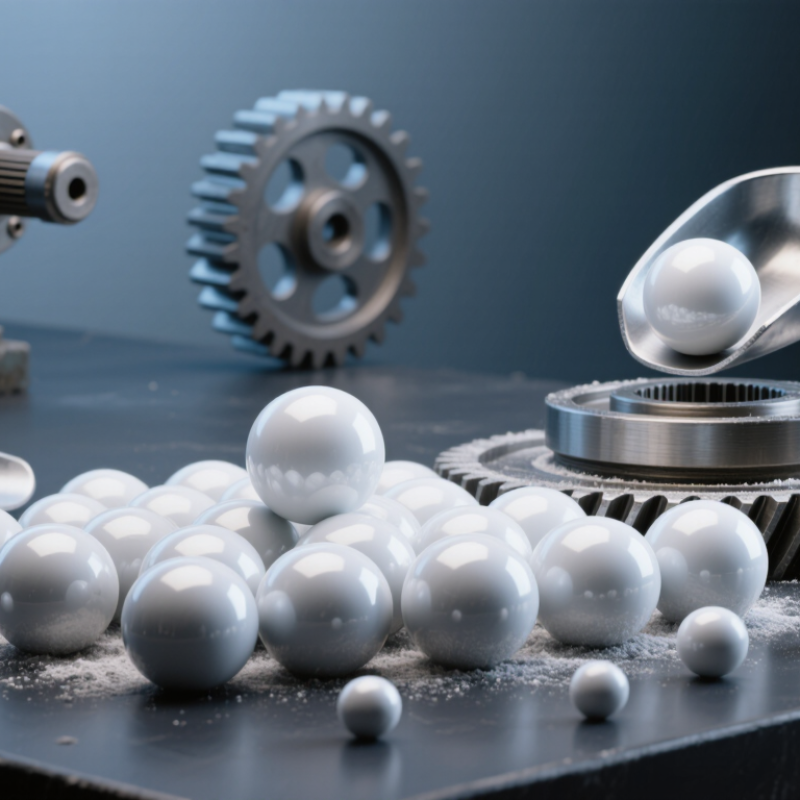
Choosing the right grinding media can influence product consistency, equipment wear, and operating costs. A Cerium Stabilized Zirconia Ball is valued for its high density, hardness, and resistance to wear. These properties can support efficient milling in demanding applications. The material also offers useful toughness, though actual performance depends on ball quality, mill design, and operating conditions. Small details matter.

This article examines why cerium-stabilized zirconia balls may suit particular milling tasks. It looks at their material characteristics, common uses, and practical selection factors, including ball size and slurry conditions. It also considers how they compare with other grinding media, without treating one material as the best choice for every process. That would be too simple.

In practice, a ball’s performance is shaped by more than its composition. Milling speed, feed characteristics, contamination limits, and maintenance routines all deserve attention. A media choice that works well in one plant may disappoint in another. That deserves a closer look. The goal is to help readers ask better questions before choosing a product, and to understand which claims need verification through supplier data or controlled trials. There is no shortcut around testing. When the application is well matched to the material, cerium-stabilized zirconia can offer a durable, consistent option for precision grinding. But the final decision should reflect real process evidence, not a specification sheet alone.
Why Choose Cerium Stabilized Zirconia Balls?

Composition and Structure of Cerium-Stabilized Zirconia Balls

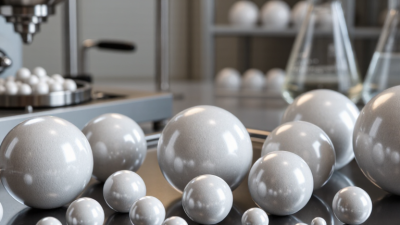
Cerium-stabilized zirconia balls are made mainly from zirconium dioxide, with cerium oxide added to help stabilize the ceramic structure. The precise composition varies by grade and manufacturing process. That difference matters: it can affect hardness, toughness, and performance in a particular milling or bearing application.

Their microstructure may contain tetragonal and cubic grains, depending on ceria content and processing. In suitable grades, stress can trigger some tetragonal grains to change phase, helping slow crack growth. The grains are typically densely packed, and careful polishing creates a smooth, rounded surface. Still, these balls are not unbreakable. A sharp impact or unsuitable operating conditions may cause damage, and composition alone cannot predict service life.

Tips: Check the material grade and application data before choosing a ball. Look for details on size tolerance, surface finish, and chemical compatibility. Test a small batch when conditions are unusual; that extra step can prevent a costly assumption.

Key Mechanical and Chemical Properties

Why Choose Cerium Stabilized Zirconia Balls?
Key Mechanical and Chemical Properties

Cerium-stabilized zirconia balls balance strength, toughness, and wear resistance. Their fine-grained ceramic structure helps them withstand repeated contact in milling and precision components. Stress can trigger a phase change that helps slow crack growth during impact. Their high density supports efficient grinding, while hardness helps limit surface wear. Not indestructible.

Chemically, these balls remain stable in many water-based and mildly corrosive processes, and they do not rust like steel. Their low porosity can reduce fluid uptake and contamination when slurry purity matters. Actual performance still depends on pH, temperature, load, and additive chemistry. Abrasive particles, for example, may wear a ball faster even when the liquid seems benign. This is easy to overlook. Match ball size and grade to the mill, then check wear in a small trial. Published toughness values are not guarantees; test conditions differ, and real contact patterns are rarely perfect.

Why Choose Cerium Stabilized Zirconia Balls? - Key Mechanical and Chemical Properties

Property Typical Value or Characteristic Why It Matters for Ball Applications
Material type Cerium oxide–stabilized tetragonal zirconia polycrystal (Ce-TZP) The stabilized zirconia microstructure combines high strength with resistance to crack growth.
Density Typically about 6.0–6.1 g/cm³ Provides a dense ceramic ball; the resulting mass is higher than that of many other engineering ceramics.
Vickers hardness Typically about 1,100–1,300 HV, depending on grade and test method Supports resistance to indentation and abrasive wear in suitably designed contact systems.
Fracture toughness Often reported in the approximate range of 8–12 MPa·m1/2 Relatively high fracture toughness for a ceramic can help limit crack propagation under impact or concentrated loading.
Flexural strength Commonly around 800–1,200 MPa for reported Ce-TZP grades; actual values vary with processing and specimen geometry Indicates strong resistance to bending in test specimens; it is not a direct allowable contact stress for a ball.
Elastic modulus Approximately 200–210 GPa for many grades Describes stiffness and helps engineers assess elastic deformation in a loaded ball-and-raceway system.
Thermal expansion Typically about 10–11 × 10−6 K−1 near room temperature Dimensional change with temperature should be considered when specifying clearances and fits.
Thermal conductivity Generally low, often roughly 2–3 W/(m·K), depending on composition and temperature Heat moves through the material less readily than through metals, so heat dissipation in the assembly needs consideration.
Chemical resistance Generally resistant to corrosion in many aqueous and chemical environments; resistance depends on the specific chemical, concentration, temperature, and exposure time. Can be suitable where metallic corrosion is a concern, but compatibility should be verified for the actual process fluid.
Electrical behavior Electrically insulating under ordinary conditions Useful when electrical isolation is required, subject to the operating environment and system design.
Wear and contamination Hard, non-metallic ceramic surface; actual wear and particle generation depend on finish, load, lubrication, and counterface material. May help reduce metal-related contamination in suitable equipment, but performance must be confirmed in the application.
Selection note Values shown are indicative ranges for Ce-TZP materials, not guaranteed specifications. Confirm the exact grade, ball size, surface finish, load, temperature, and chemical compatibility with the supplier before use.

How Cerium Stabilization Improves Wear and Fracture Resistance

Why Choose Cerium Stabilized Zirconia Balls?

How Cerium Stabilization Improves Wear and Fracture Resistance

In a grinding mill, balls repeatedly collide with feed particles and the mill lining. Ceria stabilization helps zirconia keep a tough tetragonal structure during these impacts. Near a growing crack, some grains can transform and expand slightly, creating compressive stress that slows crack growth. Hannink, Kelly, and Muddle describe this transformation-toughening mechanism in their 2000 Journal of the American Ceramic Society review. The result can be better resistance to chipping than in many conventional ceramic media. Not invincible, though.

Reported Ce-TZP fracture-toughness values commonly fall around 8–12 MPa·m½, with composition and processing affecting results. A harder surface also helps resist abrasion as particles slide across the ball. In practice, operators may notice smoother ball surfaces and fewer sharp fragments in the product. But wear depends on more than the stabilizer: slurry chemistry, particle size, speed, and contamination matter too. A ball that performs well in one mill may wear faster in another. That uncertainty deserves attention.

Hannink, Kelly, and Muddle, “Transformation Toughening in Zirconia-Containing Ceramics,” Journal of the American Ceramic Society, 83(3), 461–487, 2000.

Common Applications in Milling and Grinding

Why Choose Cerium Stabilized Zirconia Balls?
Common Applications in Milling and Grinding

Cerium-stabilized zirconia balls are used in wet and dry milling when operators need dense, wear-resistant grinding media. Common applications include dispersing ceramic powders, processing pigments, and reducing mineral particles. In a mill, the balls tumble against the feed, helping break down coarse grains into a finer, more even powder. Their ceramic composition can also help limit metal contamination, although media wear still needs monitoring.

The U.S. Geological Survey’s Mineral Commodity Summaries 2024 estimated global zirconium mineral-concentrate production at about 1.4 million metric tons in 2023. This figure describes upstream supply, not demand for grinding balls, but it shows the scale of the zirconium-material chain. In practice, the right ball size and mill speed depend on the feed, target particle size, and slurry conditions. One setup rarely fits every material. Test batches matter.

Tips: Check ball wear and particle-size results during a trial run. A finer product may take longer and increase energy use. Review contamination limits before choosing media, especially for high-purity powders. The trade-off is easy to miss.

Factors to Consider When Selecting Zirconia Balls

Why Choose Cerium Stabilized Zirconia Balls?
Factors to Consider When Selecting Zirconia Balls

Choosing zirconia balls starts with the material being processed, not the bead itself. Cerium-stabilized zirconia offers a useful balance of density, hardness, and fracture resistance for many wet-milling tasks. The right choice still depends on your equipment and production goals. Small beads cut differently.

Match bead diameter to the required particle size and mill design. Smaller balls provide more contact points, while larger balls can deliver stronger impact. A change in size may also affect flow, heat, and processing time. Test a small range before scaling up; results can differ from a supplier’s general guidance.

Check chemical compatibility, wear limits, and contamination tolerance. For sensitive powders, ask for data on composition, dimensional consistency, and surface quality. Inspect a sample for chips or rough spots, especially before a long run. Consider the slurry’s viscosity and solids loading, too. A bead that performs well in a thin suspension may behave poorly in a dense one. There is no perfect setting for every application, and trial runs sometimes expose assumptions worth revisiting.

Why Choose Cerium-Stabilized Zirconia Balls?

Compare typical reported fracture-toughness ranges for selected ceramics. Higher toughness can help resist crack growth, but it is only one factor when choosing milling media.

Values are indicative literature ranges in MPa·m1/2, not guaranteed specifications for zirconia balls. Actual properties vary with composition, processing, and test method. Also consider ball diameter, density, wear resistance, slurry chemistry, and contamination limits.