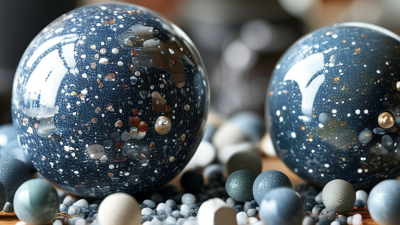
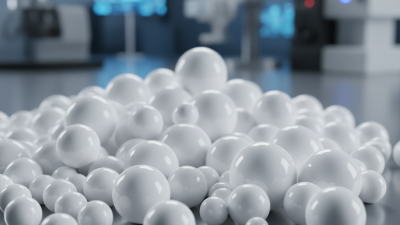
Ceria Stabilized Zirconia Balls deserve attention when grinding performance, contamination control, and service life matter. Their dense microstructure supports high wear resistance under continuous milling. Ceria stabilization also improves toughness compared with many conventional ceramic media. That difference becomes visible inside a mill: fewer chipped balls, steadier particle-size distribution, and cleaner product contact.
Industry data supports this interest. Grand View Research estimated the global zirconia market at approximately USD 1.46 billion in 2022, with continued growth expected through 2030. The U.S. Geological Survey also identifies zirconium compounds as important materials for ceramics, refractories, and advanced industrial applications. These reports do not measure every Ceria Stabilized Zirconia Balls sale. Still, they show expanding demand for engineered zirconia materials.
Professor A. G. Evans, a leading ceramics researcher, described transformation toughening as a mechanism that increases resistance to crack growth. That principle helps explain why ceria-stabilized media can tolerate repeated impact and compression. The benefit is not automatic. Ball density, surface finish, bead size, slurry chemistry, and mill design still control real results. A harder ball is not always the better ball.
In practical testing, operators should compare wear loss, contamination levels, energy use, and final fineness. Small differences matter. A damaged lining can change the outcome. So can poor media loading.
This article examines why Ceria Stabilized Zirconia Balls are selected for demanding applications, while acknowledging a less convenient truth: laboratory specifications never replace production trials.
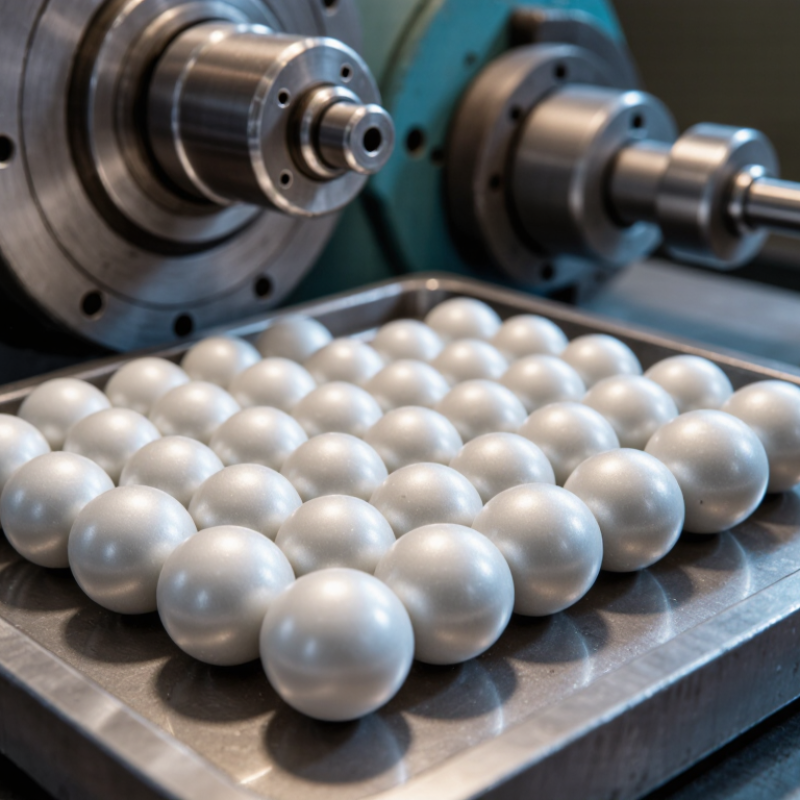
What Are Ceria Stabilized Zirconia Balls?
Ceria stabilized zirconia balls are dense ceramic grinding media made from zirconium dioxide and cerium oxide. Cerium oxide stabilizes zirconia’s crystal structure during repeated impact and pressure. This reduces cracking compared with unstabilized zirconia. Typical compositions contain about 10–12 mol% ceria, although formulations vary by manufacturer and application.
They are engineered for bead mills, dispersers, and high-shear laboratory equipment. Their density commonly reaches about 6.0 g/cm³. Hardness often approaches 8 Mohs, while fracture toughness may reach 8–10 MPa√m. These figures are practical ranges, not guarantees. Surface finish, firing quality, and bead size can change real performance. The 2024 U.S. Geological Survey Mineral Commodity Summaries estimated global zirconium mineral concentrate production at roughly 1.4 million metric tons in 2023. That supply supports ceramics, refractories, and advanced processing materials.
In operation, the balls produce a narrow particle-size distribution when the mill is correctly loaded. They also resist many chemical environments and show low contamination potential. Still, “low wear” is not “zero wear.” Incorrect speed, poor slurry control, or mixed bead sizes can accelerate damage. Operators should inspect the media regularly and compare actual wear against technical data, not marketing claims. Small details matter.
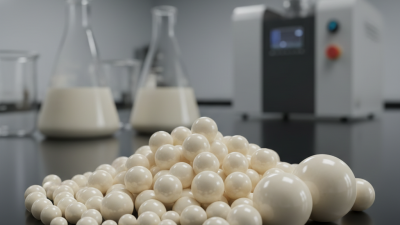
Ceria stabilized zirconia balls begin with refined zirconium oxide powder and a controlled amount of cerium oxide. The ceria helps retain zirconia’s tetragonal or cubic structure during impact. This reduces sudden cracking during repeated milling. The U.S. Geological Survey’s Mineral Commodity Summaries 2025 reports global zirconium mineral concentrate production at about 1.5 million metric tons in 2024. That figure reflects a large raw-material base, not finished ceramic-ball output.
The powders are wet-mixed, milled, and spray-dried into uniform granules. Manufacturers then shape them through pressing, granulation, or bead-forming methods. Moisture control matters. Too much water creates pores; too little causes weak compaction. Green balls are dried slowly before sintering, commonly between 1,400°C and 1,600°C. The exact temperature depends on powder purity, ceria content, and furnace design.
After sintering, the balls are sized, polished, and inspected. Typical industrial products reach densities near 6.0–6.2 g/cm³, while roundness and surface defects require tight control. ASTM-style density testing, microscopic inspection, and batch wear tests improve traceability. Yet no process is perfect. A polished surface can hide internal porosity. That is why experienced producers combine laboratory testing with real mill trials.
Less noise. Fewer surprises.
Why Choose Ceria Stabilized Zirconia Balls?
What Properties Make Them Suitable for Grinding?
Ceria stabilized zirconia balls are designed for demanding wet and dry grinding operations. Their density commonly reaches about 6.0–6.2 g/cm³, according to technical studies published in Ceramics International. This higher density creates stronger impact energy than many alumina media. The result is faster particle breakdown, especially in mineral slurries, coatings, and advanced ceramic powders.
They also offer high fracture toughness, often reported near 8–12 MPa√m in peer-reviewed ceramic research. That toughness helps reduce chipping under repeated collision. Their smooth, polished surfaces limit contamination and reduce material adhesion inside the mill. Hardness typically approaches 8 Mohs. Less wear. Cleaner processing.
Ceria stabilization improves resistance to thermal and mechanical shock. It also avoids some rapid aging problems associated with certain zirconia formulations. However, selection should not rely on hardness alone. An industrial wear report should be checked against bead size, mill speed, slurry viscosity, and solid loading. In practice, oversized balls may waste energy, while undersized balls may slow coarse-particle reduction. No ceramic is perfect. Testing a small batch first is wiser than trusting a catalogue value. Performance can shift noticeably between laboratory and production conditions.
| Property or Dimension | Typical Value or Range | Why It Matters in Grinding | Practical Benefit |
|---|---|---|---|
| Material Composition | Zirconium dioxide stabilized with approximately 10–15 mol% cerium oxide | Ceria reduces the tendency of zirconia to undergo destructive crystal-phase transformation during service. | Improves structural stability and supports consistent media performance under repeated impact and compression. |
| Bulk Density | Approximately 6.0–6.2 g/cm³ | High density increases the kinetic energy of the grinding media at a given bead size and mill speed. | Promotes efficient size reduction and is suitable for demanding dispersion and fine-grinding applications. |
| Vickers Hardness | Typically about 1,100–1,300 HV | Hard surfaces resist indentation, scratching, and abrasion from hard particles. | Enables effective grinding of pigments, minerals, ceramics, electronic materials, and other abrasive solids. |
| Mohs Hardness | Approximately 8–8.5 | The media are harder than many common feed materials and can maintain a relatively smooth working surface. | Supports long service life and helps reduce premature deformation of the beads. |
| Fracture Toughness | Commonly around 5–10 MPa·m1/2, depending on grade and microstructure | Higher toughness improves resistance to crack growth caused by collisions and mechanical stress. | Helps reduce chipping and catastrophic breakage compared with many less-tough ceramic media. |
| Wear Resistance | Very high; exact wear rate depends on mill design, load, slurry chemistry, and feed hardness | Low wear limits media consumption and reduces the generation of ceramic particles during processing. | Can improve process consistency and reduce contamination in sensitive products. |
| Chemical Stability | Generally resistant to water, dilute acids, alkalis, and many organic processing liquids | Zirconia-based ceramics do not readily react with a broad range of grinding formulations. | Suitable for wet and dry milling where chemical purity and formulation stability are important. |
| Electrical Insulation | High electrical resistivity at room temperature | The ceramic media do not introduce metallic conductivity into the grinding chamber or slurry. | Useful for electronic materials, battery-related powders, and applications where metal contamination must be minimized. |
| Thermal Expansion | Approximately 9–11 × 10−6 K−1 | Moderate and predictable thermal expansion helps maintain dimensional stability during temperature changes. | Supports stable bead performance when grinding generates heat or when temperature varies during processing. |
| Typical Bead Sizes | Commonly available from about 0.1 mm to several millimeters | Smaller beads provide more contact points and are suited to fine particle-size reduction; larger beads provide greater impact energy. | Allows the media size to be matched to the target particle size, viscosity, and mill configuration. |
| Surface Finish and Sphericity | High-density, smooth, precision-formed spherical media | Uniform geometry improves flow through the grinding chamber and reduces irregular contact points. | Promotes consistent grinding action and can help limit excessive seal, rotor, and chamber wear. |
| Contamination Potential | Low compared with metallic grinding media; composition remains zirconia-based | The absence of iron or other metallic alloy components can be advantageous for high-purity processing. | Helps preserve product color, chemistry, and electrical properties in contamination-sensitive applications. |
| Suitable Grinding Processes | Wet milling, stirred-media milling, dispersion, deagglomeration, and selected dry-milling processes | The combination of density, hardness, toughness, and chemical resistance supports a broad operating range. | Provides a versatile option for pigments, coatings, inks, pharmaceuticals, ceramics, minerals, and advanced materials. |
Ceria stabilized zirconia balls are used where grinding efficiency and low contamination matter. Their high density transfers strong impact energy to hard particles. Ceria stabilization also improves toughness, reducing fracture during continuous milling. The result is more consistent particle-size control in demanding production lines.
Ceramic manufacturers use these balls for pigments, glazes, electronic ceramics, and advanced technical powders. In wet mills, they help disperse fine solids without adding excessive impurities. Paint and coating producers use them for titanium dioxide, mineral fillers, and color concentrates. Ink manufacturers also value their smooth surfaces and stable wear performance. Small details matter here. A clean mill can protect color accuracy.
Battery-material processing is another important field. Engineers may use zirconia media when processing cathode powders, conductive additives, or other sensitive materials. Mineral processors use them for fine grinding and laboratory testing. Chemical producers can select them for dispersing functional powders and specialty compounds. However, they are not ideal for every process. I have found that the wrong ball size can reduce output, even when the material quality is excellent. Higher media cost may also challenge smaller operations. Operators should review slurry viscosity, mill speed, feed hardness, and contamination limits before choosing a grade. Regular inspections remain essential. Worn media should not stay in the system too long.
Performance should be measured, not judged by appearance. Ceria-stabilized zirconia typically offers a density of 5.9–6.2 g/cm³. Published ceramic datasets also report fracture toughness near 8–10 MPa·√m for many ceria-rich formulations. These figures support stable impact resistance during high-energy milling. However, porosity, bead size, and sintering quality can change the result. Catalog values are only a starting point.
Evaluate wear inside the real process. Record bead mass before testing, then measure loss after a fixed number of operating hours. Track slurry viscosity, solids content, shaft speed, temperature, and separator settings. ASTM C1161 supports flexural-strength testing, while ASTM C1327 guides indentation fracture-toughness measurements. A 2021 review in Ceramics International reported that zirconia-media wear can vary by more than tenfold between dry and wet conditions. That difference is significant. Fine debris may contaminate coatings, pigments, or electronic ceramics.
Service life should be calculated as wear cost per processed tonne. Compare at least three production batches. Report average wear, standard deviation, particle-size change, and rejected-bead percentage. I have found that one laboratory wear number rarely predicts a full production cycle. Cleaning habits matter. Operator adjustments matter too. The method is imperfect, but transparent records expose those weaknesses. If test conditions remain undisclosed, confidence should remain limited. Real service is messier.