Pingxiang Baitian New Materials Co., Ltd

Leave Your Message

China Best ZrO2 Grinding Ball Supplier?

Choosing the China Best ZrO2 Grinding Ball supplier requires more than comparing prices. A reliable decision depends on zirconia purity, density, grinding efficiency, wear resistance, and production consistency. These details directly affect contamination levels, energy use, and mill downtime. In real applications, a few percent of quality variation can change the final product.

Dr. Li Wei, a zirconia ceramic materials specialist, explains, “A good Zro2 Grinding Ball should protect the material being milled, not become the next source of contamination.” This principle matters in battery materials, pigments, pharmaceuticals, coatings, and advanced ceramics. Buyers should request technical data, including zirconia content, bulk density, crushing strength, and dimensional tolerance. They should also examine test reports and batch-traceability records.

A serious supplier should explain its manufacturing process clearly. Isostatic pressing, controlled sintering, and precision polishing can influence ball life. The details are easy to overlook. Supplier experience also matters when selecting ball sizes for different mill chambers and slurry conditions. However, no supplier is perfect. Even strong manufacturers may show inconsistent results when testing methods differ or operating conditions change. That weakness deserves attention.

This guide compares Chinese suppliers through practical criteria, not advertising claims alone. It considers factory capability, inspection procedures, export experience, technical support, and customer feedback. Sample testing remains essential. A polished brochure cannot replace measured wear data. The best supplier is not always the cheapest one. It is the partner that delivers stable Zro2 Grinding Ball performance, communicates honestly, and supports improvement after purchase.

China Best ZrO2 Grinding Ball Supplier?

What Are ZrO2 Grinding Balls and How Do They Work?

China Best ZrO2 Grinding Ball Supplier?

ZrO2 grinding balls are dense ceramic media made from zirconium oxide, usually stabilized with yttria. Their density commonly reaches 5.9–6.1 g/cm³, according to technical literature published in Ceramics International. This is higher than alumina’s typical density, near 3.8–3.9 g/cm³. Higher density creates stronger impact energy inside a stirred mill. The balls also resist corrosion, contamination, and repeated abrasion. ISO 13356 identifies yttria-stabilized zirconia as a suitable advanced ceramic material. However, zirconia is not automatically the best choice for every process.

Inside a mill, rotating or vibrating forces lift the balls and create impact and shear between particles. Smaller balls increase contact points and often support finer grinding. Larger balls deliver stronger impact against hard particles. Ball diameter, solid loading, speed, and slurry viscosity must work together. A poor match can increase heat, wear, or energy use. The U.S. Geological Survey’s 2024 Mineral Commodity Summaries reported about 1.4 million metric tons of global zirconium mineral concentrate production in 2023. That figure describes raw mineral output, not finished grinding media, so it should not be used as supplier proof. In practice, buyers should request density, toughness, wear-loss, size tolerance, and contamination test data. A supplier may provide impressive specifications. The real question is whether those results match your mill and material. Testing remains necessary.
Key Properties of High-Performance ZrO2 Grinding Balls

China Best ZrO2 Grinding Ball Supplier?

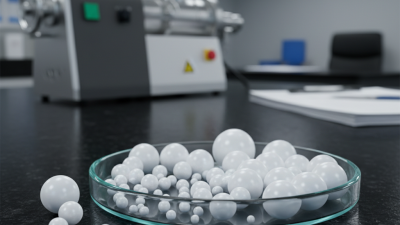
High-performance ZrO2 grinding balls combine high hardness, fracture resistance, and chemical stability. Their dense structure supports efficient particle size reduction with limited ball wear. This matters when milling ceramics, pigments, minerals, or advanced materials.

In practical milling work, I check the ball diameter, roundness, and surface finish before testing. A smooth 5 mm ball can reduce dead zones inside the mill. Consistent density also helps maintain stable movement and energy transfer. Low wear is important because excess debris may contaminate the final powder. That detail is easy to overlook.

No ball is perfect.

A reliable supplier should provide test data for density, hardness, wear loss, and crushing strength. Batch traceability adds another layer of confidence. I also compare performance under the actual milling speed, solvent, temperature, and material load. Laboratory data alone can be misleading. One ceramic formula may perform well with a 0.3 mm ball, while another needs a larger size to prevent clogging. ZrO2 grinding balls should resist cracking during long cycles, but improper loading can still damage them. My own view is cautious: the best result depends on both ball quality and process control.

China Best ZrO2 Grinding Ball Supplier? - Key Properties of High-Performance ZrO2 Grinding Balls
Performance Dimension Typical Value or Range Why It Matters Recommended Evaluation Method Typical Applications
Zirconium Oxide Content Approximately 80–95 wt%, depending on the zirconia-based formulation Higher zirconia content generally supports greater density, hardness, and wear resistance. Review the technical data sheet and verify composition by an appropriate chemical or elemental analysis. High-energy milling, advanced ceramics, pigments, and electronic materials
Bulk Density Approximately 3.7–6.1 g/cm³ Higher density increases impact energy and can improve grinding efficiency in demanding applications. Confirm whether the supplier reports bulk density or true density, because the two values are not interchangeable. Ultrafine dispersion and high-viscosity slurry processing
Vickers Hardness Typically about 1,000–1,300 HV, depending on composition and test conditions High hardness helps the beads resist deformation and surface damage during prolonged milling. Compare results tested under the same load, dwell time, and standard. Mineral powders, coatings, battery materials, and ceramic slurries
Fracture Toughness Typically about 5–10 MPa·m1/2 Higher toughness reduces chipping and breakage when the beads experience repeated impacts. Check the test standard and measurement technique because reported values can vary significantly. High-speed bead mills and recirculating milling systems
Wear Resistance Very high when compared with conventional glass or alumina media Low wear helps reduce media consumption, contamination, maintenance, and changes in product composition. Request a wear-loss result from a relevant mill type, operating speed, slurry, and test duration. Purity-sensitive products and long continuous production runs
Available Diameter Commonly 0.03–30 mm; actual ranges depend on manufacturing capability Smaller beads provide more contact points and are suitable for fine particle-size reduction, while larger beads provide stronger impact. Select the size according to feed size, target fineness, mill chamber design, and separator configuration. Nanomaterial processing through conventional wet grinding
Dimensional Tolerance High-grade beads are commonly manufactured with tight diameter variation Uniform size distribution supports stable flow, consistent energy transfer, and predictable milling performance. Inspect particle-size distribution, roundness, and representative sample measurements. Precision dispersion and narrow particle-size distribution requirements
Sphericity and Surface Finish Near-spherical geometry with a smooth, polished surface is preferred A smooth surface reduces friction, improves circulation, and limits product retention or contamination. Use visual inspection, microscopy, and measurement of sphericity or surface roughness where necessary. Ink, paint, pharmaceutical, cosmetic, and specialty chemical processing
Chemical Resistance Excellent resistance to many acids, alkalis, solvents, and aqueous process media Chemical stability helps preserve media integrity and minimizes unwanted interaction with the formulation. Evaluate compatibility with the actual pH, solvent system, temperature, and chemical additives. Wet grinding of reactive or high-purity formulations
Thermal Stability Suitable for elevated-temperature processing within the equipment and binder limitations Stable properties help maintain grinding performance when heat is generated by high-speed milling. Verify the operating temperature range of the bead grade, mill, seals, and process liquid. High-speed milling and temperature-sensitive production lines
Contamination Control Low media contribution when the bead grade and process conditions are properly selected Reduced media wear is important for white, electronic, pharmaceutical, and high-purity products. Analyze the milled product for zirconium, yttrium, aluminum, silicon, or other relevant trace elements. Electronic ceramics, pharmaceutical ingredients, and high-purity powders
Supplier Quality Documentation Certificate of analysis, batch traceability, dimensional data, and wear-test information should be available Complete documentation improves incoming inspection, process control, and batch-to-batch consistency. Confirm that documents identify the material grade, lot number, test methods, and acceptance criteria. Industrial production, regulated industries, and quality-controlled supply chains

Note: Values shown are typical industry ranges for zirconia-based grinding media and may vary according to stabilizer type, formulation, bead size, manufacturing process, test method, and operating conditions. Always confirm the supplier’s current technical data before selection.

How to Evaluate a Chinese ZrO2 Grinding Ball Supplier

How to Evaluate a Chinese ZrO2 Grinding Ball Supplier

A reliable Chinese ZrO2 grinding ball supplier should provide measurable evidence, not polished claims. The 2024 USGS Mineral Commodity Summaries reported about 1.4 million metric tons of global zirconium mineral concentrate production in 2023. This concentrated supply chain makes raw-material traceability important. Ask for the zirconia source, stabilizer type, and batch identification. Yttria-stabilized zirconia commonly shows a density near 5.8–6.1 g/cm³, but actual values must come from testing.

Check the technical data sheet carefully. It should state bead size tolerance, density, hardness, crushing strength, and wear performance. Request test methods and original laboratory records. A certificate without batch numbers is weak evidence. Very low wear claims deserve questioning.

Test the slurry.

Use a sample trial with your real mill, solids content, pH, and operating speed. Measure media loss, particle contamination, temperature, and final fineness after a fixed period. Industry reports from MarketsandMarkets identify advanced ceramics as a growing materials sector, but market growth does not prove one supplier’s quality.

Factory audits should review sintering control, storage conditions, calibration records, and corrective-action history. ISO 9001 certification helps, yet it is not a substitute for product testing. I would also compare three batches, not one. One successful sample may be luck. The evaluation can feel slower, but overlooked contamination or oversized beads can damage equipment and quietly raise production costs.

Manufacturing Processes and Quality Control Standards

China Best ZrO2 Grinding Ball Supplier?

Manufacturing Processes and Quality Control Standards

A reliable ZrO2 grinding ball begins with controlled raw material, not a polished surface. The 2024 U.S. Geological Survey Mineral Commodity Summaries reported global zirconium mineral concentrate output near 1.5 million metric tons in 2023. That scale does not guarantee ceramic purity. Suppliers must verify zirconia content, stabilizer percentage, moisture, and trace metallic impurities for every powder batch.

Production usually includes spray granulation, cold isostatic pressing, precision sintering, and diamond grinding. Each stage changes performance. Uneven granules can create internal pores. Excessive sintering may increase density but reduce fracture resistance. ISO 18754 supports density and open-porosity testing for fine ceramics, while ISO 9001 encourages traceable procedures and corrective actions. These standards help, but they cannot replace skilled process control.

Quality inspection should measure density, roundness, diameter tolerance, surface defects, crushing strength, and wear loss. A practical batch record links furnace temperature curves with test results and retained samples. Independent laboratories can verify selected batches, especially for high-energy milling. Some suppliers still rely too heavily on visual inspection. That is a weakness. Small cracks may remain invisible until thousands of impacts occur. Buyers should request test methods, sampling plans, calibration records, and recent performance data under comparable milling conditions.

Applications, Specifications, and Purchasing Considerations

China Best ZrO2 Grinding Ball Supplier?

Zirconia grinding balls support fine, low-contamination processing in modern bead mills. They are used for ceramics, pigments, minerals, coatings, and battery materials. In ceramic slurry production, smaller balls improve particle-size control. Larger balls can handle tougher feed materials. The best size depends on mill design, viscosity, and target fineness. Test the process.

A reliable specification should include zirconia content, density, hardness, diameter tolerance, and wear rate. High-density balls usually transfer more energy during grinding. Typical diameters range from 0.1 to 3 millimeters for fine dispersion work. Larger sizes may suit coarse pre-grinding. A smooth, round surface reduces uneven wear and mill damage. However, density alone cannot prove quality. Operators should review batch data, inspection methods, and contamination results.

Purchasing decisions should begin with a material sample and a clear application profile. Share the mill type, operating speed, slurry chemistry, and expected production volume. Request a certificate showing composition, density, and dimensional consistency. Confirm packaging strength, batch traceability, replacement policy, and delivery capacity. A short trial can reveal wear, temperature rise, and unexpected contamination. It may also expose poor compatibility. Do not select only by price. Low-cost media can increase downtime, cleaning labor, and product loss. Some specifications look impressive but remain difficult to verify without independent testing.

China Best ZrO2 Grinding Ball Supplier? Applications, Specifications, and Purchasing Considerations

Typical zirconia grinding-ball diameter ranges vary according to product viscosity, target particle size, mill design, and feed composition. Smaller beads are generally selected for fine dispersion, while larger beads provide higher impact energy.

These are representative industry starting ranges for dense zirconia media, not company-specific specifications. Before purchasing, confirm bead density, zirconia grade, hardness, fracture toughness, size tolerance, contamination requirements, and compatibility with the mill and slurry.