
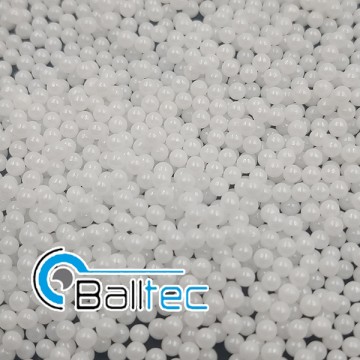
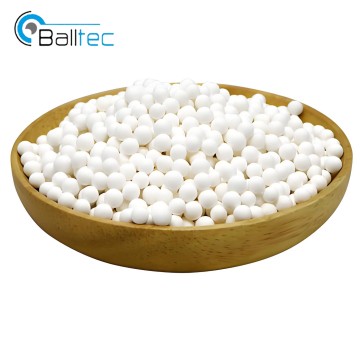
Zirconia Beads – Grinding Media for Continuous Ball Milling of Matcha
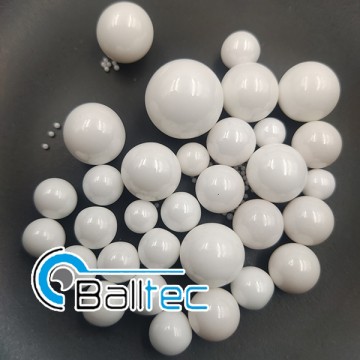
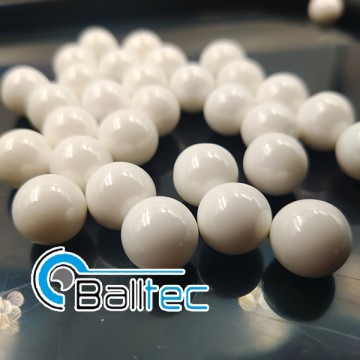
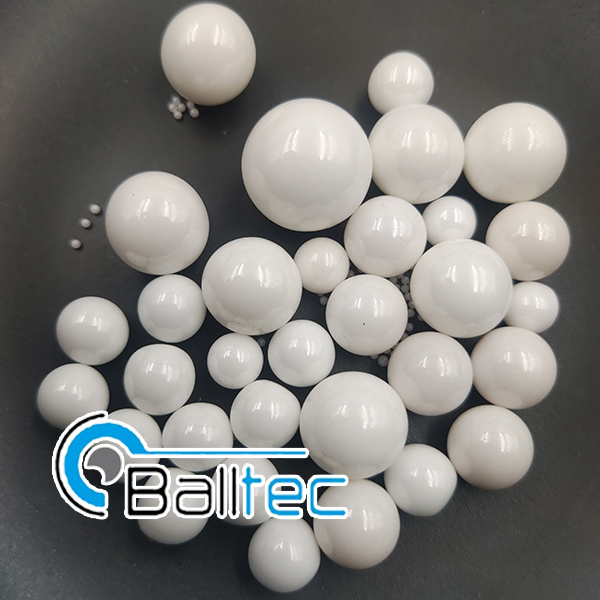
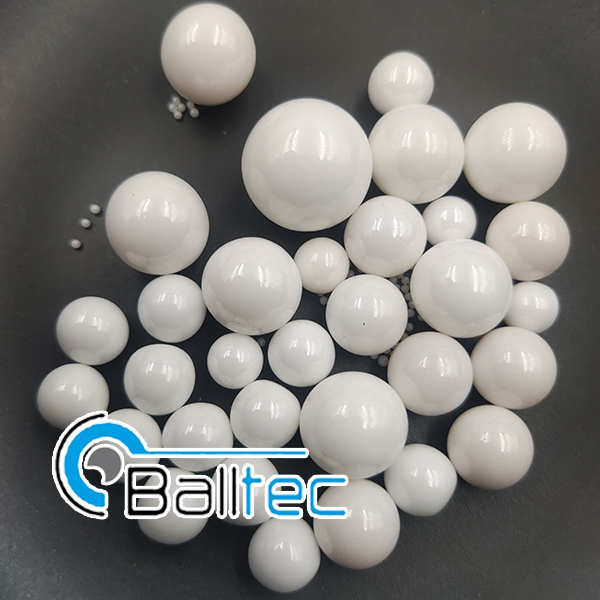
Food-contact grade zirconia beads serve as the core adaptive grinding media for the continuous ball milling process of matcha. Relying on excellent physical and chemical properties, food-grade safety characteristics and process compatibility, these beads have become a core consumable that balances production efficiency, food safety and matcha product quality. They are even the mainstream preferred grinding media for the current small and medium-scale industrial mass production of matcha (with a daily output of 100-500 kg), and their comprehensive performance is far superior to traditional non-food-grade grinding media such as alumina beads.
The core operating principle of continuous ball milling equipment is to drive the grinding media and tea powder to undergo high-frequency impact, shearing and grinding through the high-speed rotation of the drum. Its prominent advantage is the realization of continuous feeding and discharging without intermittent shutdowns, which can meet the demand for large-scale 24/7 uninterrupted production. The high wear resistance, low loss rate and excellent structural stability of food-contact grade zirconia beads are fully adaptable to the high-speed continuous operation characteristics of the equipment at 300-500 r/min. They effectively avoid shutdowns and replacements caused by frequent wear and breakage of the media, greatly reduce the risk of production interruption, and ensure production continuity and stability.
Meanwhile, these media can be efficiently combined with the traditional stone mill process to form a composite grinding process of "ball milling for coarse grinding + stone milling for fine grinding". In the coarse grinding stage, ball milling can quickly grind the pre-crushed tea blanks to a particle size of D90=80-100 μm, which greatly reduces the operating load of stone mill fine grinding and increases the overall production efficiency by more than 30%. Then, by virtue of the mild grinding characteristics of stone mills, the core flavor substances such as tea polyphenols and theanine, as well as the emerald green color in matcha, are retained to the maximum extent.
Ultimately, this composite process achieves a two-way balance between mass production efficiency and product quality, accurately meeting the core demands of "high efficiency, safety and high quality" in the current industrial production of matcha. It is widely applied in the large-scale production of mass consumer-grade matcha and mid-range gift matcha.
Product Parameter Table
|
Item |
Food-Contact Grade Zirconia Beads (Matcha Milling Special) |
|
Main Material |
High-purity ZrO₂ + Food-grade Y₂O₃ (yttria-stabilized TZP) |
|
ZrO₂ Purity |
≥95% |
|
Y₂O₃ Content |
4.5~5.2% (food-grade stabilizer) |
|
Crystal Phase |
Tetragonal phase (TZP) |
|
Microcrystal Diameter |
<0.5μm |
|
Mohs Hardness |
≥9.0 |
|
True Density |
≥6.0 g/cm³ |
|
Bulk Density |
≥3.6 g/cm³ |
|
Wear Rate |
≤0.4 ppm (ppm level ultra-low wear) |
|
Water Absorption Rate |
≤0.01% (dense structure, no water absorption) |
|
Applicable Rotation Speed |
300~500 r/min (continuous ball milling equipment) |
|
Common Particle Sizes |
0.8mm, 1.0mm, 1.2mm, 1.5mm, 2.0mm (customizable for matcha) |
|
Food Safety Standard |
Compliant with GB 4806.4-2023, FDA CPG 7117.06/07 |
|
Shape |
Spherical (high roundness ≥0.98, no burrs) |