
0102030405
Zirconium bead production process
2025-11-27
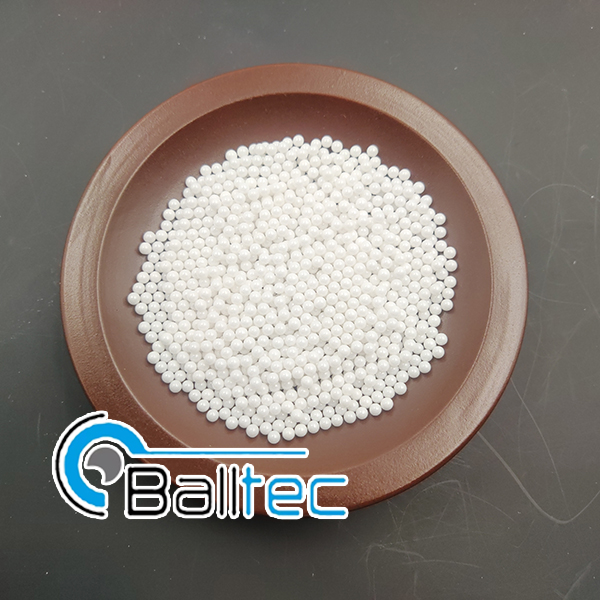
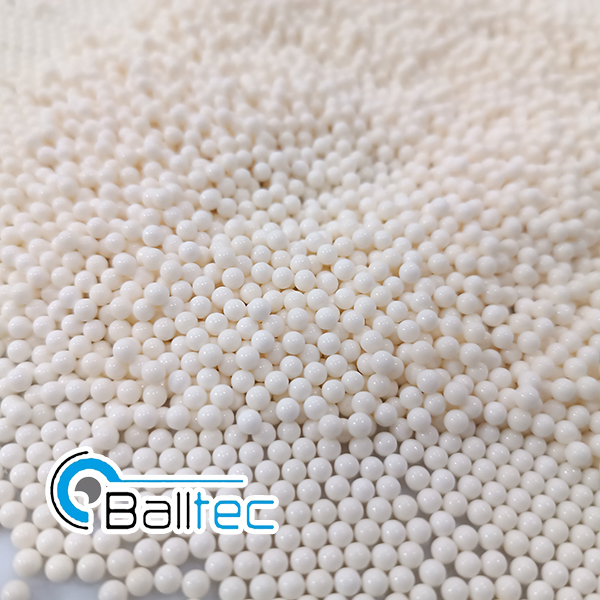
Production Processes of Zirconia Balls There are three main production processes for zirconia balls: compression molding, rolling granulation, and droplet forming. Spherical shape is the primary form of grinding media currently in application. Typically, high-quality microcrystalline zirconia grinding media are manufactured using yttria-stabilized zirconia (Y-TZP) ultra-fine powder as raw material. After molding, the material undergoes high-temperature sintering (1400–1600°C) for densification, followed by polishing via self-grinding or the addition of ultra-fine abrasive powder.
- Compression Molding This is a common molding method for large-sized ceramic grinding media, mainly including dry pressing (powder containing 3–7% water or additives) and isostatic pressing (powder containing ≤3% water or additives). Dry Pressing: Features convenient operation, simple technology, and low capital investment. However, uneven pressure distribution leads to inconsistent density in the green body, thereby affecting the comprehensive performance of the final product. To improve the green body density, manufacturers often adopt the method of gradually increasing pressure in actual production. Nevertheless, higher pressure is not always better—exceeding the ultimate pressure can cause a decrease in green body density due to layer cracking. Isostatic Pressing: Produces green bodies with high strength, uniform and high density, enabling the manufacturing of high-performance, high-quality grinding media balls. Therefore, the industrial sector may combine these two methods to produce high-performance ceramic balls.
- Rolling Granulation In addition to isostatic pressing, rolling granulation is another important molding method for ceramic balls. It is characterized by simple production equipment, raw materials, and operation, as well as excellent sphericity and easy sintering. Although the strength of the formed balls is lower than that of isostatically pressed ones, the production cost is relatively low, and it can produce balls of various sizes ranging from 0.1 mm to 60 mm as required. ### Two Main Rolling Approaches: Clay Segment Rolling: Ceramic powder is mixed with water, binders, plasticizers, lubricants, etc., in a kneading machine to form plastic clay, which is then aged. The clay is extruded into strips by an extruder and cut into segments with length equivalent to their diameter. These segments are then placed into a rolling machine to form green balls. By controlling the die caliber of the extruder and the length of the cut segments, clay segments with good consistency can be obtained, and the roundness of the rolled green balls is also easy to control. However, due to the relatively low density of the green balls, a higher sintering temperature is required to achieve a dense ceramic body, which may cause abnormal grain growth and make it difficult to produce wear-resistant microcrystalline zirconia with excellent performance. Direct Powder Rolling**: Uses a simple and low-cost rotary rolling machine. Preformed green ball seeds are first added to the machine, then ceramic powder is sprinkled while rotating and spraying mist. The powder continuously adheres to the surface of the seeds and gradually grows to form green balls of the desired size. By controlling appropriate rolling process parameters, green balls with high bulk density, good roundness, and uniform size can be obtained.
- Droplet Forming For extremely small zirconia grinding media beads (0.05 mm to several tenths of a millimeter), the droplet forming method is used to produce ceramic green beads. For example, Sinocera (Guoci) uses self-developed 6 nm high-purity ultra-fine zirconia powder synthesized via hydrothermal method as the raw material. The zirconia ceramic microbeads produced by droplet forming can be sintered at low temperatures with no internal pores, exhibiting high density, high strength, high toughness, low wear rate, and other excellent properties. The average grain size of zirconia balls sintered at 1200°C using Sinocera’s customized process is approximately 150 nm. These beads are suitable for the dispersion and grinding of high-performance materials such as electrode materials, multilayer ceramic capacitors (MLCCs), paints, and coatings.