Which filling method should be used for ceramic random packing?
Most people have the impression that installing ceramic random packing into a packed tower simply involves pouring the packing into the tower. In practice, however, the installation is not that simple.If random packing is poured into the tower casually, the packing density will be uneven. In severe cases, the ceramic packing may break, resulting in uneven gas-liquid distribution and reduced separation efficiency.
If conditions permit, wet packing should be used for ceramic random packing.First, install the support plate, then fill the tower with water. Pour the packing gently into the water from above the surface; the packing will float down through the water.The water level should be kept at least 1 meter above the packing layer.This method reduces breakage and deformation, ensuring uniform packing.
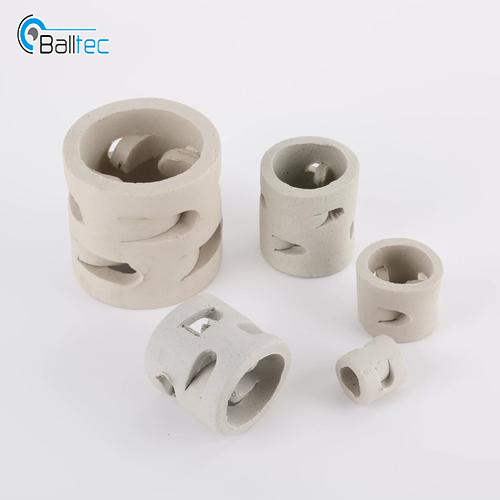
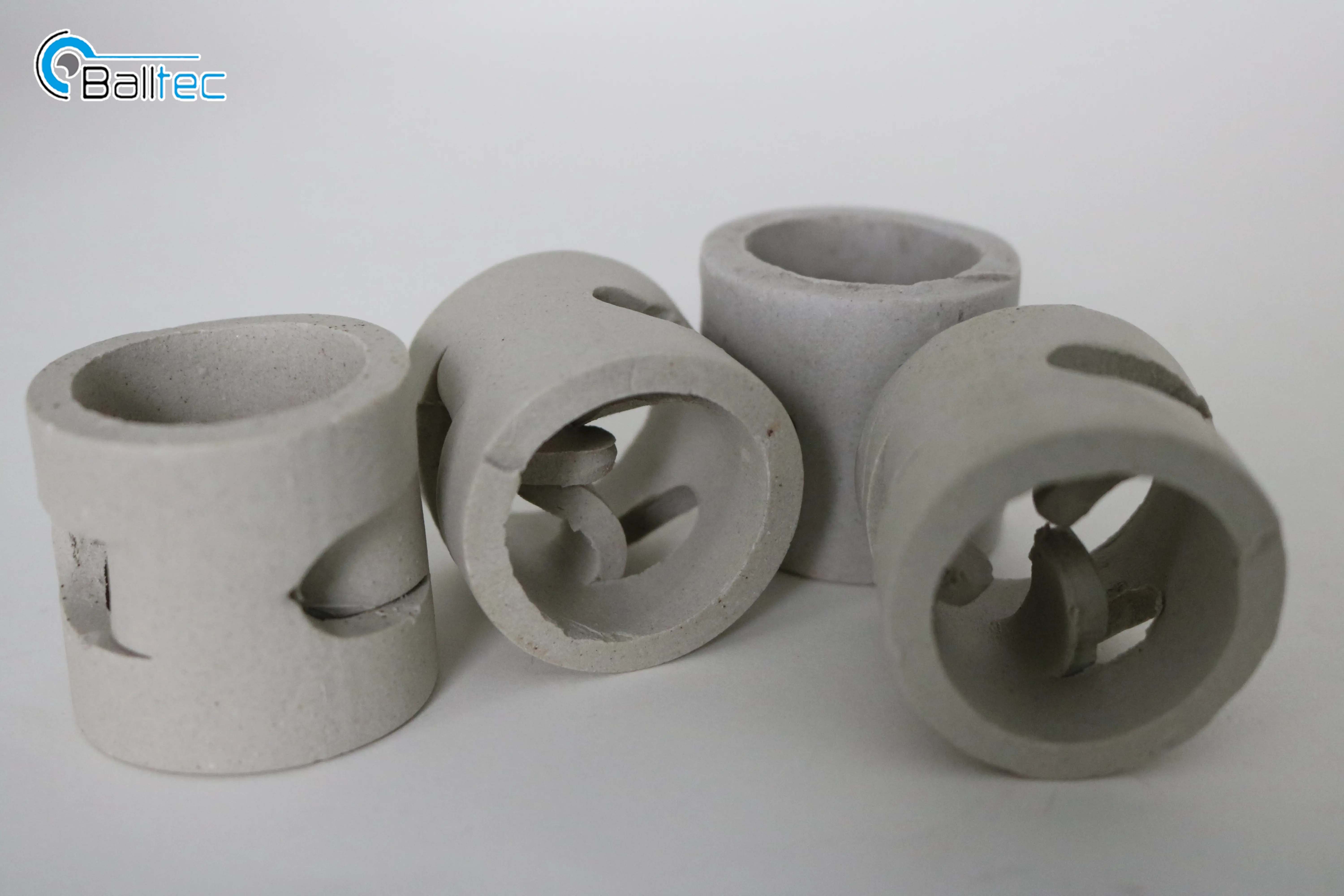
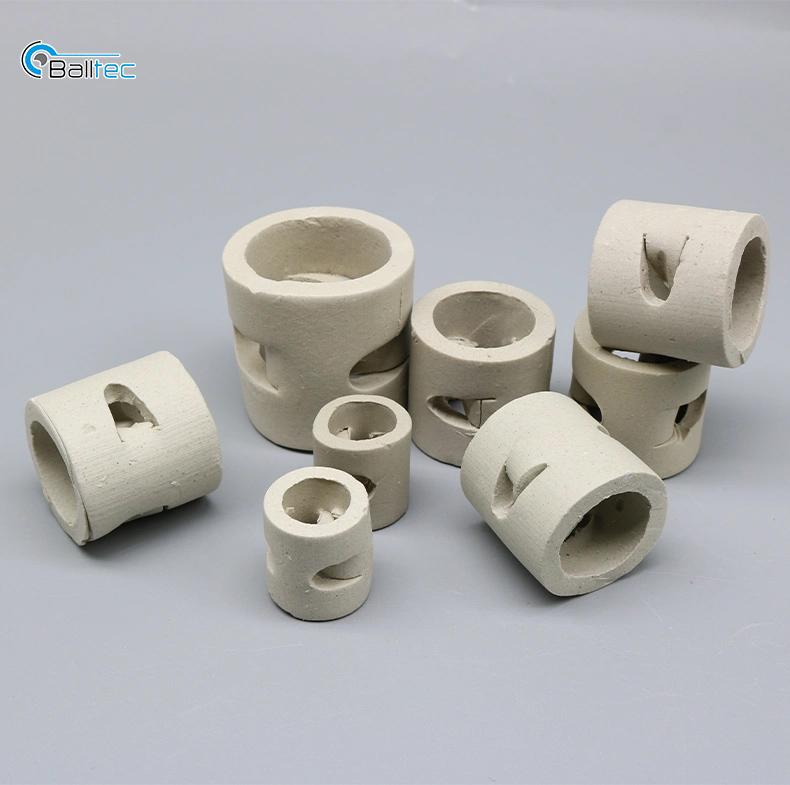
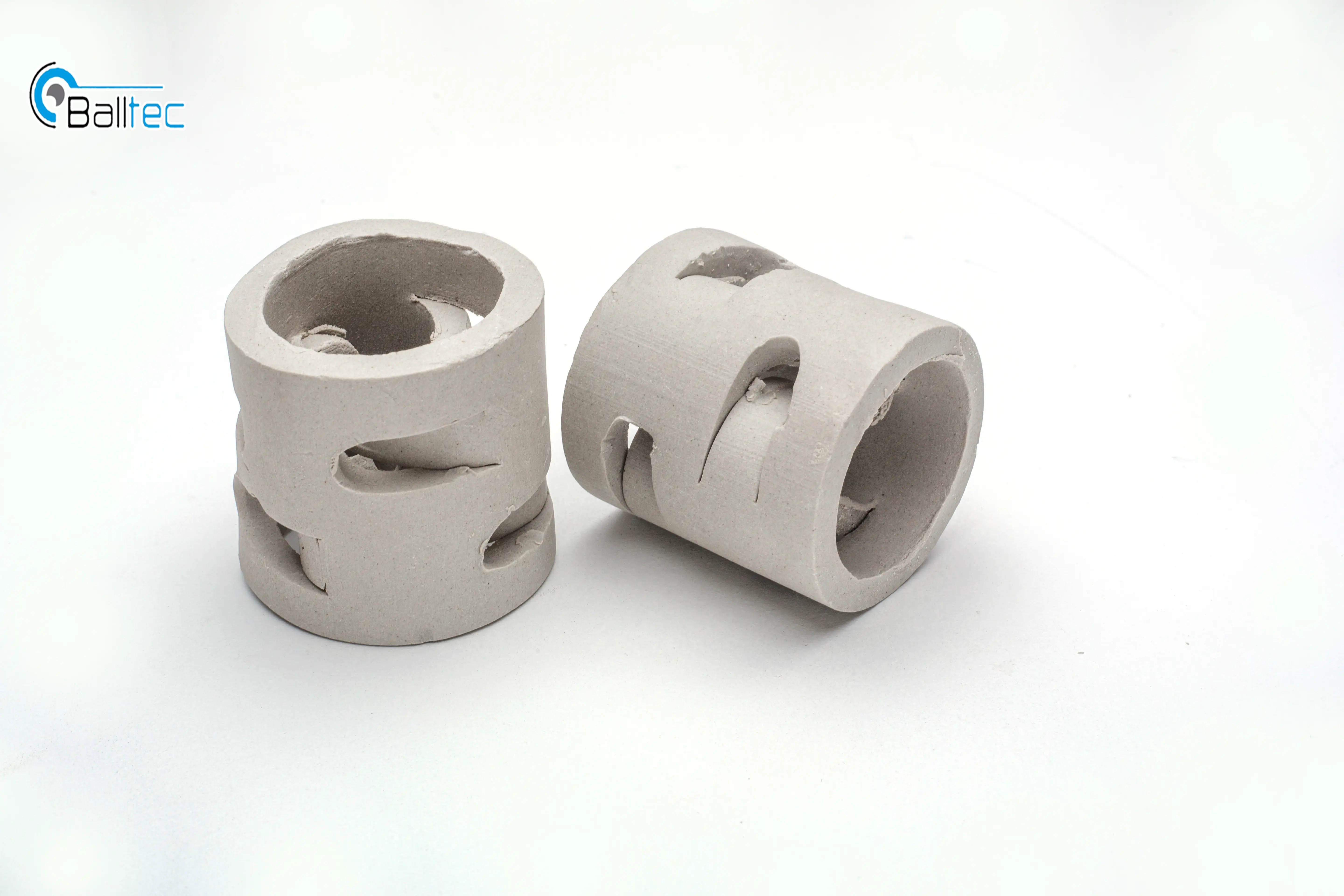
A comparative test was conducted on a 500 mm-diameter tower using 38 mm ceramic Pall rings, comparing wet packing and dry packing.The results showed that wet packing reduced packing consumption by 5%, lowered pressure drop by 10%, and achieved almost the same efficiency as dry packing.Therefore, wet packing is strongly recommended where throughput is limited.
When using dry packing, the packing should always be poured from a certain height above the packing layer.For large-diameter towers using dry packing, workers sometimes need to stand on the packing layer during installation.In such cases, wooden boards must be laid on the packing to distribute pressure — do not stand directly on the packing, to avoid deformation and uneven density.
Regardless of whether wet or dry packing is used,filling should proceed from the tower wall toward the center to prevent bridging at the wall.The packing should not be forced into place, so as to avoid deformation and uneven density.After each section is installed, check that the top layer is leveled; smooth out any uneven areas if necessary.