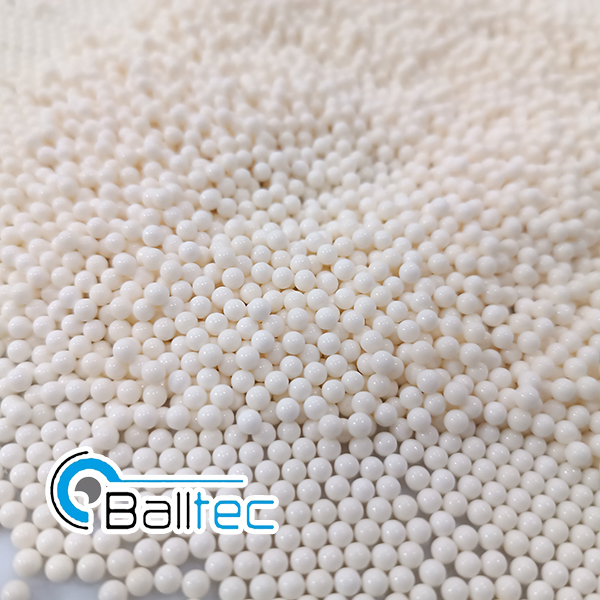
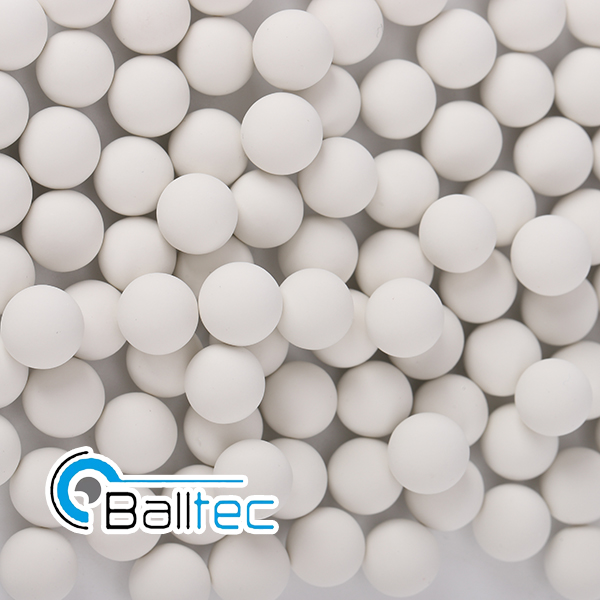
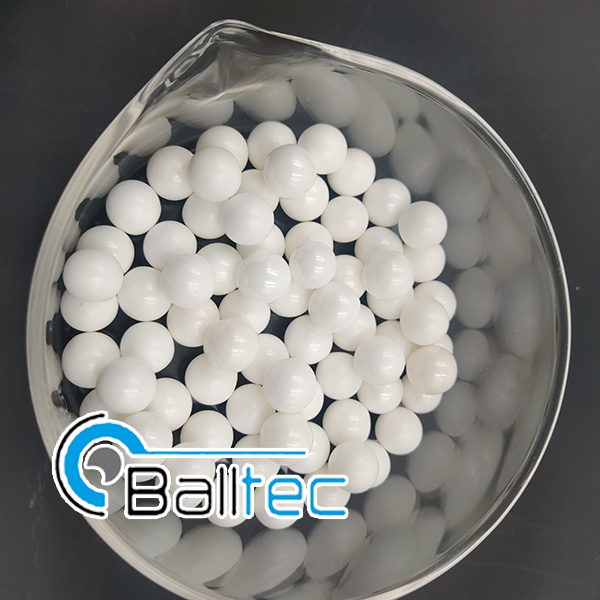
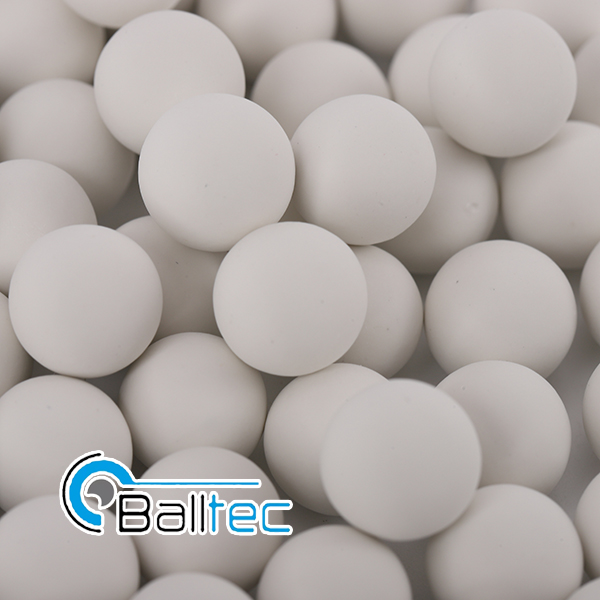
What Are Alumina Balls and Activated Alumina Balls?
What are alumina balls and activated alumina balls, and what are their similarities and differences? The difference between the two lies in the type of alumina powder used. Calcined α-alumina powder, referred to as calcined alumina powder for short, has a density of 3.9-4.0 g/cm³, a melting point of 2050℃, a boiling point of 2980℃, and is insoluble in water. Industrial alumina mainly includes two types (Note: The original text is redundant; it is corrected to "two types" for clarity). Industrially, it can be extracted from bauxite.
Bauxite (Al₂O₃·H₂O and Al₂O₃·3H₂O) is the primary mineral of aluminum in nature. It is crushed and leached with a high-temperature sodium hydroxide solution to obtain a sodium aluminate solution. The residue is removed by filtration, the filtrate is cooled, and aluminum hydroxide crystals are added. After long-term stirring, the sodium aluminate solution decomposes and precipitates aluminum hydroxide; the precipitate is separated and washed, then calcined at a high temperature above 1550℃ to obtain calcined alumina powder.
Regarding alumina types: In the crystal lattice of α-alumina, oxygen ions are closely packed into a hexagonal structure, and Al³⁺ ions are symmetrically distributed at the center of the octahedral coordination surrounded by oxygen ions. The lattice energy is very high, so it has high melting and boiling points. α-alumina is insoluble in water and acids; industrially, it is also called corundum alumina and is the basic material for producing metallic aluminum. It is also used to make various refractory bricks, refractory crucibles, refractory pipes, and high-temperature resistant laboratory instruments; it can also be used as an abrasive, flame retardant, filler, etc. High-purity α-alumina is also the material for producing synthetic corundum, synthetic rubies, and sapphires; it is also used in the production of modern large-scale integrated circuit boards.
γ-Alumina is prepared by dehydrating aluminum hydroxide at a low temperature of 140-150℃; industrially, it is also called activated alumina and aluminum gel. In this structure, oxygen ions are approximately closely packed at the vertical center of mass, and Al³⁺ ions are irregularly distributed in the octahedral and tetrahedral spaces surrounded by oxygen ions. γ-Alumina is insoluble in water but soluble in strong acid or strong alkali solutions. When heated to 1200℃, it will be completely converted into α-alumina. γ-Alumina is a porous material with an internal surface area of several hundred square meters per gram, high activity, and strong adsorption capacity. Industrial products are usually colorless or pink cylindrical particles with good pressure resistance.
It is commonly used as an adsorbent, catalyst, and catalyst carrier in the petroleum refining and petrochemical industries. Industrially, it is a deacidifier for transformer oil and turbine oil, and is also used in chromatographic analysis; it is a strong neutral desiccant in laboratories, with a drying capacity not lower than that of phosphorus pentoxide. It can be regenerated and reused after heating at below 175℃ for 6-8 hours.
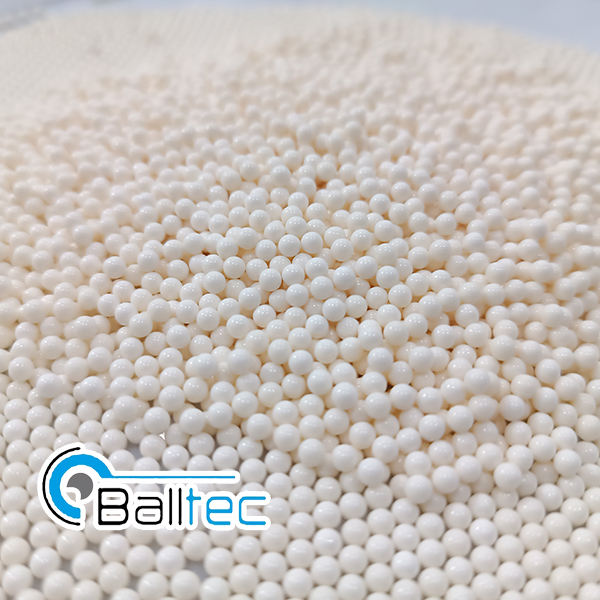
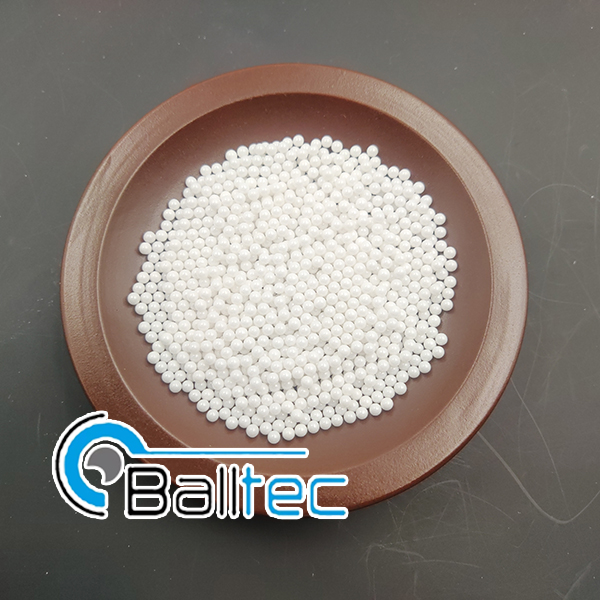
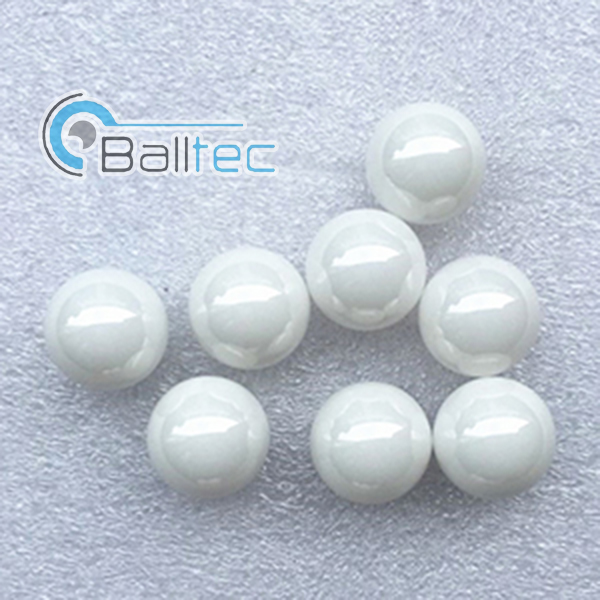
Alumina grinding balls are widely used in ceramic factories, refractory material manufacturers, etc. Current data show that grinding balls using pebbles as the medium are gradually being replaced. Grinding slurry with pebbles (natural cobblestones) plus 10% alumina grinding balls (φ35mm) can shorten the grinding time by 15% compared with using only pebbles. Grinding slurry with high-alumina balls plus 30% alumina grinding balls (φ35mm) can shorten the grinding time by about 30% compared with using only high-alumina balls. The high cost brought by using alumina grinding balls can be saved by reducing electricity bills in about 2 years. According to reports from some manufacturers, all alumina grinding balls are used to replace the original natural balls, and the output is about three times that of the original. At present, most cement plants have also replaced the original steel balls with high-alumina balls with a longer service life.
Therefore, using alumina grinding balls to grind materials can not only save electricity costs and increase output, but also improve the efficiency of machinery and play a great protective role in mechanical equipment. In addition to the ceramic industry, industries such as quartz and chemical engineering are also testing and using alumina grinding balls for production.