
The grinding effects of oxide zirconia beads of different diameters on ink
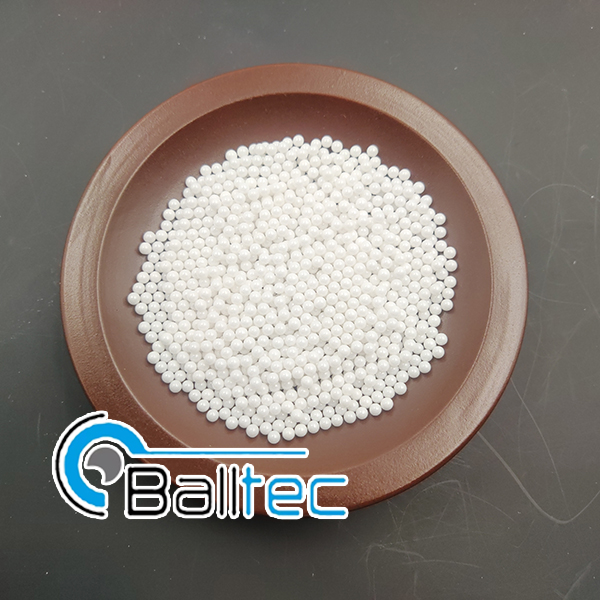
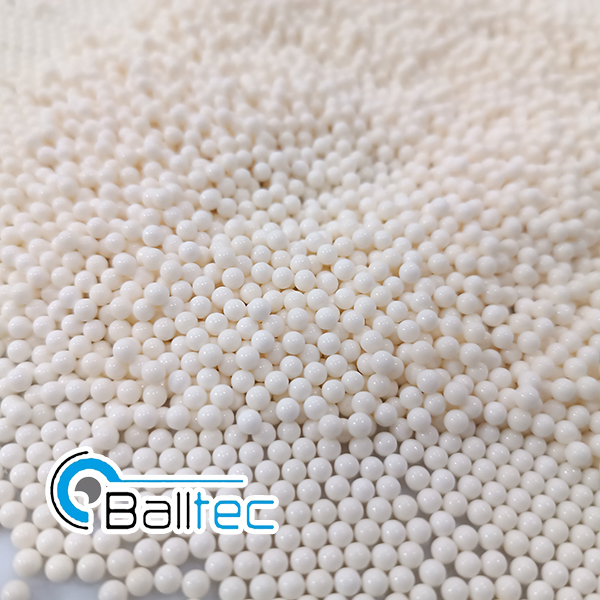
Material grinding is an important step in ink production, and the quality of grinding can be indicated by the degree of material dispersion. The different particle sizes of our zirconia beads affect the grinding effect and efficiency of the materials. In order to better apply the grinding machine in the dispersion and grinding of ink, this paper analyzes the influence of our zirconia beads of different diameters on the dispersion and grinding effect of solvent and water-based inks. The research results show that due to the higher density of the medium, the grinding effect of the materials using our zirconia beads as the grinding medium is better than that of glass beads and alumina beads; for the same type of our zirconia beads with smaller diameters, the smaller the particle size of the pigment, the better the grinding effect.
Three types of our zirconia beads with diameters of 1.0 - 1.2 mm, 1.6 - 1.8 mm, and 2.2 - 2.4 mm were selected as grinding media. Under the same other grinding conditions, the same amount of pigments were ground for 90 minutes using a horizontal grinding machine, and the particle size of the pigments after grinding was measured by a laser particle size analyzer. The influence of different types of our zirconia beads on the ink grinding effect was analyzed, and the specific results are shown in Figure 2.
The grinding effect of different diameters of our zirconia beads of the same type is analyzed:
(1) When using our zirconia beads with smaller diameters as the grinding medium, the particle size of the pigment should be smaller, and the grinding effect will be better. When using our zirconia beads with diameters of 1.0 - 1.2 mm as the grinding medium, 95% of the particle size of the ink is less than 1 μm; when using our zirconia beads with diameters of 1.6 - 1.8 mm as the grinding medium, 95% of the particle size of the ink is less than 1.52 μm; when using our zirconia beads with diameters of 2.2 - 2.4 mm as the grinding medium, 95% of the particle size of the ink is less than 1.6 μm. At the same time, the grinding effects of our zirconia beads with diameters of 1.6 - 1.8 mm and 2.2 - 2.4 mm are relatively close.
(2) The probability of our zirconia beads with smaller diameters colliding with each other and undergoing shear action in the grinding machine barrel is higher. The smaller the diameter of our zirconia beads, the more the number of collisions in the same volume capacity, and the higher the probability of collision; during the grinding process, the larger the action area of our zirconia beads, the greater the shear force on the pigment dispersion, the narrower the particle size distribution of the ink, and the overall smaller the pigment particle size after grinding and more pigment particles of smaller size. The grinding effect and efficiency are high. Due to the small specific surface area and small action area, the shear force on the pigment dispersion is small, and the particle size distribution of the ink is wider and there are more particles of larger size.