The function of ceramic corrugated structured packing
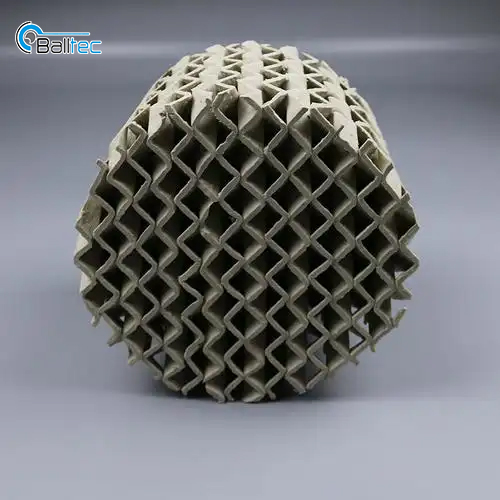
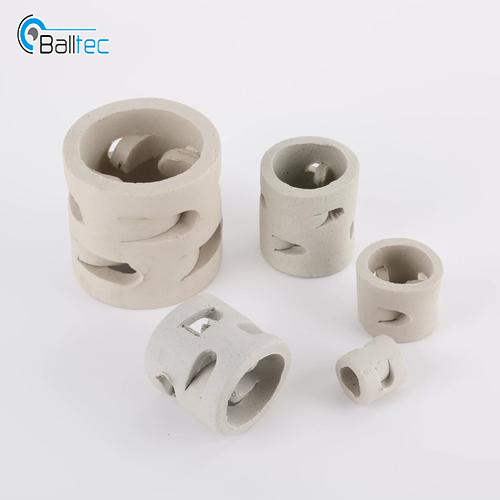
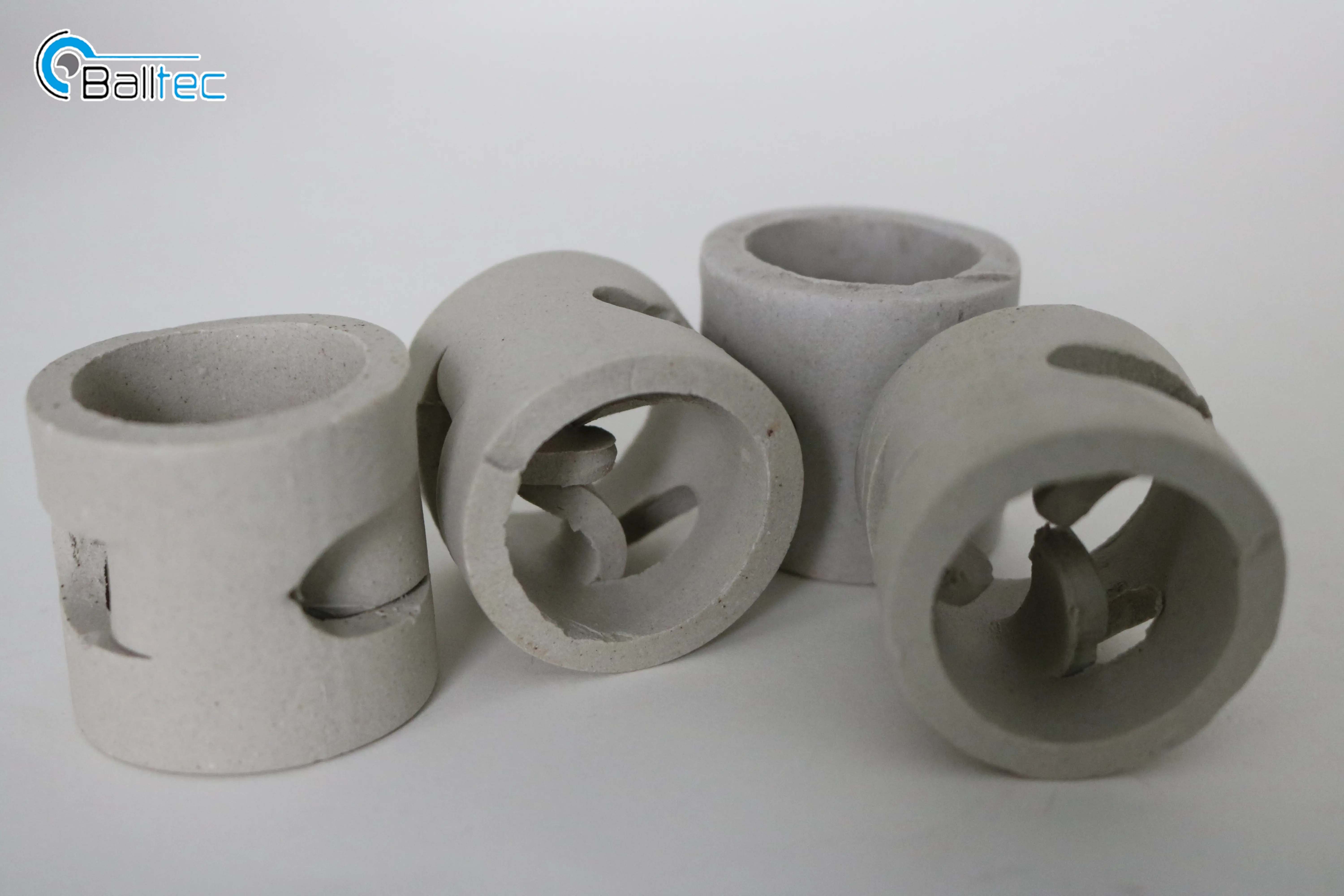
Ceramic structured packing is a widely used tower component in the fields of chemical engineering, environmental protection, and petroleum, etc. Its main function is to enhance the mass transfer, heat transfer or reaction performance by optimizing the contact efficiency between gas and liquid or liquid and liquid. The following are its core functions and features:
- Enhance mass transfer efficiency
Ceramic structured packing provides uniform flow channels through its ordered geometric structure (such as honeycomb, corrugated plate, etc.), reducing fluid short-circuiting or wall flow phenomena, thereby increasing the gas-liquid contact area and promoting mass transfer (such as absorption, distillation, etc. processes).
2.Corrosion Resistance and High Temperature ResistanceCeramic materials possess excellent chemical inertness, making them suitable for strong acid, strong alkali or high-temperature environments (such as sulfuric acid production, waste gas treatment), which avoids the problem of easy corrosion of metal packing.
3.Low Pressure Drop and High FluxThe structured design can significantly reduce the pressure drop during fluid passage, making it suitable for high-flow operating conditions (such as large-scale towers) while maintaining high separation efficiency.
4.Mechanical Strength and StabilityCeramic packing has high mechanical strength, is not prone to deformation or breakage during long-term use, and is suitable for harsh conditions involving high pressure or particulate matter.
5.Environmental Protection and Energy SavingIn waste gas treatment (e.g., VOCs removal) or wastewater treatment, ceramic packing can efficiently capture pollutants, reduce energy consumption, and meet the requirements of green chemical industry.