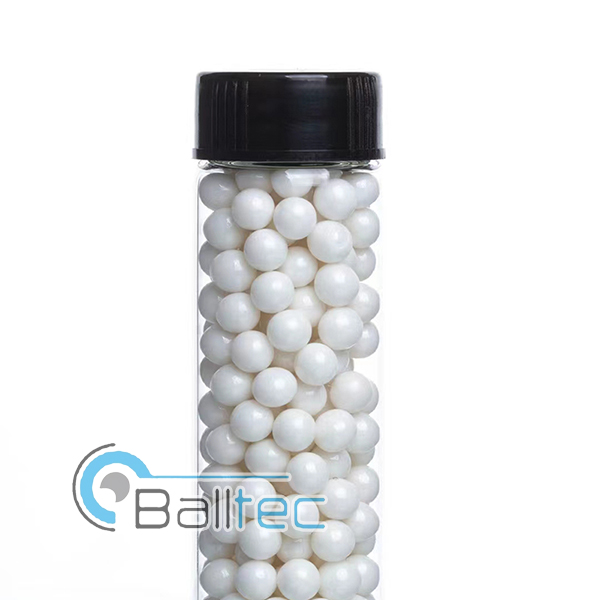
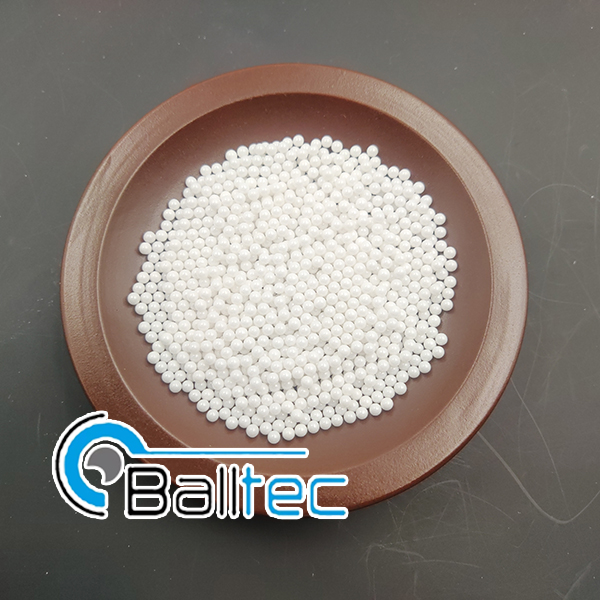
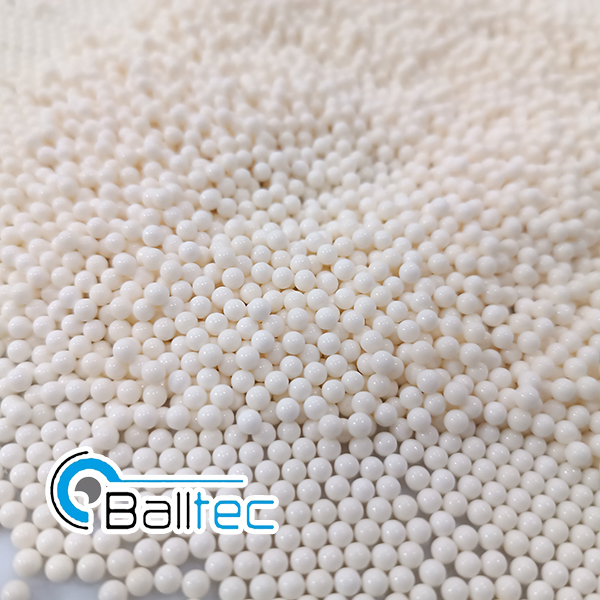
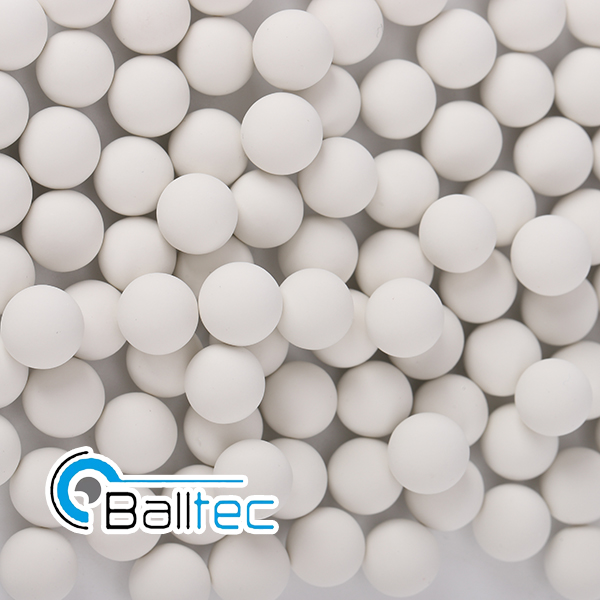
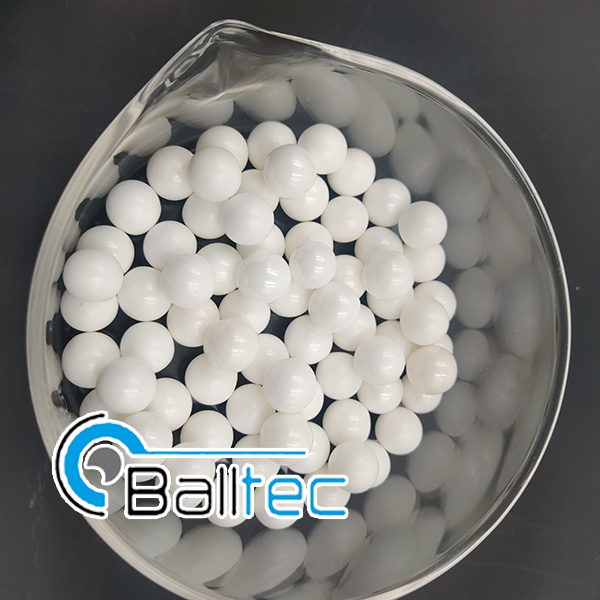
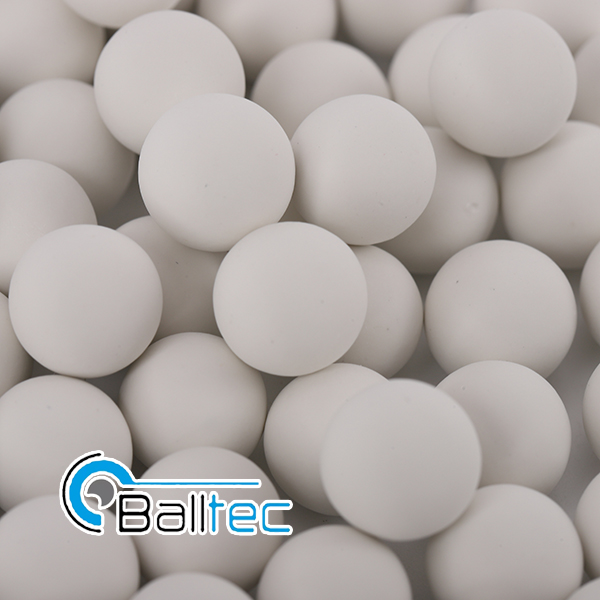
Production Process and Advantages of Zirconia Balls via Dropping Molding
The dropping molding process of zirconia balls mainly consists of the following four steps:
Step 1: Dropping Molding
Zirconia powder (either yttria-stabilized zirconia powder with an yttrium oxide content of approximately 5% by weight, or ceria-stabilized zirconia powder with a cerium oxide content of about 6–20% by weight) is mixed evenly with a binding agent. Then the mixture is sent into the droplet molding equipment, and through droplet molding, the zirconia ceramic particles are formed for pre-forming. After air cooling for shaping, the formed zirconia ceramic particles fall into a cooling liquid by gravity to be collected, resulting in zirconia ball green bodies.
Step 2: Degreasing
The collected zirconia ball green bodies are removed from the cooling liquid and placed into a degreasing solution. They are heated to 40–90°C for degreasing, and the degreasing time is usually 1–4 hours.
Step 3: Sintering with Heat Preservation
The degreased zirconia ball green bodies are sintered at 1350–1550°C with heat preservation for 3–6 hours, forming zirconia ball blanks.
Step 4: Polishing
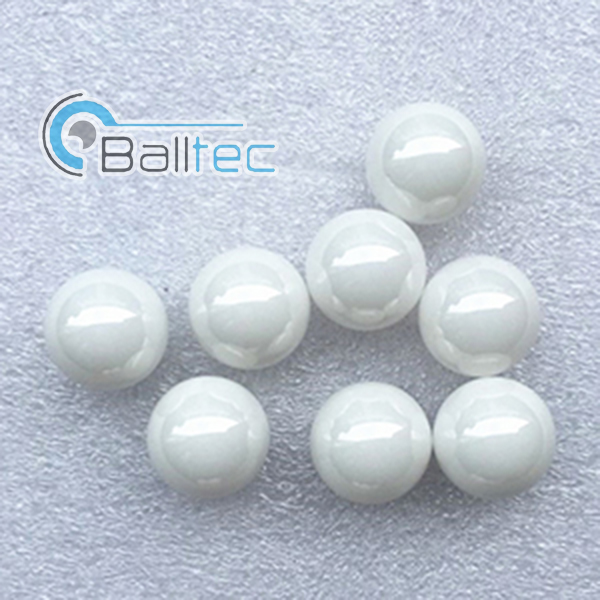
The zirconia ball blanks are polished to obtain finished zirconia balls.
The dropping process enables precise control over the diameter of zirconia balls.
During the dropping process, the surface tension of the liquid is utilized to achieve 100% sphericity, eliminating the formation of irregular microbeads and improving grinding efficiency.
The dropping process leverages gravity to achieve "high density" of the balls, increasing the density per unit volume of zirconia balls and thereby enhancing their kinetic energy.
After sintering, the balls have a "smooth and clean" surface, which increases their rotation speed and further improves (grinding) efficiency.