
Optimal Zirconia Bead Loading Ratio for Sand Mills Introduction
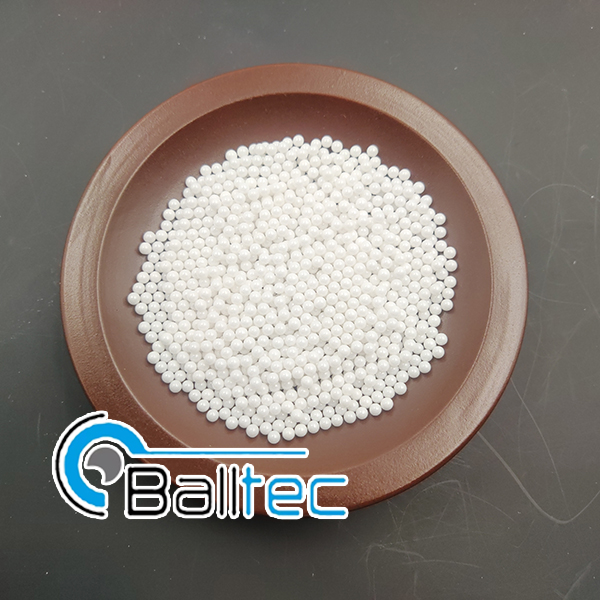
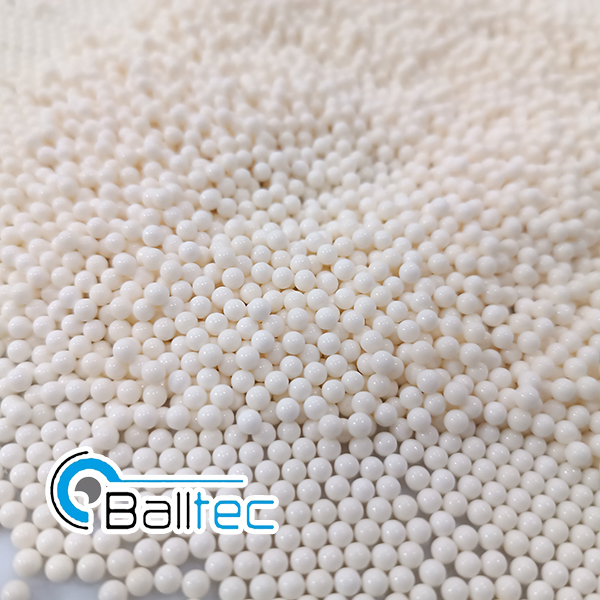
Sand mills are essential for ultra-fine grinding in industries like paints, lithium-ion batteries, and advanced ceramics. Zirconia beads (mainly yttria-stabilized zirconia, YSZ) are the primary grinding medium, and their loading ratio directly impacts grinding efficiency, bead lifespan, and product quality. A wrong ratio—too high or too low—can cause low output, high energy use, or equipment damage. This article outlines the optimal loading ratio, key influencing factors, and practical guidelines.
1. Definition and Core Principles of Loading Ratio
The zirconia bead loading ratio is the volume percentage of beads relative to the sand mill’s effective grinding chamber volume (excluding agitators, separators, etc.). Its design follows two core principles:
- Impact & Shear Sufficiency: Enough beads create continuous impact and shear to break material agglomerates. Too few beads reduce contact between beads and materials, slowing grinding.
- Fluidity & Heat Control: Too many beads increase friction between beads and the chamber wall, raising temperature (risking material damage or bead phase change) and blocking material flow, leading to uneven grinding.
2. Optimal Loading Ratios by Sand Mill Type
Different sand mill structures require specific ratios to match their working mechanisms.
2.1 Horizontal Sand Mills (Industrial Mainstream)
Horizontal sand mills have a horizontal chamber and high-speed rotating agitators (disc/pin type). The optimal ratio is 70%–80% of the effective chamber volume:
- For high-viscosity materials(e.g., solvent-based inks, battery cathode slurries), use 70%–75%. Lower ratios improve material circulation and avoid "dead zones" (trapped and over-ground material).
- For low-viscosity materials(e.g., water-based paints, mineral slurries), use 75%–80%. Higher bead density boosts impact frequency, speeding up particle reduction.
2.2 Vertical Sand Mills
Vertical sand mills (vertical agitator, bottom-fed material) need a slightly lower ratio: 65%–75%:
- Gravity makes beads accumulate at the bottom. A lower ratio reduces pressure on the bottom separator, preventing bead leakage and ensuring smooth material discharge.
- For small lab vertical mills (chamber volume <5L), keep the ratio at 65%–70% to reduce wear on small agitators.
2.3 Mills with Dynamic Separators
For sand mills with screen/disc separators, the ratio must be ≤80% (even for horizontal mills). This reserves space for material to pass through the separator—ratios over 85% may push beads into the separator, causing abrasion and product contamination.
3. Key Factors Adjusting the Ratio
Besides mill type, three factors require flexible ratio adjustments:
3.1 Zirconia Bead Size
- Small beads (0.1–0.5mm): Use 75%–80%. Small beads have low individual impact energy; higher density increases contact with fine materials (e.g., nano-pigments).
- Large beads (3–5mm): Use 65%–70%. Large beads generate strong impact; lower density avoids excessive friction and chamber wall wear.
3.2 Material Properties
- Hard materials (e.g., Al₂O₃, ZrO₂ powders): Increase the ratio by 5%–10% (e.g., 75%–85% for horizontal mills) to enhance crushing force.
- Thermosensitive materials (e.g., organic pigments): Decrease by 5%–10% (e.g., 65%–70% for horizontal mills) to reduce friction heat and avoid material denaturation.
3.3 Grinding Targets
- Rough pre-grinding (target particle size: 5–10μm): Use 65%–70% to prioritize throughput.
- Ultra-fine grinding (target <1μm): Use 75%–80% for sufficient shear to refine particles to nano-scale.
4. Practical Measurement & Verification
To confirm the correct ratio, follow these steps:
- Calculate Effective Volume: Use the manufacturer’s data or water displacement (fill the chamber with water, drain and measure volume).
- Load Beads: Add beads slowly while rotating the agitator at 30%–50% of rated speed (for uniform distribution). Stop when beads reach the target ratio height (e.g., 70% = 7/10 of the chamber’s transparent window).
-
Verify Performance: After 30 minutes of operation:
- If fineness is insufficient: Increase the ratio by 5% (max 80%).
- If temperature >80°C: Decrease by 5% for better heat dissipation.
- If bead wear >0.3 ppm/h: Reduce the ratio to lower bead friction.
5. Common Mistakes to Avoid
- Overloading (>85%): Causes agitator jamming, higher motor load, and faster wear of beads/liners.
- Underloading (<60%): Leads to agitator "idling," wasted energy, and uneven particle size.
- Ignoring Settlement (Vertical Mills): Do not fill to full visual height—leave 5%–10% space for bead settlement to avoid separator blockage.
Conclusion
The optimal zirconia bead loading ratio is dynamic, depending on mill type, bead size, material properties, and grinding targets. Following typical ranges (70%–80% for horizontal, 65%–75% for vertical mills) and adjusting via on-site verification ensures high efficiency, low bead wear, and consistent product quality—critical for modern ultra-fine grinding.