Is ceramic Pall ring alkali-resistant?
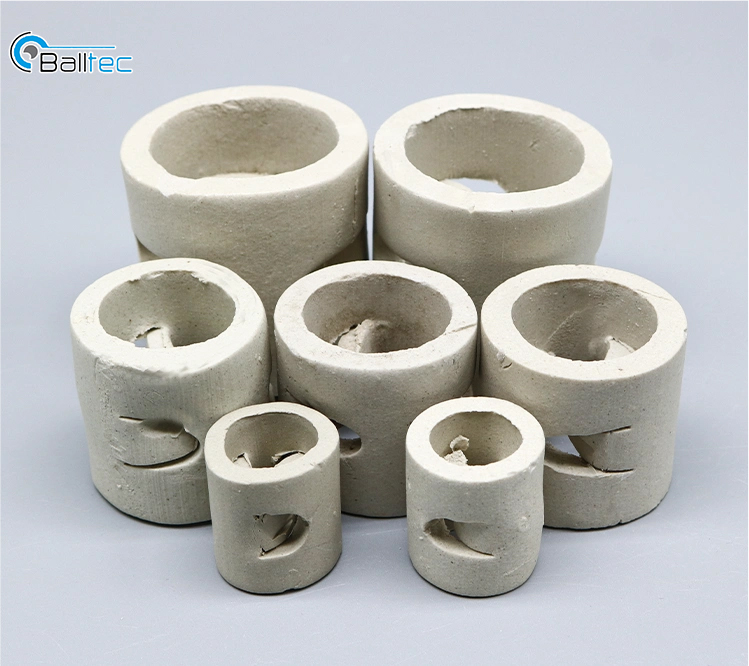
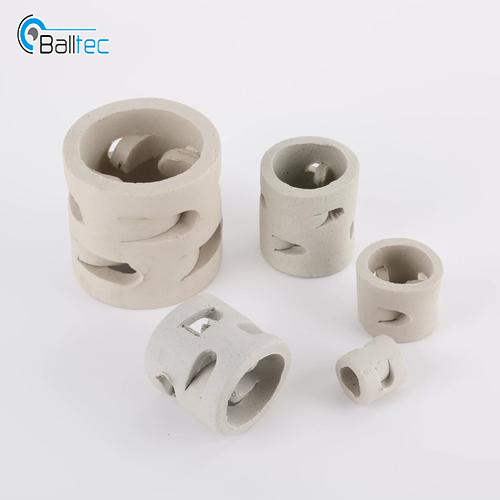
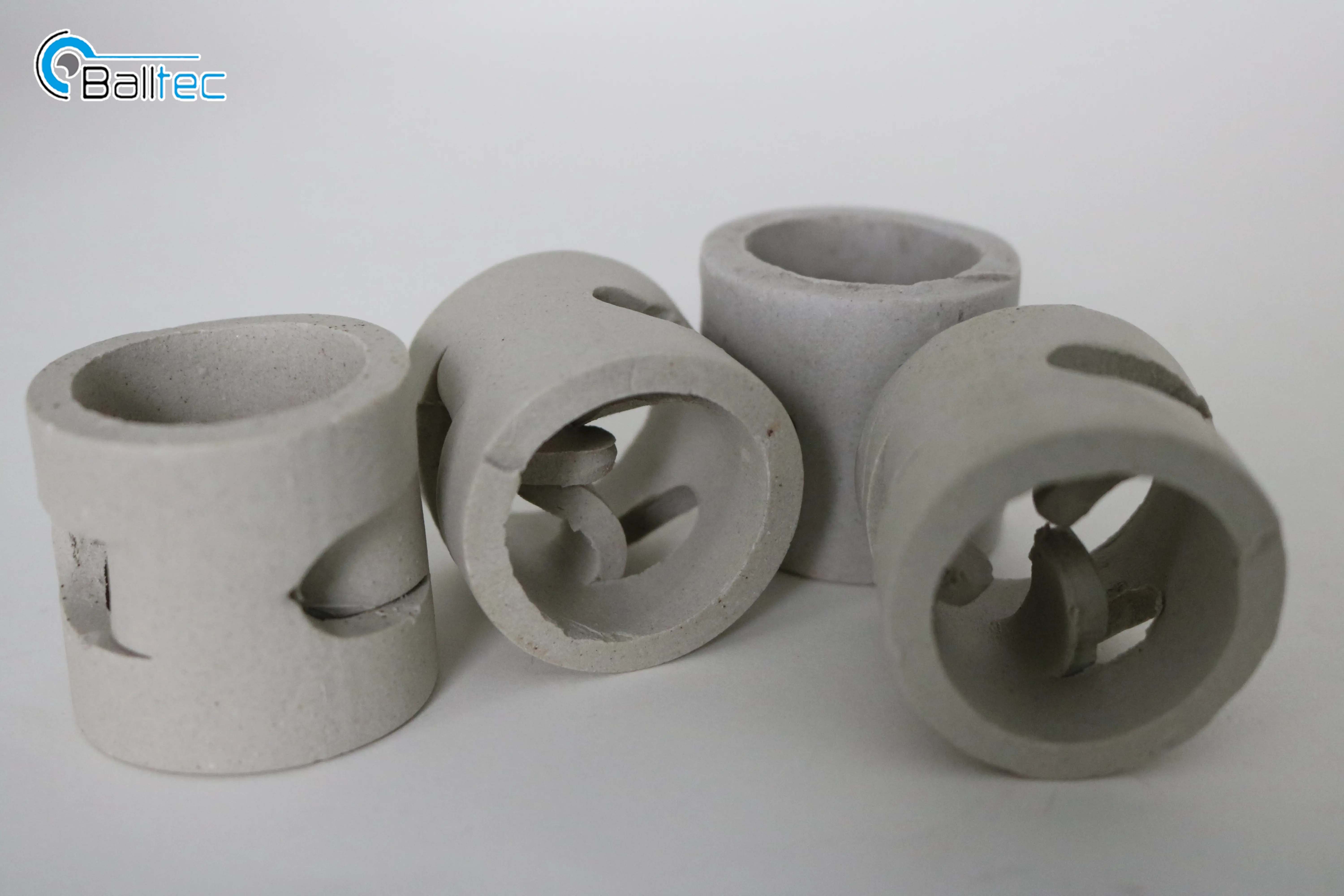
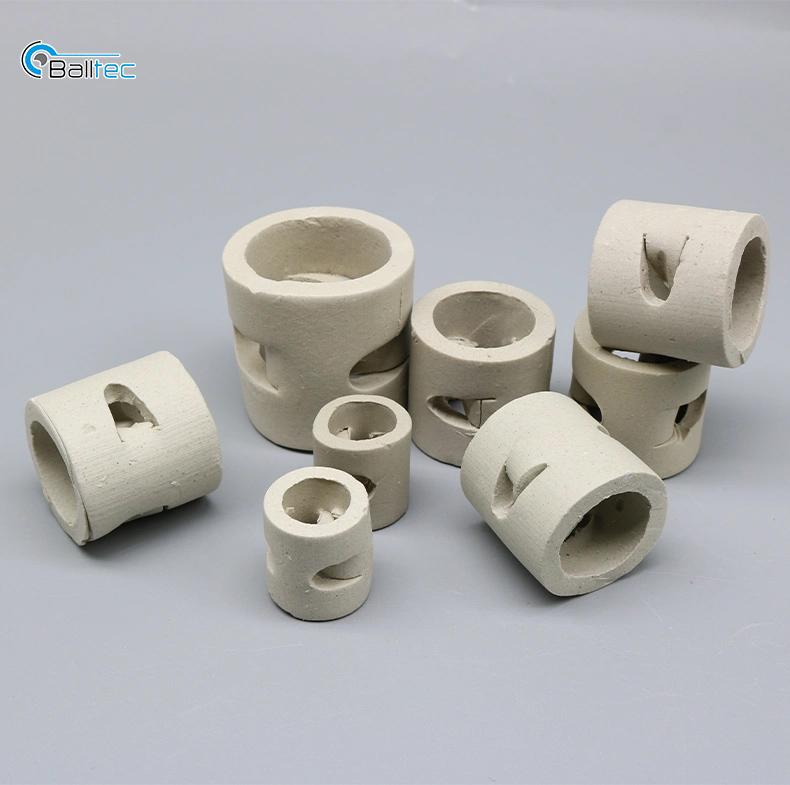
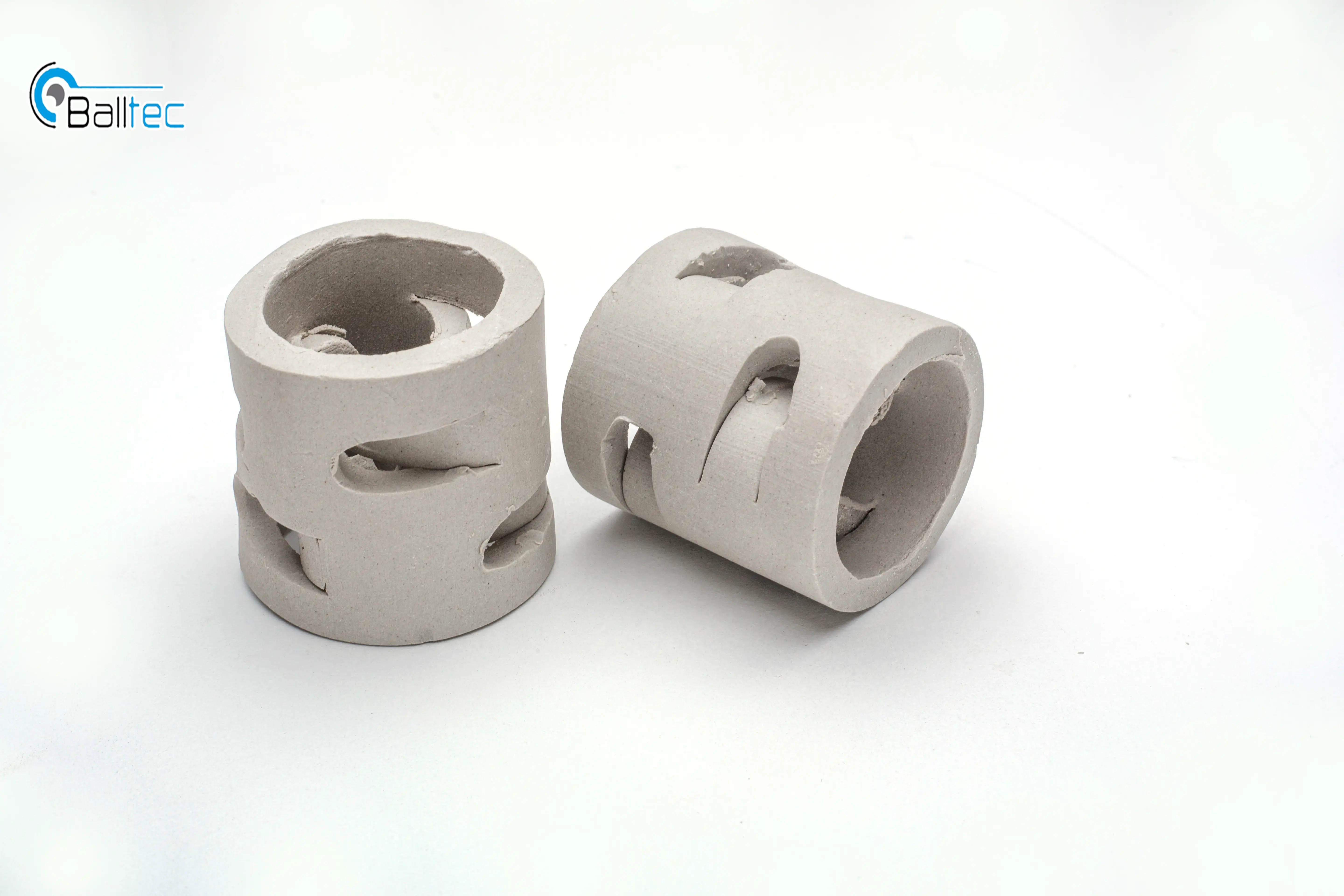
Pall rings were developed on the basis of Raschig rings. The upper and lower layers of the ring wall are equipped with inward-bent tongues. Each layer has five tongues bending toward the center of the ring, and the upper and lower layers are staggered. The window area accounts for about 35% of the ring wall.
Regardless of the packing orientation in the tower, liquid sprayed onto the pall rings flows partly along the outer wall, partly through the windows to the inner wall, and partly along the tongues toward the center. This improves liquid dispersion and the utilization rate of the inner surface of the packing. The inward-bent tongues increase gas turbulence, and the staggered windows reduce dead zones between adjacent packing elements.
Pall ring packing achieves uniform gas and liquid distribution with a large two-phase contact area, resulting in improved mass transfer efficiency. It can operate over a wide range of gas velocities while maintaining stable mass transfer performance, making it especially suitable for direct air distillation.
Ceramic pall ring packing features excellent chemical resistance to acids and alkalis, high mechanical strength, and good thermal stability. Its main structural components include quartz and mullite as the main crystalline phases, with feldspar glass and sintered kaolin as the structural binder. Taking advantage of the high strength and heat resistance of sintered kaolin and quartz crystals, the product offers excellent oxidation resistance, wear resistance, gas impact resistance, strong acid and alkali corrosion resistance, dense sintering structure, and extremely low chemical activity, ensuring long service life.
Advantages of Ceramic Pall Ring Packing:Good acid resistance, alkali resistance, heat resistance and oxidation resistance, as well as low cost.
Disadvantages:Brittle, heavy weight, inconvenient installation, and relatively high installation requirements. The wet packing method can be adopted to better protect ceramic pall rings from breakage.
Ceramic pall rings have excellent acid resistance and heat resistance (operating temperature ≥ 1300 °C). They can resist corrosion from various inorganic acids (except hydrofluoric acid), organic acids and organic solvents. Their acid resistance reaches up to 99%, and alkali resistance up to 85%. The production cost is lower than that of plastic and metal pall rings.
They are widely used as tower packing in CO₂ degassing towers, acid mist purification towers, ozone contact reaction towers and other reaction towers.They are suitable for various separation, absorption and desorption units, atmospheric and vacuum units, ammonia synthesis decarbonization and desulfurization systems, ethylbenzene separation, isooctane and toluene separation, etc.