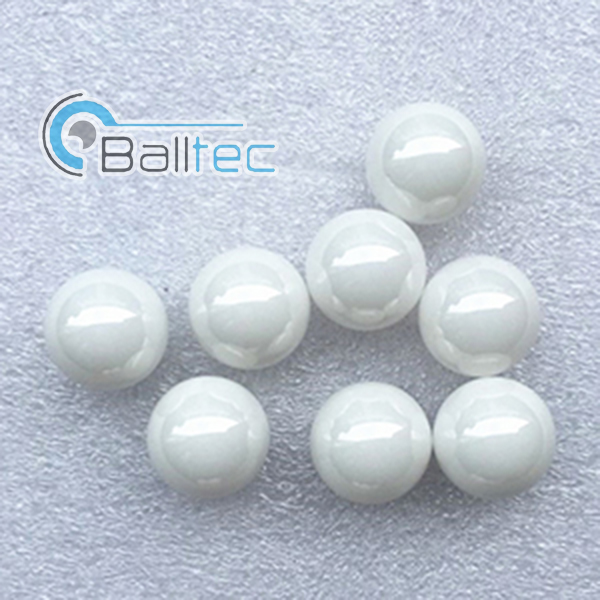
Introduction to the Production Processes of Zirconia Balls
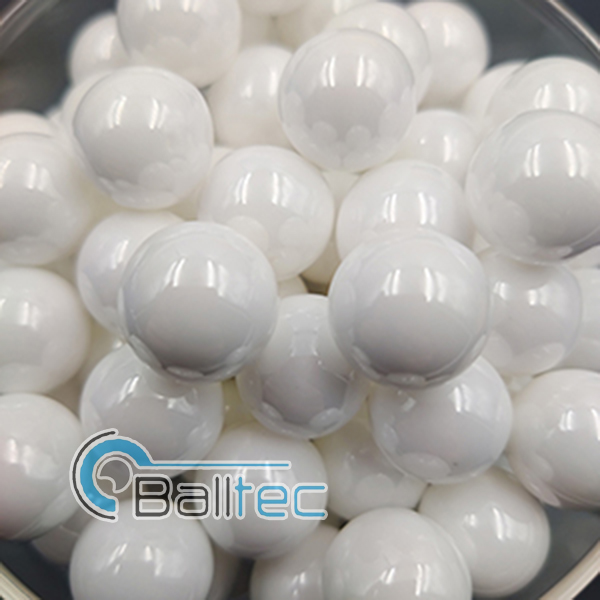
There are mainly three preparation processes for zirconia balls: compression molding, rolling molding, and dropping molding.
① Compression Molding (also referred to as dry powder compression molding) has the advantages of simple operation, suitability for manufacturing large-sized balls, and low investment. However, uneven pressure distribution can cause inconsistent density inside the green body, which in turn affects the comprehensive performance of the final product. Either excessively high or low pressure will result in poor sphericity of the zirconia beads.
② Rolling Molding is also a method for mass production of zirconia beads in China. It features simple production equipment and raw materials, low preparation cost, high molding efficiency, fast production speed, good sphericity, and easy sintering. Nevertheless, since rolling molding builds up the bead size layer by layer, the density of the beads is slightly lower than that of those produced by other processes. This leads to relatively higher wear during grinding, obvious bead breakage during use, difficulty in controlling the quality of the prepared zirconia microbeads, and a high damage rate of finished products.
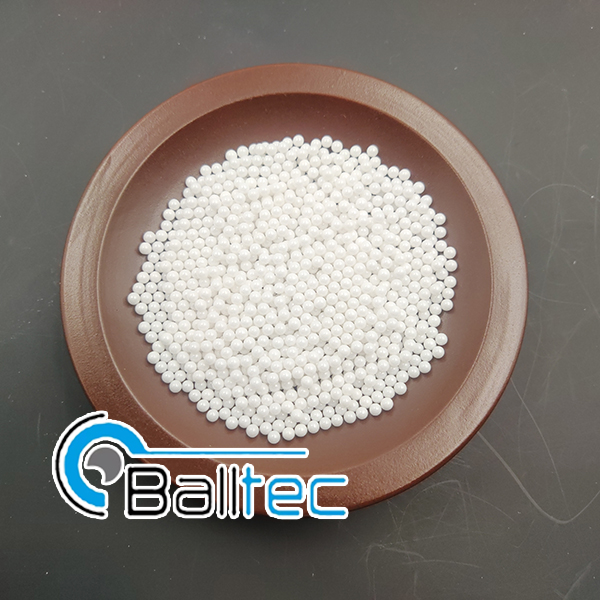
③ Dropping Molding works similarly to a syringe squeezing out water droplets. During production, the surface tension of zirconia droplets suspended in a dielectric medium shapes the droplets into spherical forms. Zirconia beads produced by this dropping method have high sphericity. Moreover, the zirconia beads manufactured via dropping molding can be sintered at low temperatures, and they possess properties such as high density, high strength, high toughness, and low wear. However, this process has slow production speed and high cost. For small-sized zirconia beads (ranging from 0.05mm to several tenths of a millimeter), dropping molding can be used to form the green bodies of ceramic beads.