Comparison of Ceramic Ball Packed Columns and Raschig Rings
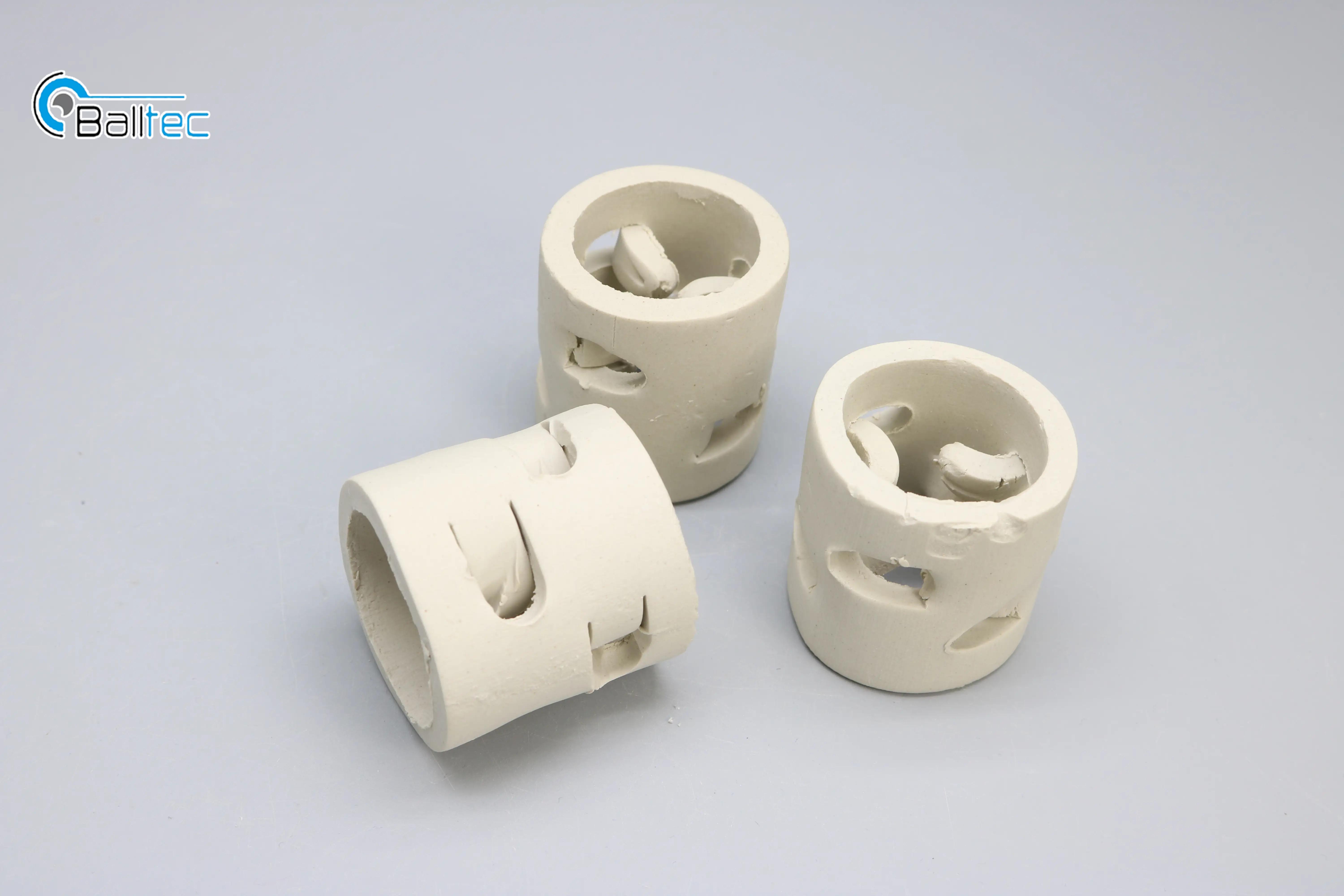
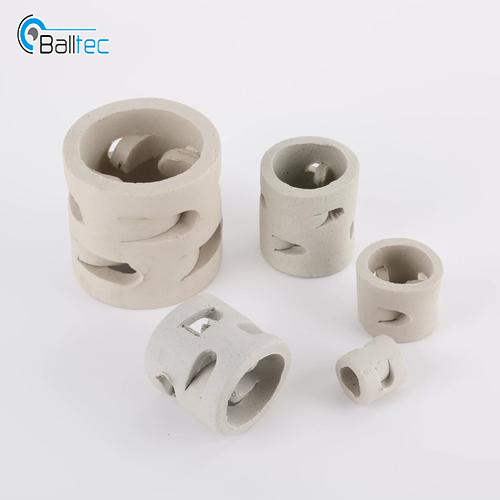
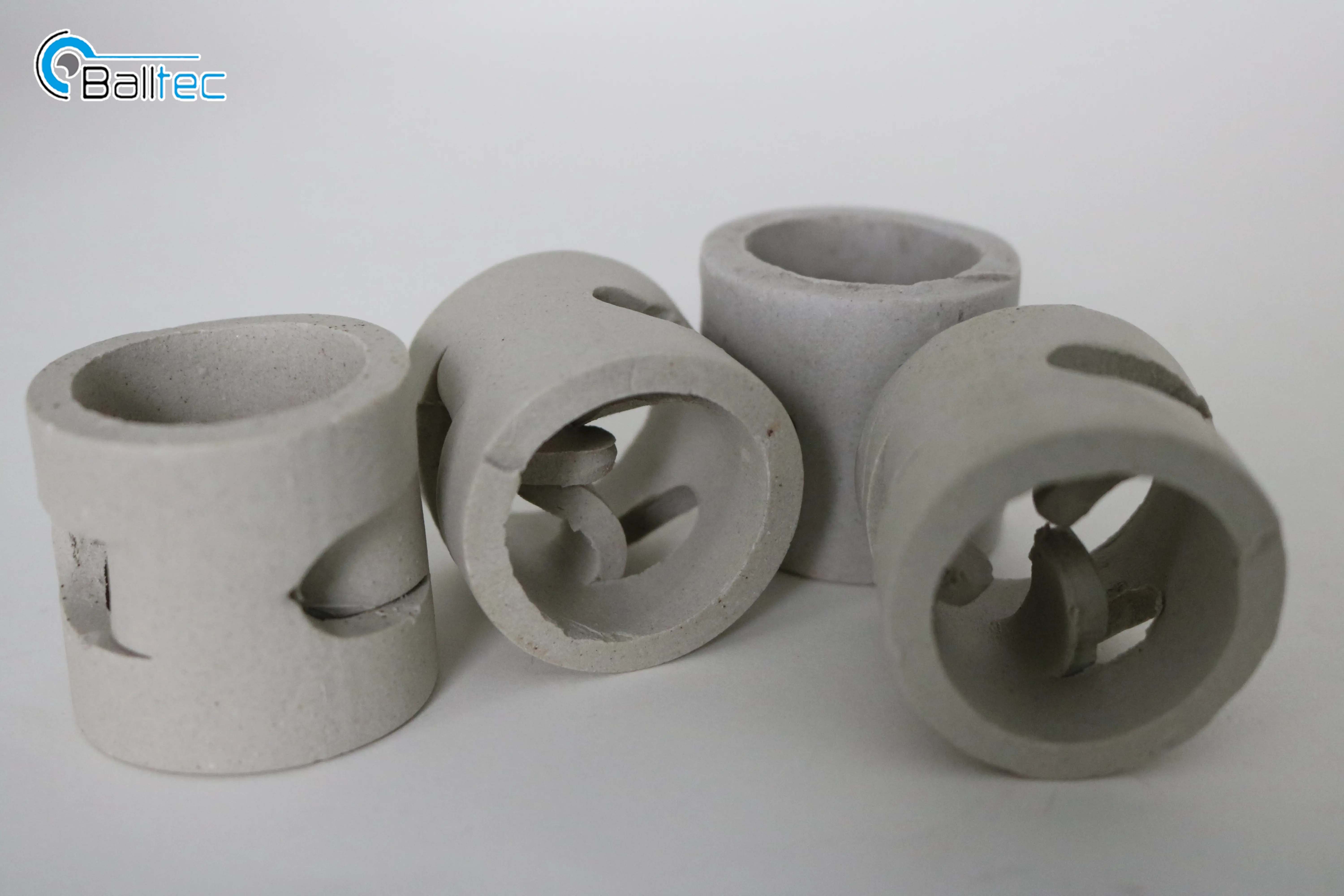
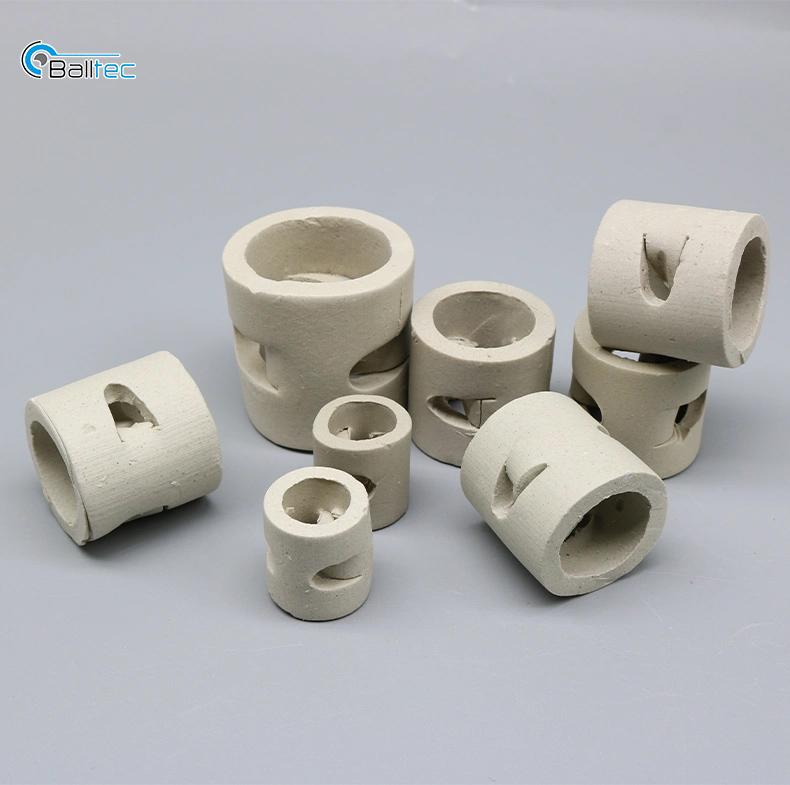
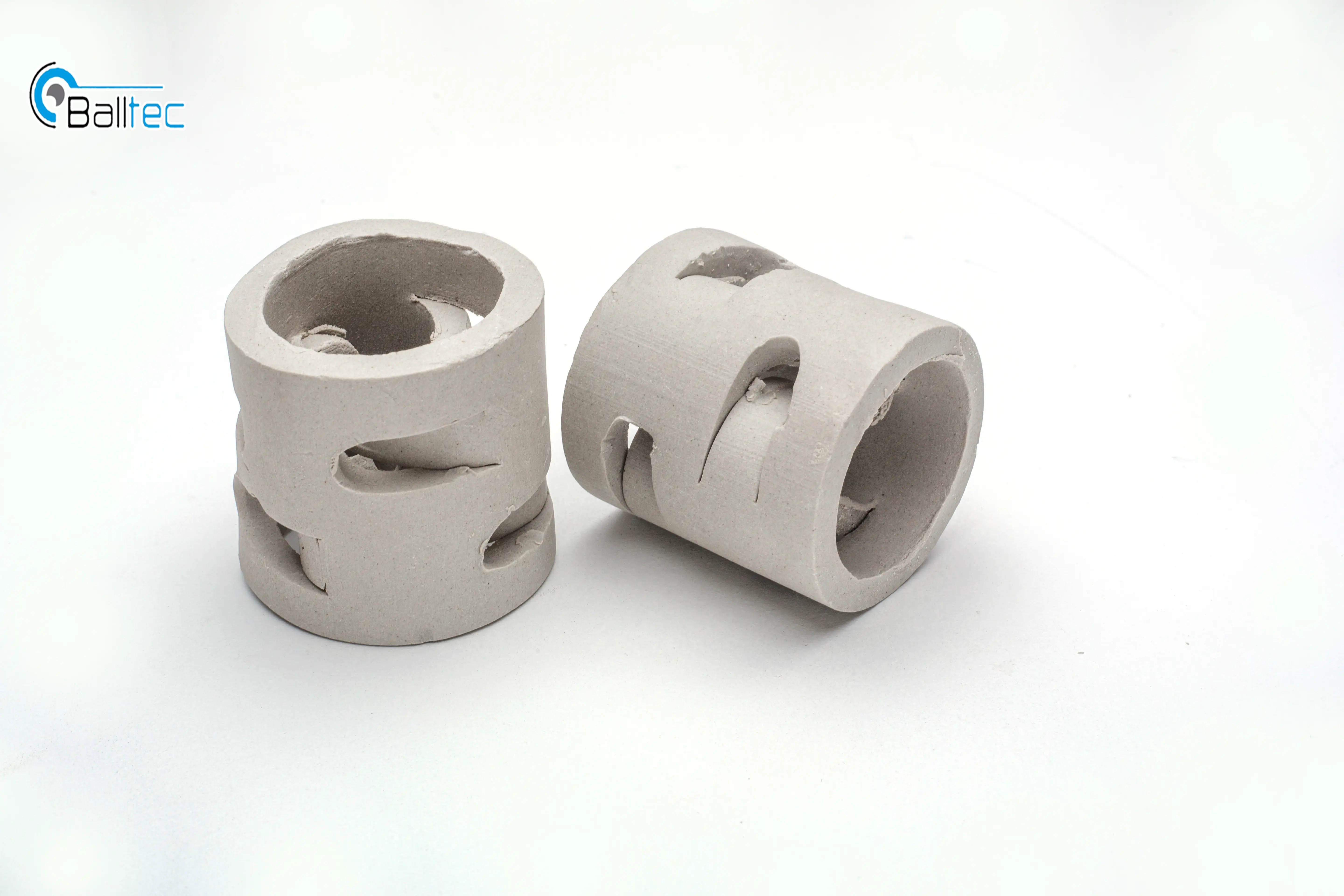
The shape of the ceramic Pall ring is designed to overcome the shortcomings of the ceramic Raschig ring in industrial applications, and great structural improvements have been made in the research and development of the ceramic Pall ring. Its structure is based on a cylindrical ring, with eight small windows on the outer wall, forming eight tongues that bend inward toward the center of the ring. The windows are arranged in two layers, with the positions of the upper and lower layers reversed. In this way, the symmetry of the ring structure prevents the packing from easily reacting with other materials.
Compared with the Raschig ring, the porosity of the ceramic Pall ring is greatly increased, which also improves its mass transfer performance. The gas-liquid separation efficiency of the ceramic Pall ring is significantly enhanced, with uniformly distributed openings, higher efficiency, and relatively low pressure drop, while liquid no longer flows along fixed paths. Meanwhile, the risk of channeling and poor gas-liquid separation is greatly reduced. Even when used in large towers, the operating pressure of ceramic Pall ring packing can be much lower and more stable than conventional packing. The large surface area and openings allow gas to pass through with lower resistance and higher capacity.
In practical chemical industry production, ceramic Pall rings can be used in towers scrubbed with acidic liquids to filter excess gases, even under high liquid concentration conditions. They also play an important role in ozone-related reactions. They are widely used in various towers such as drying towers, regeneration towers, and cooling towers to achieve excellent mass transfer performance.
In addition, the ceramic material itself features acid and alkali resistance, good corrosion resistance, and high heat resistance, making it increasingly widely used in packed towers.