
A Professional Guide to Distinguishing Zirconia Beads from Zircon Silicate Beads
Introduction
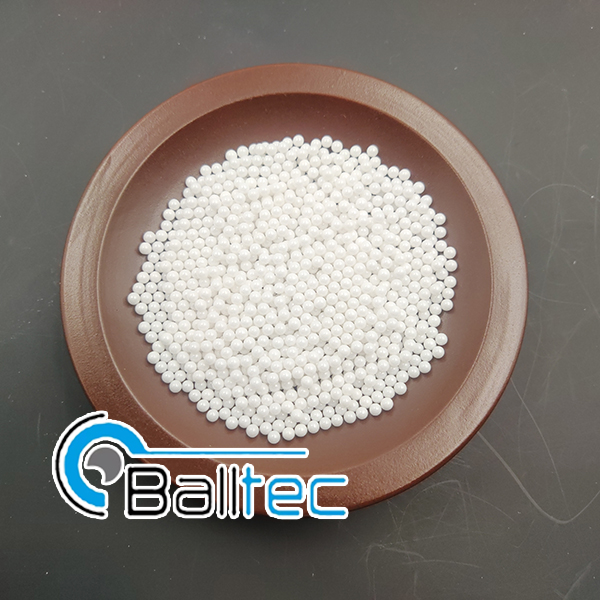
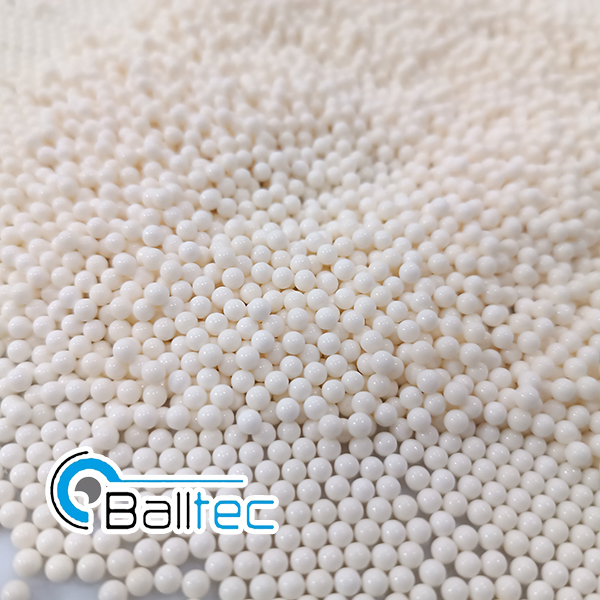
Zirconia beads and zircon silicate beads are two widely used ceramic grinding media in industries such as paints, inks, advanced ceramics, and lithium-ion battery manufacturing. Despite their similar nomenclature and occasional visual resemblance, they differ fundamentally in chemical composition, physical-chemical properties, application scope, and economic cost. Misclassification can lead to compromised grinding efficiency, accelerated equipment wear, or even defects in final products—for instance, excessive contamination in high-purity electronic pastes or insufficient particle refinement in nano-scale inks. This article systematically differentiates the two bead types through multi-dimensional analysis and provides practical identification techniques, enabling accurate selection for industrial applications.
1. Fundamental Distinction: Chemical Composition and Phase Structure
The core difference between zirconia beads and zircon silicate beads originates from their chemical composition, which dictates their intrinsic stability and functional characteristics.
1.1 Zirconia Beads
Zirconia beads (chemical formula: ZrO₂) are primarily composed of zirconium dioxide, a ceramic material that requires stabilization to avoid phase transformation-induced volume expansion during use. The most industrially relevant variant is yttria-stabilized zirconia (YSZ) beads, where yttrium oxide (Y₂O₃) is added as a stabilizer to lock the zirconia in a tetragonal or cubic crystal phase—eliminating the monoclinic-tetragonal transition that causes pure zirconia to crack under thermal or mechanical stress.
Typically, zirconia beads have a zirconium dioxide content of 90% or higher: for example, 92% YSZ beads contain 92% ZrO₂ and 8% Y₂O₃, while 95% YSZ beads consist of 95% ZrO₂ and 5% Y₂O₃. Trace impurities (e.g., Al₂O₃, SiO₂) are usually controlled below 1% to maintain mechanical integrity and chemical inertness.
1.2 Zircon Silicate Beads
Zircon silicate beads (also referred to as zircon beads, chemical formula: ZrSiO₄) are derived from natural zircon mineral, a compound of zirconium and silicon. Unlike zirconia beads, they do not require external stabilizers, as zircon silicate inherently forms a stable orthorhombic crystal structure at room temperature and remains phase-stable within the typical industrial grinding temperature range (≤200°C).
Industrial-grade zircon silicate beads typically have a zirconium silicate content of ≥93%, with minor impurities including free silica (SiO₂), aluminum oxide (Al₂O₃), and iron oxide (Fe₂O₃)—these are usually kept below 5% to prevent adverse effects on grinding performance or product purity.
2. Contrast in Physical-Chemical Properties
The divergent chemical compositions of zirconia and zircon silicate beads translate to distinct physical-chemical properties, which directly influence their performance in grinding processes.
2.1 Density and Impact Energy
Zirconia beads exhibit a high density of 6.0–6.2 g/cm³, significantly exceeding the 4.0–4.2 g/cm³ density of zircon silicate beads. In grinding equipment such as sand mills or planetary ball mills, higher density generates stronger centrifugal force and impact energy during bead rotation. This makes zirconia beads far more efficient at breaking down hard, coarse particles—for example, agglomerated metal oxide pigments (e.g., TiO₂, Al₂O₃) or lithium battery cathode materials (e.g., LiCoO₂)—whereas zircon silicate beads, with lower impact energy, are better suited for softer or pre-ground materials.
2.2 Hardness and Wear Resistance
Zirconia beads possess exceptional hardness: their Mohs hardness ranges from 8.5 to 9.0, and their Vickers hardness (HV) reaches 1200–1400. This translates to ultra-low wear rates of 0.1–0.3 ppm per hour, meaning minimal bead fragmentation during grinding—critical for applications requiring high-purity products (e.g., pharmaceutical intermediates, electronic pastes) where even trace contamination can render products non-compliant.
In contrast, zircon silicate beads have lower hardness: Mohs hardness of 7.5–8.0 and Vickers hardness of 800–1000. Their wear rate is substantially higher, at 0.8–1.5 ppm per hour, leading to more frequent bead replacement and a higher risk of contaminating the grinding matrix with ceramic particles.
2.3 Compressive Strength and Mechanical Stability
Zirconia beads exhibit superior compressive strength, typically ≥2000 MPa, allowing them to withstand the high mechanical stress of high-speed grinding without cracking or shattering. This stability is attributed to the tetragonal phase of stabilized zirconia, which undergoes a localized phase transition under stress—absorbing energy and preventing crack propagation (a phenomenon known as “transformation toughening”).
Zircon silicate beads have a lower compressive strength of ≥1200 MPa, making them more prone to breakage in high-intensity grinding processes (e.g., ultra-fine grinding of hard minerals). Broken beads not only reduce grinding efficiency but also pose a risk of damaging grinding equipment (e.g., scratching sand mill discs).
2.4 Chemical Inertness
Zirconia beads demonstrate excellent chemical resistance: they are inert to most acids (except hydrofluoric acid) and strong alkalis, and do not react with organic solvents (e.g., alcohols, esters) commonly used in ink or paint formulations. This makes them ideal for grinding alkali-based ceramic slurries or solvent-sensitive materials.
Zircon silicate beads, while resistant to weak acids and neutral solutions, are susceptible to erosion by strong alkalis (e.g., 10% NaOH solution at 80°C). In such environments, the silica component of zircon silicate dissolves, leading to surface roughening, weight loss, and potential contamination of the grinding material with silicate ions.
2.5 Thermal Properties
Zirconia beads have a higher thermal expansion coefficient (10–11 × 10⁻⁶/°C) compared to zircon silicate beads (4.5–5.0 × 10⁻⁶/°C). This means zirconia beads expand more significantly under temperature fluctuations, but their stabilized phase structure prevents cracking. Zircon silicate beads, with lower thermal expansion, are more stable in temperature-variable environments but have lower thermal conductivity—resulting in slower heat dissipation during grinding (a minor consideration for most ambient-temperature applications).
3. Differentiation in Application Scenarios
The property differences between zirconia and zircon silicate beads lead to their specialization in distinct industrial scenarios.
3.1 Zirconia Beads: High-Performance Grinding
Zirconia beads are the preferred choice for applications demanding high efficiency, low contamination, and ultra-fine particle sizes:
- High-purity products: Electronic pastes (e.g., silver paste for solar cells, where contamination must be <50 ppm), pharmaceutical APIs (active pharmaceutical ingredients), and food-grade coatings—where their ultra-low wear rate minimizes product adulteration.
- Hard/ultra-fine grinding: Nano-scale inks (target particle size <1 μm), metal oxide ceramics, and lithium battery anode/cathode materials—where their high density and hardness enable efficient breakdown of tough agglomerates.
- Harsh chemical environments: Alkali-based ceramic slurries (e.g., sanitary ware glazes) or solvent-based industrial paints—where their chemical inertness prevents bead degradation and material contamination.
3.2 Zircon Silicate Beads: Cost-Effective General Grinding
Zircon silicate beads are optimized for cost-sensitive, general-purpose grinding tasks with lower purity or fineness requirements:
- Low-to-medium purity products: Water-based architectural coatings, decorative inks, and ceramic tiles—where minor wear contamination (≤100 ppm) does not affect product performance.
- Coarse-to-medium grinding: Pre-grinding of mineral slurries (e.g., kaolin, talc) or organic pigments (e.g., azo pigments for wall paints)—where their lower impact energy is sufficient to reduce particle sizes to 5–10 μm.
- Large-scale production: Construction material manufacturing (e.g., exterior wall coatings) or bulk ceramic glazes—where their lower cost (typically 1/3–1/2 that of zirconia beads) reduces long-term operational expenses.
4. Practical Identification Techniques
On-site or laboratory identification of zirconia and zircon silicate beads can be achieved using simple, equipment-light methods—no specialized analytical tools are required for preliminary differentiation.
4.1 Density-Based Identification (Qualitative and Quantitative)
Qualitatively, take 10 beads of the same diameter (e.g., 1 mm) from each sample and weigh them with a precision balance (accuracy ≥0.001 g). Zirconia beads will be noticeably heavier: 10 pieces of 1 mm zirconia beads weigh approximately 0.03 g, while the same number of zircon silicate beads weigh ~0.02 g.
For quantitative confirmation, use the water displacement method: weigh a small sample of beads (e.g., 5 g), then immerse them in a graduated cylinder filled with a known volume of water. Calculate density using the formula: Density = Mass (g) / Volume Displaced (cm³). Zirconia beads will yield a density of 6.0–6.2 g/cm³, while zircon silicate beads will measure 4.0–4.2 g/cm³.
4.2 Hardness Test via Scratching
Use a tungsten carbide needle (Mohs hardness 9.5) or a sapphire plate (Mohs hardness 9.0)—both readily available in industrial settings—to lightly scratch the surface of the beads. Zirconia beads, with hardness 8.5–9.0, will show minimal or no scratch marks (their hardness is close to that of sapphire). In contrast, zircon silicate beads (hardness 7.5–8.0) will leave clear, visible scratches due to the lower resistance of their crystal structure to abrasion.
4.3 Thermal Conductivity Assessment (Qualitative)
Hold equal quantities of the two bead types in your palm for 30 seconds, then place them on a cool glass surface (temperature ~20°C). Zirconia beads, with higher thermal conductivity, will transfer heat from your hand to the glass more rapidly—feeling cooler to the initial touch and warming up the glass surface faster. Zircon silicate beads, with lower thermal conductivity, retain heat longer, remaining warmer to the touch and causing slower temperature changes on the glass.
4.4 Chemical Resistance Test (Laboratory Confirmation)
For definitive identification, immerse 1 g of each bead sample in 50 mL of 10% sodium hydroxide (NaOH) solution heated to 80°C, and incubate for 24 hours. After incubation, rinse the beads with deionized water, dry them, and weigh them again. Zirconia beads will show no measurable weight loss (<0.1%) and no visible surface changes. Zircon silicate beads, however, will exhibit a weight loss of >0.5% (due to SiO₂ dissolution) and a rough, eroded surface when examined under a light microscope.
5. Conclusion
Zirconia beads and zircon silicate beads are functionally distinct grinding media, with their differences rooted in chemical composition and manifested in physical properties, application suitability, and cost. Zirconia beads excel in high-performance scenarios requiring efficiency, low contamination, and chemical stability, while zircon silicate beads offer cost-effectiveness for general-purpose grinding.
By applying the identification methods outlined—density measurement, hardness scratching, thermal conductivity assessment, and chemical resistance testing—industries can avoid misselection and optimize grinding processes. Accurate differentiation between these two media is not only a matter of operational efficiency but also a critical factor in ensuring the quality and consistency of end products across grinding-dependent sectors.