What is Zro2 Ceramic Ball 65 Percent and Its Applications?
ZrO2 ceramic balls, particularly those with a composition of 65%, have gained attention in various industries. They exhibit remarkable properties, such as high strength, excellent thermal stability, and resistance to chemical corrosion. According to market research by Grand View Research, the global ceramic balls market is expected to reach over $10 billion by 2027. This growth highlights the increasing demand for reliable materials in applications ranging from aerospace to automotive components.
The unique characteristics of ZrO2 ceramic balls make them ideal for precision applications. In the automotive industry, they are used in bearings and valve components, where durability is critical. Similarly, in the aerospace sector, their lightweight nature contributes to enhanced fuel efficiency. Yet, despite their advantages, some manufacturers face challenges in maintaining consistent quality during production. This raises concerns about reliability and performance in demanding environments.
While ZrO2 ceramic balls hold great potential, it is essential to approach their use with caution. Issues related to manufacturing techniques can yield variations in performance. A focus on quality control and innovation is necessary for their successful application. The balance between performance advantages and potential imperfections requires ongoing research and development efforts.
What is ZrO2 Ceramic Ball 65 Percent?
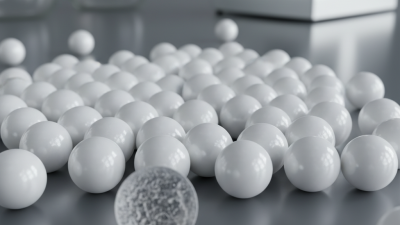
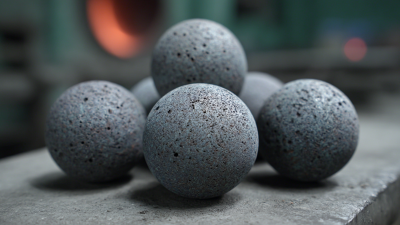
ZrO2 ceramic ball, composed of 65% zirconia, is gaining prominence in various industries. This material exhibits high wear resistance and durability. According to recent reports, zirconia's toughness is significantly higher than that of conventional ceramics. It is often used in precision applications, such as bearings and valve components.
The unique properties of ZrO2 ceramic balls make them suitable for extreme environments. Their thermal stability allows usage in high-temperature applications. However, challenges remain. For instance, their brittleness can lead to unexpected failures. Industries must evaluate their specific needs before adoption. The high cost of producing these balls can also be a barrier for some manufacturers.
In terms of market trends, the demand for ZrO2 ceramic balls is on the rise. Various sectors, including aerospace and automotive, are investing heavily in this material. Nonetheless, not every application benefits equally from zirconia. Engineers must carefully analyze the operational conditions. A thorough understanding of ZrO2 ceramic balls can lead to improved efficiency and performance in targeted applications.
Composition and Properties of ZrO2 Ceramic Balls
ZrO2 ceramic balls, comprising 65% zirconia, are known for their unique properties. They exhibit high hardness, wear resistance, and thermal stability. These characteristics make them suitable for various industrial applications. According to a recent market report, the global demand for zirconia-based materials is expected to grow by 15% annually through 2025.
The composition of ZrO2 affects its mechanical properties. With a density of approximately 6 g/cm³, it provides excellent load-bearing capabilities. Moreover, these ceramic balls have low porosity, enhancing their durability in challenging environments. Research indicates that ZrO2 can withstand temperatures above 2000°C, which is crucial in industries like aerospace and automotive.
Applications of ZrO2 ceramic balls are diverse. They are commonly used in valve ball bearings and grinding media. In the medical field, they are utilized in dental implants, due to their biocompatibility. However, manufacturers must also address challenges, such as cost and production scalability. This raises questions regarding sustainability. As demand rises, reflecting on methods to improve efficiency is necessary.
Manufacturing Process of ZrO2 Ceramic Balls
The manufacturing process of ZrO2 ceramic balls involves several key steps that contribute to their unique properties. These balls are produced primarily from zirconium oxide, which is known for its high strength and durability. Initially, the raw materials are mixed and ground into a fine powder. This powder must be of high purity to ensure optimal performance. According to industry reports, purity levels impact the final mechanical properties of the ceramic balls.
Next, the powder undergoes pressing to form green bodies. This step requires careful attention to pressure and temperature. After pressing, the green bodies are sintered at high temperatures, typically between 1200°C and 1600°C. This sintering process is crucial as it enhances the density and mechanical strength of the ceramic balls. Reports indicate that the density of ZrO2 balls reaches approximately 6.0 g/cm³ post-sintering, significantly improving their performance in various applications.
Finally, the balls are subjected to precision grinding and polishing. This final step ensures that they meet strict tolerance standards. The entire process is energy-intensive and demands significant resources. Manufacturers often reflect on the environmental impact of these processes. While ZrO2 balls have excellent wear resistance and toughness, achieving these characteristics requires balancing efficiency and sustainability in the production methods.
ZrO2 Ceramic Balls Applications and Manufacturing Process
Applications of ZrO2 Ceramic Balls in Industry
ZrO2 ceramic balls, composed of zirconium dioxide, hold significant value in various industrial applications. These balls are known for their high strength and excellent wear resistance. They are often utilized in ball bearings, valve seats, and pumps, where durability is crucial. A recent industry report indicated that ZrO2 balls can withstand extreme temperatures, making them suitable for high-performance environments.
In the chemical and petrochemical sectors, ZrO2 ceramic balls excel in applications encountering corrosive substances. Their chemical inertness ensures longevity and reliability. In the aerospace industry, ZrO2 balls find use in components exposed to high pressures and operational stresses, which aligns with recent findings highlighting their stress-bearing capacities.
Tips: When choosing ceramic balls, consider the application's specific requirements. Pay attention to temperature and chemical exposure. Sometimes, the initial cost may seem high, but the long-term savings through reduced replacements can be substantial. Reflect on whether you can benefit from integrating ZrO2 balls into your operations for improved performance.
Advantages of Using ZrO2 Ceramic Balls Over Other Materials
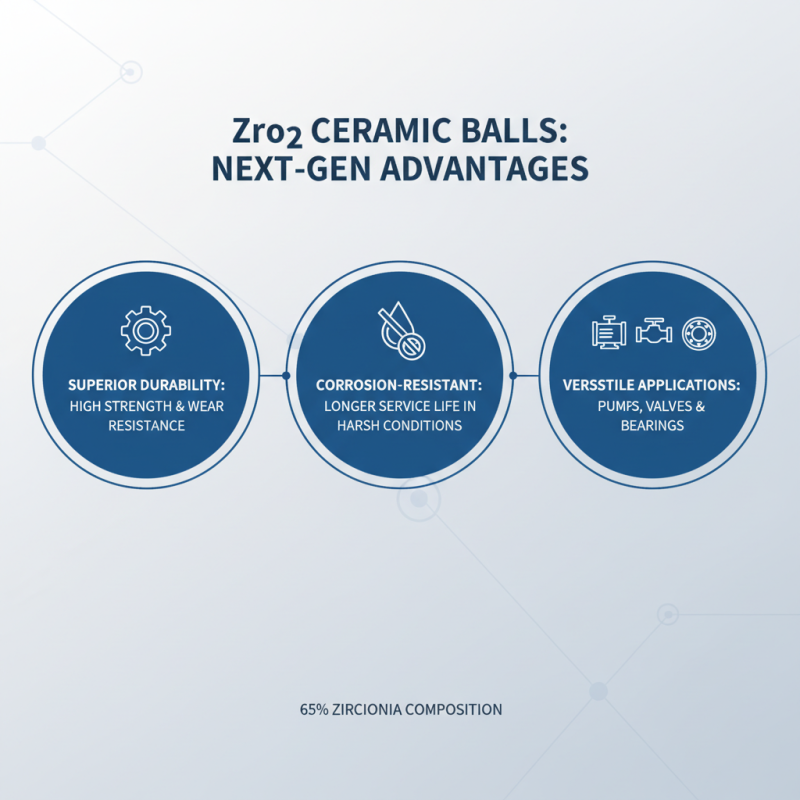
ZrO2 ceramic balls, with a composition of 65 percent zirconia, offer distinct advantages in various applications. Their high strength and resistance to wear make them ideal for demanding environments. Unlike metallic counterparts, ZrO2 balls do not corrode easily. This ensures longer service life in harsh conditions. They are often used in pumps, valves, and bearings where durability is critical.
In addition to their mechanical properties, ZrO2 balls exhibit excellent thermal stability. They can withstand extreme temperatures without significant deformation. This is crucial in industries like aerospace and automotive. Moreover, they offer lower friction, which can enhance efficiency in systems. However, the production of these ceramic balls can be resource-intensive, raising concerns about sustainability. Balancing performance and environmental impact is a challenge for manufacturers.
Another key benefit is their non-magnetic nature. This is particularly useful in applications sensitive to electromagnetic interference. However, the cost of ZrO2 balls can be higher than traditional materials. This might deter some users. Yet, considering their longevity, they can provide good value over time. The decision to switch to ZrO2 should weigh both immediate costs and long-term benefits.