How to Choose the Right Ceria Zirconia Ball?
Choosing the right Ceria Zirconia Ball requires more than comparing purchase prices. The selection affects grinding efficiency, contamination control, equipment wear, and product consistency. A bead may look flawless under bright warehouse lighting, yet fail inside a high-speed mill.
MarketsandMarkets’ 2024 Ceramic Balls Market analysis identifies chemical resistance, durability, and demanding industrial processing as major market drivers. Grand View Research’s 2024 Advanced Ceramics Market report also highlights ceramics’ growing role in high-wear and chemically aggressive applications. However, these reports usually group several ceramic materials together. Their findings should not be treated as ceria-specific evidence.
Ceria-stabilized zirconia is often selected for its fracture toughness, density, and resistance to severe milling conditions. The correct choice still depends on particle size, slurry viscosity, mill design, rotation speed, and required final fineness. Measure the operating environment carefully. Guesswork becomes expensive quickly.
Materials scientist Ronald C. Garvie and his colleagues famously described zirconia as “ceramic steel,” reflecting its unusual toughness compared with many traditional ceramics. That phrase remains useful, but it is not a purchasing specification. It does not replace testing.
A practical evaluation should compare bead density, wear rate, crushing strength, roundness, size distribution, and chemical compatibility. Request independent test data when possible. Check whether results match your actual formulation.
The uncomfortable truth is simple: the most expensive ball is not always the best ball. A carefully matched Ceria Zirconia Ball can reduce contamination and downtime, but only when its specifications fit the mill, material, and process. Even experienced buyers sometimes overlook temperature changes or aggressive additives. That deserves a second look.
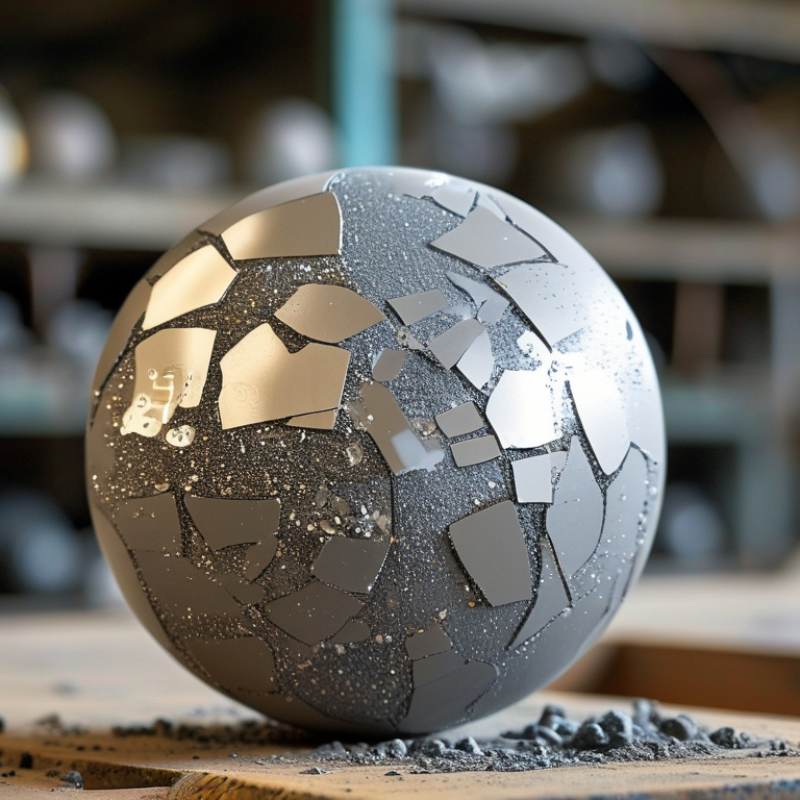
Understanding Ceria Zirconia Balls and Their Key Characteristics
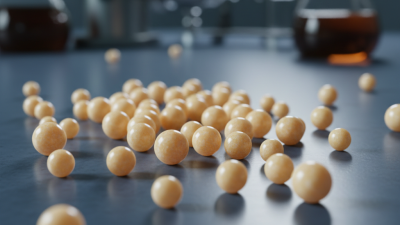
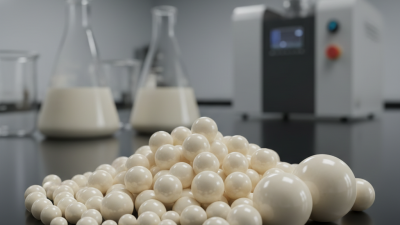
Ceria zirconia balls are grinding media made from zirconium oxide stabilized with cerium oxide. This structure improves toughness and reduces cracking during repeated impacts. Their high density transfers strong energy to particles, even in compact milling chambers. They also offer good wear resistance and low contamination when properly manufactured. However, performance depends on more than material composition. Ball quality can vary with density, hardness, roundness, and surface finish.
Particle size is a practical starting point. Smaller balls create more contact points and suit fine grinding. Larger balls deliver stronger impact for coarse particles. A mixed size range may improve efficiency, but the ratio needs testing. Consider the material being processed, too. Soft powders may need less impact, while hard minerals can expose weak surfaces or accelerate wear. In my experience, selecting the hardest media is not always the best choice. Excessive hardness can increase equipment wear.
Check the supplier’s measured density, crushing strength, wear rate, and size tolerance. Ask for batch data rather than relying on general claims. Examine used balls after a trial run. Flat spots, powder discoloration, or unexpected residue can reveal problems. Milling speed, slurry viscosity, filling ratio, and chamber design also change results. A short laboratory test usually gives more reliable guidance than a specification sheet alone. No selection is perfect. Real process evidence matters.
How to Choose the Right Ceria Zirconia Ball?
Understanding Ceria Zirconia Balls and Their Key Characteristics
Ceria-stabilized zirconia balls typically provide a high density of about 6.0 g/cm³ and high hardness of approximately 1,200 HV, helping deliver efficient grinding and good wear resistance. Compared with glass media, their higher density and hardness generally support stronger impact and faster size reduction. Actual values vary by composition, manufacturing process, and test method, so the final selection should also consider particle size, mill speed, slurry viscosity, and contamination requirements.
Selecting the Appropriate Ball Size and Density
How to Choose the Right Ceria Zirconia Ball?
Selecting the Appropriate Ball Size and Density
Ball size should match the material, mill design, and target particle size. Smaller balls create more contact points and improve fine grinding. However, they may slow material flow in a crowded chamber. Larger balls deliver stronger impact and suit coarse feed materials. A practical starting range is often 0.3 to 1.0 millimeters for fine dispersion, but actual results depend on the equipment.
Watch the slurry closely. If the chamber temperature rises quickly, the balls may be too large, too dense, or overfilled. If the product remains coarse, smaller media may provide better contact. Particle size matters.
Density affects impact energy. Ceria zirconia balls are denser than many conventional ceramic media, so they can grind hard materials efficiently at suitable speeds. Yet higher density also increases stress on the mill, seals, and internal parts. Check the equipment manufacturer’s operating limits before increasing speed or filling volume.
In practical testing, compare two ball sizes under identical conditions. Measure particle size, temperature, power use, and wear after each run. A visually smooth slurry can still contain oversized particles. This is easy to miss. The best selection may not be the densest or smallest option. It should provide stable grinding, acceptable energy use, and controlled wear for your specific process.
Comparing Suppliers, Costs, and Application-Specific Performance
How to Choose the Right Ceria Zirconia Ball?
Choosing the right ceria zirconia ball starts with process details, not a catalog price. In trial batches, I compare ball size, density, hardness, and surface finish against the mill’s feed. A 0.3 mm variation can change flow behavior in a narrow chamber. Ask suppliers for current test data, production tolerances, and traceable lot records. Request samples from the same production route. Samples can mislead. Good.
The lowest quote rarely shows the total cost. Compare purchase price, shipping, replacement frequency, cleaning time, and energy demand. A dense ceria zirconia ball may cost more upfront, yet reduce wear in high-viscosity ceramic slurries. In softer formulations, that advantage may not justify the premium. Calculate cost per processed tonne, not cost per kilogram. Include downtime. Supplier reliability matters here. Check response time, technical support, packaging, and delivery consistency. Ask how failures are investigated. Some answers remain vague.
Match performance to the application. For pigment dispersion, tight size control supports more stable particle reduction. For electronic ceramics, low contamination and chemical resistance deserve greater weight. For aggressive milling, fracture toughness and wear rate become practical indicators. Review test conditions carefully; rpm, bead load, solvent, and temperature can change results. Independent laboratory data is useful, but your own pilot run provides stronger evidence. Record particle size, viscosity, temperature, and media loss each hour. Not every result will be clean. That is useful. Recheck unusual gains before scaling them.