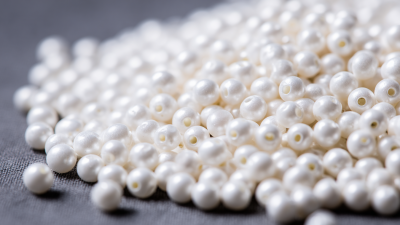
Why Choose Zirconium Oxide Beads for Your Industry Needs?
In the evolving landscape of industrial materials, the choice of grinding media plays a pivotal role. Zirconium Oxide Beads have gained significant attention for their unique properties. Dr. Emily Carter, a leading expert in materials science, emphasizes their advantages, stating, "Zirconium Oxide Beads are unmatched in durability and efficiency."
These beads are known for their high density and resistance to wear. Industries utilizing these beads report notable improvements in grinding performance. Their ability to reduce contamination makes them suitable for sensitive applications like pharmaceuticals and food processing. However, some industries still hesitate. They question the initial cost compared to traditional media.
Yet, the long-term benefits often outweigh the concerns. With proper insights and understanding, companies can make informed choices. Understanding the specific needs of your industry is essential. This ensures that the decision aligns with both performance and sustainability goals. In a world where efficiency is crucial, the role of Zirconium Oxide Beads cannot be overlooked.

Benefits of Zirconium Oxide Beads in Various Industries
Zirconium oxide beads are gaining popularity across various industries. Their unique properties make them valuable in many applications. These beads are highly resistant to wear and corrosion. This durability makes them ideal for grinding and dispersing materials in the manufacturing sector. Industries like ceramics and pharmaceuticals benefit greatly from their effectiveness.
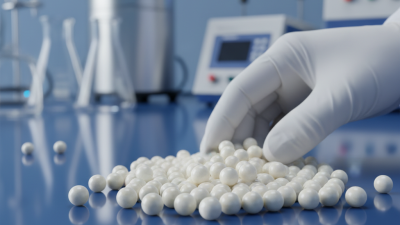
In laboratories, zirconium oxide beads enhance precision and quality. They help achieve finer particle sizes, which is crucial for certain experiments. However, some users report challenges with bead breakage during intense processes. While they perform well, it is essential to monitor conditions to extend their lifespan. Adjusting the grinding techniques may mitigate these breakage concerns.
The eco-friendliness of zirconium oxide is another advantage. These beads tend to be less harmful to the environment compared to other materials. However, their sourcing can sometimes raise questions about sustainability. Industries must consider their entire supply chain to ensure responsible practices. The promise of zirconium oxide beads is significant, but awareness and reflection on their use are vital.
Key Properties of Zirconium Oxide Beads that Enhance Performance
Zirconium oxide beads have gained popularity across various industries due to their remarkable properties. One key feature is their high strength and durability. These beads can withstand harsh conditions without cracking or degrading. They maintain their integrity during extended use. This resistance ensures consistent performance in processes where longevity is crucial.
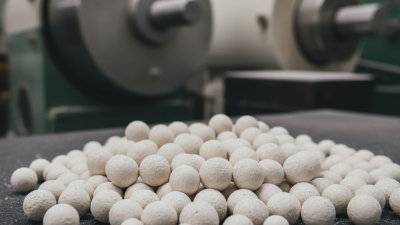
Another important characteristic is their superior wear resistance. Zirconium oxide beads can resist abrasion effectively, making them ideal for applications involving grinding or milling. This quality minimizes the need for replacements, ultimately reducing operational costs. The hardness of these beads also allows for efficient particle size reduction.
In terms of chemical stability, zirconium oxide is quite impressive. It is resistant to acids and bases, which enhances its usability in various chemical environments. However, not all applications may yield the same results. Testing is essential to determine compatibility with specific materials. While these beads offer many advantages, users should assess their unique requirements carefully.
Comparative Analysis: Zirconium Oxide Beads vs. Other Materials
Zirconium oxide beads stand out in various industrial applications. Their high density and hardness make them effective in grinding and milling processes. A recent report by the International Journal of Advanced Manufacturing Technology indicates that zirconium oxide beads can improve grinding efficiency by up to 25% compared to traditional media. This enhancement in performance is crucial for industries that require precise material processing.
When comparing zirconium oxide beads to ceramic and steel beads, notable differences emerge. Zirconium has lower wear and tear. In fact, studies show that its longevity can surpass that of steel beads by 50%. However, the initial cost may be higher, which raises questions for budget-conscious companies. Consideration of long-term savings is essential in this context.
In some cases, the effectiveness of zirconium oxide beads may depend on specific applications. For example, they may not be ideal for softer materials where other options could be more economical. There's a delicate balance between performance and cost. Assessing the operational requirements is critical before making a choice. Each material brings its advantages and drawbacks, and evaluating them thoroughly can lead to better decisions for operational success.
Applications of Zirconium Oxide Beads Across Different Sectors
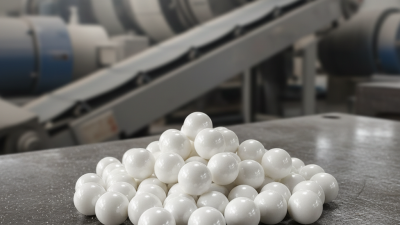
Zirconium oxide beads have gained popularity due to their versatility across various industries. These beads excel in applications requiring high durability and chemical resistance. For example, they are critical in the mining and mineral industries for their use in grinding media. The hardness of zirconium oxide helps in achieving finer particle sizes, a crucial factor in mineral processing.
In the field of biomedical engineering, zirconium oxide beads also play a vital role. Their biocompatibility makes them suitable for medical implants and devices. This quality allows for safe interaction with biological tissues. Moreover, in the coatings industry, zirconium oxide beads are used to create high-performance coatings. These coatings offer superior abrasion resistance and thermal stability, thereby enhancing product longevity.
While zirconium oxide beads provide numerous advantages, challenges remain in their production. The manufacturing process can be complex and costly. Achieving the right particle size and uniformity is not always straightforward. As industries continue to innovate, further exploration into sustainable production methods is essential. This exploration may open new pathways for enhanced applications in the future.
Considerations for Choosing Zirconium Oxide Beads for Your Business Needs
Zirconium oxide beads are increasingly becoming a preferred choice in various industries. When selecting zirconium oxide beads, it's crucial to consider specific factors that influence their suitability for your business. Understanding these factors can significantly affect your operational efficiency.
Quality matters. The density, hardness, and surface finish of the beads can impact your grinding and mixing processes. According to a 2022 industry report, zirconium oxide beads have a density range of 5.6 to 6.2 g/cm³, making them durable in high-energy milling applications. They can withstand extreme conditions, thus ensuring longevity and reduced replacement costs.
Tip: Always assess the bead size that aligns with your application requirements. Smaller beads often provide better dispersion, while larger beads can be more effective in high-viscosity materials.
Another critical consideration is the cost-effectiveness of these materials. A thorough analysis indicates that while zirconium oxide beads may have a higher upfront cost, their performance can lead to reduced processing time and less wear on machinery. This long-term savings can be more crucial than initial expenses.
Tip: Regularly monitor wear rates of the beads in your application. This practice can provide insights into whether you are achieving optimal performance and if your bead choice remains valid.