What Are the Benefits of Yttria Zirconia Beads for Procurement?
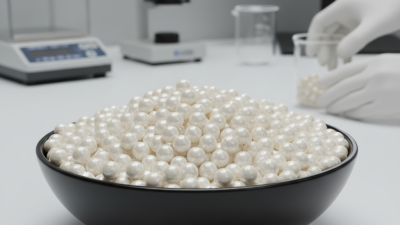
In the realm of advanced materials, Yttria Zirconia Beads have garnered significant attention for their unique properties. Dr. Emily Chen, an authority in the field of ceramic engineering, emphasizes, "The versatility of Yttria Zirconia Beads makes them invaluable for various applications." These beads offer exceptional wear resistance, high strength, and thermal stability, positioning them as a key component in industries like manufacturing and pharmaceuticals.
Procurement professionals are increasingly recognizing the advantages of these beads. Their uniform particle size leads to efficient mixing processes, enhancing product quality. However, some inconsistencies in sourcing can arise, leading to challenges in ensuring quality control. Not all suppliers meet the rigorous standards required for optimal performance.
Investing in Yttria Zirconia Beads can significantly improve production efficiency. Yet, buyers must conduct thorough research. Understanding supplier capabilities is crucial. In a rapidly evolving market, the potential for subpar products exists. Thus, careful vetting of suppliers will ensure that the benefits of Yttria Zirconia Beads are fully realized.
Benefits of Yttria Zirconia Beads in Industrial Applications
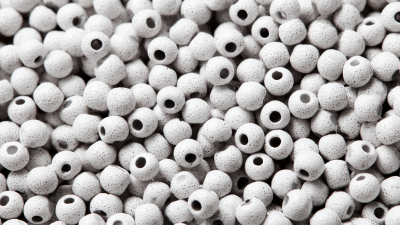
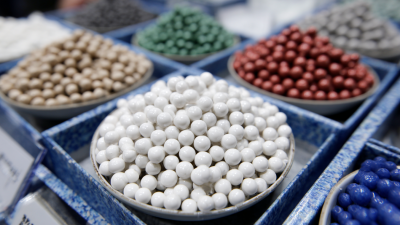
Yttria zirconia beads are becoming essential in various industrial applications due to their unique properties. These beads exhibit high durability and excellent wear resistance. They can withstand harsh conditions, making them ideal for grinding and milling processes. Their density contributes to an effective and efficient grinding action. This leads to improved particle size reduction.
In the field of ceramics, yttria zirconia beads enhance the quality of materials produced. They help achieve finer, more uniform particles, significantly impacting the final product’s performance. The stability of these beads also promotes consistent results over time. However, some users may notice slight inconsistencies in bead performance, especially under extreme conditions. It's vital to assess these factors based on specific applications.
Another advantage is their chemical resistance. Yttria zirconia beads do not react easily with other substances, ensuring the purity of the processed materials. This property is crucial in industries such as pharmaceuticals and food production. However, the initial cost might deter some businesses from utilizing them. Decision-makers should weigh these factors against the long-term benefits of using yttria zirconia beads.
What Are the Benefits of Yttria Zirconia Beads for Procurement? - Benefits of Yttria Zirconia Beads in Industrial Applications
| Benefit |
Description |
Application Area |
| High Durability |
Yttria zirconia beads exhibit exceptional wear resistance, reducing the need for frequent replacements. |
Grinding and milling processes |
| Chemical Inertness |
These beads are resistant to acids and bases, making them ideal for a variety of chemical processes. |
Chemical manufacturing |
| Enhanced Grinding Efficiency |
They provide a high surface area which facilitates better dispersion of particles. |
Paints, inks, and coatings |
| Reduced Contamination |
Yttria zirconia beads release fewer impurities into the material being processed. |
Pharmaceutical applications |
| Versatility |
Suitable for a wide range of applications across industries, from ceramics to electronics. |
Ceramics and electronics manufacturing |
Cost-Efficiency of Yttria Zirconia Beads in Procurement Processes
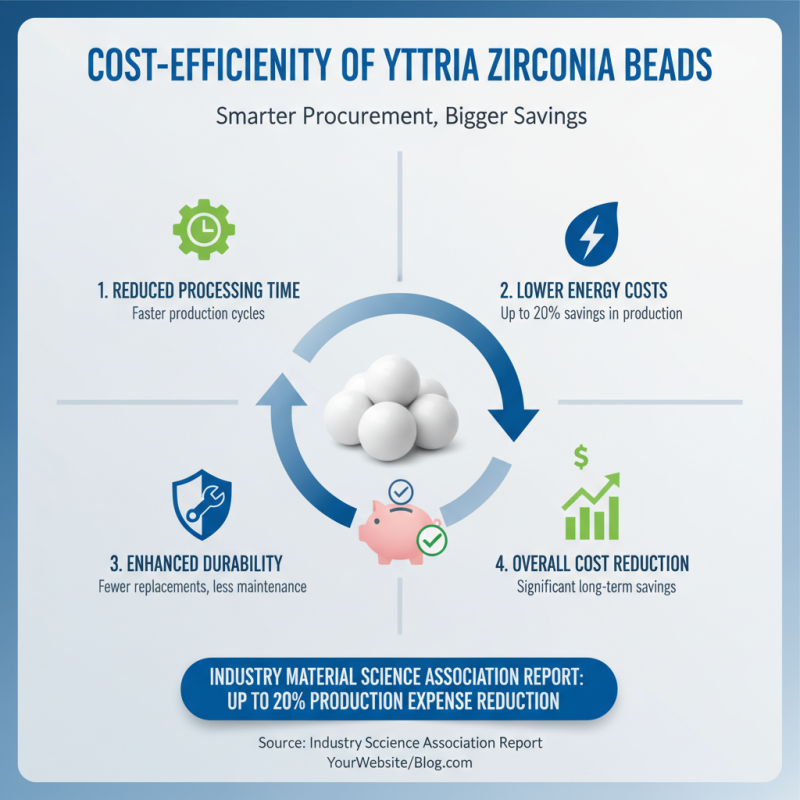
Yttria zirconia beads are increasingly favored in procurement processes for their cost-efficiency. Recent studies highlight that these beads reduce processing time and energy costs. According to a report from the Industry Material Science Association, using yttria zirconia beads can lower production expenses by up to 20%. The durability of these beads means fewer replacements and lower maintenance costs.
Moreover, yttria zirconia beads enhance the efficiency of grinding and dispersion processes. Their high density provides better particle size reduction, which can translate to shorter production cycles. For companies focusing on material procurement, this represents a significant advantage over traditional alternatives. However, it’s essential to consider the balance between initial investment and long-term savings.
Yet, relying solely on these beads may lead to overlooking other factors. The market can fluctuate, impacting material prices. Companies should evaluate their unique requirements rather than blindly opting for yttria zirconia beads. Considering the wider context can lead to more sustainable procurement strategies while also ensuring continuous performance improvements.
Comparative Durability of Yttria Zirconia Beads vs. Traditional Materials
Yttria zirconia beads are gaining attention for their impressive durability compared to traditional materials. Their unique composition enhances hardness and toughness, making them suitable for several applications. Many industries, like ceramics and coatings, now prefer these beads for their longevity.
When assessing durability, yttria zirconia beads excel in wear resistance. They withstand high energies during processes. This leads to fewer replacements and lower maintenance costs. Traditional materials often wear down faster, resulting in downtime and additional expenses. However, some users have noted initial challenges in adjusting to different processing techniques.
Another aspect to consider is the performance consistency of yttria zirconia beads. They maintain their properties under varying conditions. Yet, some users have reported a steeper learning curve in using these beads effectively. Understanding optimal operating parameters is crucial for maximizing their benefits. Balancing initial adjustment with long-term gains is vital for professionals in industries relying on these materials.
Impact of Yttria Zirconia Beads on Product Quality and Performance
Yttria zirconia beads have garnered attention in various industries due to their significant impact on product quality and performance. These beads, made from high-purity zirconium dioxide, offer superior hardness and wear resistance. Reports indicate that they can achieve a hardness of up to 1200 HV, making them ideal for applications in grinding and milling processes. Their robust structure leads to reduced contamination levels, ensuring that the end products maintain their integrity.
In the realm of coatings and ceramics, yttria zirconia beads enhance mechanical strength and thermal stability. Studies suggest that the use of these beads can increase the strength of formulations by 15% to 30%. This improvement is crucial for products that undergo extreme conditions. Additionally, yttria zirconia beads provide a uniform particle size distribution. This uniformity is essential for achieving consistent performance across different batches. However, sourcing high-quality beads remains a challenge for many manufacturers, which can impact overall product efficacy.
The adaptability of yttria zirconia beads also contributes to their benefits. They can be used in various applications, from cosmetics to pharmaceuticals. Each application, however, comes with its unique challenges. Not all batches meet the same specifications, which necessitates ongoing quality assurance. As industries evolve, the demand for more effective and versatile materials like yttria zirconia beads will likely increase, driven by the need for better product performance and quality control.
Impact of Yttria Zirconia Beads on Product Quality and Performance
Environmental Considerations in the Use of Yttria Zirconia Beads
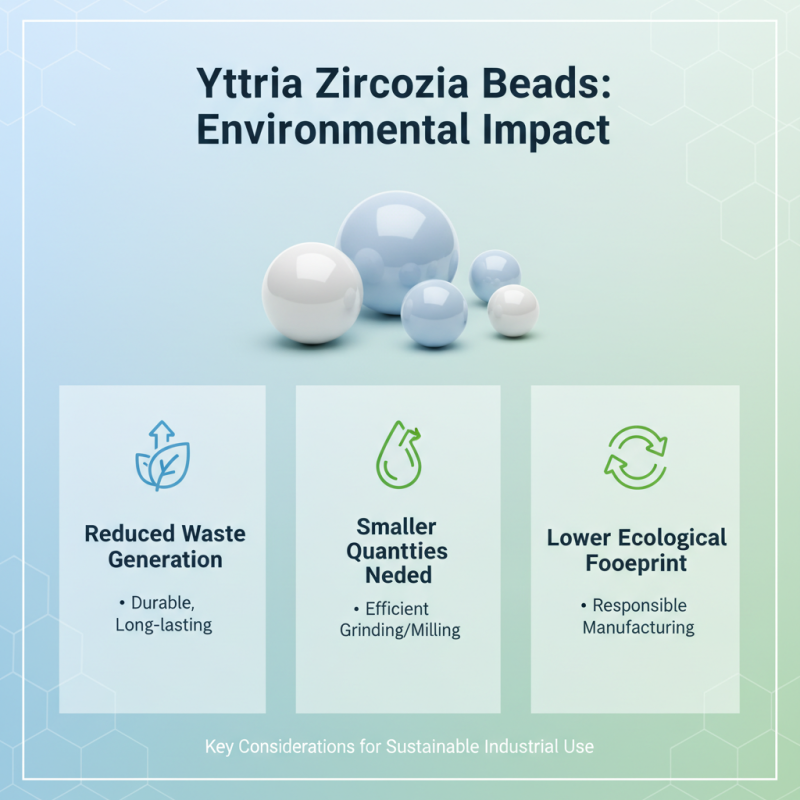
The use of yttria zirconia beads in various industrial applications brings significant environmental considerations to the forefront. These beads, known for their durability and high-performance characteristics, have a unique composition that impacts their ecological footprint. When manufactured responsibly, they can reduce waste generation in processes like grinding and milling. This innovative material allows for smaller quantities to achieve desired outcomes, which can lessen the overall environmental burden.
However, the production of yttria zirconia beads often involves processes that may not be entirely sustainable. The extraction of raw materials can lead to habitat disruption. Additionally, energy-intensive manufacturing may contribute to greenhouse gas emissions. Companies must evaluate their supply chain practices. Finding ways to minimize energy use or source materials responsibly is critical. There is room for improvement in implementing sustainable practices.
The recycling potential of yttria zirconia beads is another factor to consider. These beads, when used in various applications, often remain intact long after their initial use. Promoting recycling initiatives can prevent waste. Creating a closed-loop system could diminish landfill contribution. As industries advance, focusing on sustainability in the use of yttria zirconia beads remains essential. The balance between performance and environmental responsibility calls for ongoing reflection and innovation.